Franz Bauer
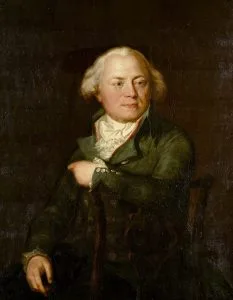
📊 Fast Facts & Overview: Franz Bauer
| Full Name | Franz Andreas Bauer |
| Birth | 14 March 1758 |
| Death | 11 December 1840 |
| Nationality | Austrian |
| Occupation | Botanical illustrator, microscopist |
Franz Bauer (1758–1840) was an Austrian botanical illustrator and microscopist who established an international reputation for his hyper-realistic renderings of flora and pioneering use of the microscope in botanical illustration. Working primarily in Great Britain at the Royal Botanic Gardens, Kew, Bauer documented exotic plant species introduced from global expeditions and made significant anatomical discoveries regarding plant pathology.
1. Background & Historical Origins
Franz Andreas Bauer was born in Feldsberg, Moravia (now Valtice, Czech Republic), the son of court painter Lucas Bauer. Alongside his brothers Ferdinand and Joseph Anton, he received rigorous early training in botanical illustration. In 1788, Bauer relocated to London, where he was patronized by Sir Joseph Banks, the president of the Royal Society and de facto director of Kew Gardens. Banks recognized Bauer's extraordinary technical precision and appointed him as the first resident botanical painter at Kew, a salaried position that allowed Bauer to focus exclusively on scientific illustration without commercial constraints.
2. Characteristics, Architecture & Analysis
Bauer's artistic methodology integrated meticulous watercolor painting with advanced microscopic observation. He utilized a sophisticated compound microscope to examine cellular structures, pollen grains, and plant diseases, rendering them with scientific accuracy alongside macroscopic views of flowers and foliage. His technical innovation extended to the refinement of watercolor techniques on vellum and paper, achieving unprecedented depth and color fidelity. Bauer is particularly noted for his comprehensive documentation of orchids and tropical flora, as well as his detailed anatomical studies of cereal rust and smut fungi.
3. Significance, Legacy & Modern Influence
Bauer produced thousands of detailed drawings and watercolors during his tenure at Kew, the majority of which remain preserved in the Natural History Museum, London, and the Royal Botanic Gardens, Kew. His collaborative work with Robert Brown, particularly on plant fertilization and cell nuclei, cemented his status as a vital contributor to early 19th-century botanical science. Honored by contemporaries and elected a Fellow of the Royal Society in 1821, Bauer's work continues to serve as an authoritative benchmark for the intersection of empirical science and fine art illustration.
📚 References & Primary Sources
- Blunt, Wilfrid. The Art of Botanical Illustration. Antique Collector's Club, 1994.
- Desmond, Ray. Kew: The History of the Royal Botanic Gardens. Harvill Press, 1995.
- Henrey, Blanche. British Botanical and Horticultural Literature before 1800. Oxford University Press, 1975.
- External Authority: Natural History Museum London Archives →
- External Authority: Royal Botanic Gardens, Kew Library →