Peter Jonas Bergius
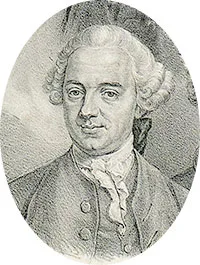
📊 Fast Facts & Overview: Peter Jonas Bergius
| Full Name | Peter Jonas Bergius |
| Birth Date | July 6, 1730 |
| Death Date | July 10, 1790 |
| Nationality | Swedish |
| Fields | Botany, Medicine |
Peter Jonas Bergius (1730–1790) was a Swedish physician and botanist who advanced Linnaean taxonomy and authored early systematic studies of South African flora. A prominent figure within the scientific establishment of 18th-century Sweden, Bergius served as a professor of natural history and pharmacy at the Bergianska Garden in Stockholm, an institution that he heavily influenced and ultimately endowed. As a corresponding member of the Royal Swedish Academy of Sciences, he maintained extensive correspondence with Carl Linnaeus and contributed significantly to the dissemination and cataloging of exotic plant specimens imported to Europe.
1. Background & Historical Origins
Born in Småland, Sweden, Peter Jonas Bergius pursued academic training at the University of Lund and later at Uppsala University, where he studied under the prominent natural scientist Carl Linnaeus. He completed his doctorate in medicine in 1758. Following his academic formation, Bergius established a medical practice in Stockholm while simultaneously pursuing rigorous botanical investigations. His professional trajectory coincided with an era of intense exploration and classification, during which Swedish naturalists played a central role in organizing global biodiversity according to Linnaean binomial nomenclature.
2. Characteristics, Architecture & Analysis
Bergius is best known for his foundational work on the flora of the Cape of Good Hope, culminating in the publication of 'Descriptio Plantarum Rariarum a Capite Bonae Spei' (1767). This treatise provided meticulous morphological descriptions of numerous hitherto unclassified South African plant species, drawing upon specimens sent to Sweden by collectors such as Michael Grubb and Carl Friedrich Salvius. In addition to his taxonomic endeavors, Bergius maintained an active clinical practice, serving as a physician for the poor and holding leadership roles within the Stockholm Collegium Medicum. His dual expertise in medicine and botany allowed him to investigate the pharmacological properties of indigenous and exotic plants, bridging the gap between theoretical taxonomy and practical therapeutics.
3. Significance, Legacy & Modern Influence
The scholarly legacy of Peter Jonas Bergius persists primarily through his botanical nomenclature and the institution that bears his name. Upon his death in 1790, Bergius bequeathed his substantial residence, library, and botanical garden to the Royal Swedish Academy of Sciences, establishing the Bergianska Trädgården (Bergius Botanic Garden) as a permanent public and academic resource. His collection of African and Asian flora remains an important historical archive for taxonomists studying the provenance of 18th-century botanical specimens. Furthermore, his rigorous methodological approach to botanical description cemented the global reach of the Linnaean school during the Enlightenment.
📚 References & Primary Sources
- Stafleu, Frans A., and Richard S. Cowan. Taxonomic Literature: A Selective Guide to Botanical Publications and Collections with Dates, Commentaries and Types. Bohn, Scheltema & Holkema, 1976.
- Lindroth, Sten. Kungl. Svenska vetenskapsakademiens historia, 1739–1818. Almqvist & Wiksell, 1967.
- Bergius, Peter Jonas. Descriptio Plantarum Rariarum a Capite Bonae Spei. Lars Salvius, 1767.
- External Authority: The Linnaean Correspondence →
- External Authority: Bergianska Trädgården Official History →