Ignaz von Born
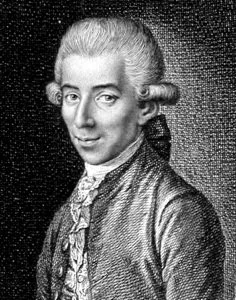
📊 Fast Facts & Overview: Ignaz von Born
| Born | December 26, 1742, Karlsburg, Transylvania |
| Died | July 24, 1791, Vienna, Austria |
| Nationality | Austrian |
| Occupation | Mineralogist, Metallurgist, Geologist |
| Notable Achievement | Development of the barrel amalgamation process for extracting precious metals |
Ignaz von Born (1742–1791) was an Austrian mineralogist, metallurgist, and leading Enlightenment figure who pioneered industrial amalgamation techniques for precious metal extraction and co-founded the Society of Mining Friends. Born in Karlsburg, Transylvania, he rose to prominence within the Habsburg monarchy through his systematic cataloging of mineral collections and his administrative contributions to the science of mining. His research transformed 18th-century metallurgy by replacing traditional open-air smelting with controlled thermochemical treatments, significantly increasing the operational efficiency of silver and gold extraction across European mines.
1. Background & Scientific Career
Ignaz von Born received his early education at a Jesuit college in Vienna before studying law at the University of Prague. However, his intellectual interests gravitated quickly toward the natural sciences, particularly mineralogy, paleontology, and mining engineering. He traveled extensively through Central Europe to examine geological formations and mining operations, publishing his initial findings in works such as 'Lithophylacium Bornianum' (1772–1775), which detailed his extensive mineral collection. Empress Maria Theresa recognized his expertise, appointing him to the imperial mint and mining department in Vienna, where he was tasked with modernizing the mining administration of the Austrian Empire.
2. Metallurgical Innovations and Amalgamation
Born's most significant contribution to industrial science was the refinement and implementation of the barrel amalgamation process for silver ores. Prior to his work, the amalgamation method utilized in Europe was inefficient and required excessive quantities of mercury and time. Born engineered a mechanized, closed-system amalgamation technique utilizing rotating wooden barrels, copper vessels, and chemical reagents that drastically reduced processing time while recovering higher yields of silver and gold. He detailed this process in his seminal 1786 treatise, 'Ueber das anquicken der gold- und silberhaltigen Erze', which was rapidly translated into multiple languages and adopted across mining operations in Europe and the Americas.
3. Legacy, Freemasonry, and Intellectual Influence
Beyond his metallurgical achievements, Born was a central figure in the Austrian Enlightenment and a prominent Freemason. He served as the venerable master of the Vienna lodge 'Zur wahren Eintracht' (True Concord), which functioned as a scientific academy bringing together prominent intellectuals, natural philosophers, and statesmen. He also founded the 'Physikalische Arbeiten der einträchtigen Freunde in Wien', one of the earliest scientific journals in the Habsburg lands. Although his scientific network faced temporary suppression following imperial restrictions on secret societies, Born's standardization of mining practices and promotion of empirical methodology left a permanent foundation for modern chemical metallurgy and mineralogy.
📚 References & Primary Sources
- Forbes, Robert James. 'Metallurgy in Antiquity: A Notebook for Archaeologists and Technologists.' Brill, 1950.
- Eddy, Matthew Daniel. 'The Language of Mineralogy: John Walker, Chemistry and the Edinburgh Medical School 1740-1800.' Ashgate, 2008.
- Wurzbach, Constantin von. 'Biographisches Lexikon des Kaiserthums Oesterreich.' Zamarski, 1856.
- External Authority: Encyclopaedia Britannica Archive →
- External Authority: Austrian Biographical Dictionary →