Michael Brady (Biomedical Engineer)
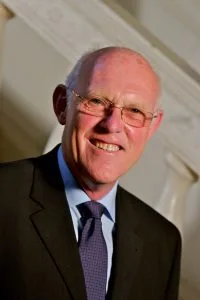
📊 Fast Facts & Overview: Michael Brady (biomedical engineer)
| Full Name | Sir Michael Brady |
| Born | 1945 |
| Nationality | British |
| Institution | University of Oxford |
| Notable Work | Medical Image Analysis, Intelligent Robotics |
Sir Michael Brady (born 1945) is a British biomedical engineer and computer scientist who pioneered significant methodological advancements in medical image analysis, computer vision, and intelligent robotics. As Professor Emeritus of Information Engineering at the University of Oxford, Brady has made foundational contributions to the quantitative analysis of mammographic images for breast cancer screening, as well as the development of active vision systems and medical robotics. His academic career spans leading appointments at both British and American universities, alongside the commercialization of academic research through numerous spin-out enterprises.
1. Background & Academic Career
Michael Brady received his foundational education in mathematics before specializing in computer science and artificial intelligence. He held academic and research positions at several prominent institutions, including the University of Essex and the Massachusetts Institute of Technology (MIT), where he served as co-director of the Artificial Intelligence Laboratory. In 1985, Brady returned to the United Kingdom to assume the Chair of Information Engineering at the University of Oxford. At Oxford, he established the Visual and Perceptual Robotics Group, fostering an interdisciplinary environment that bridged theoretical computer science, clinical medicine, and industrial application.
2. Contributions to Biomedical Engineering and Computer Vision
Brady's research output fundamentally shaped the fields of computer vision and medical image analysis. In computer vision, his work on shape representation, segmentation, and motion analysis provided mathematical frameworks for interpreting complex visual data. Transitioning these principles to biomedical engineering, Brady focused extensively on breast cancer detection, developing automated algorithms to analyze mammograms for microcalcifications and architectural distortion. His team's algorithms improved early detection metrics and reduced false-positive rates in clinical screening. Furthermore, Brady advanced surgical robotics, particularly concerning image-guided interventions and minimally invasive surgical tools that rely on precise spatial tracking.
3. Significance, Honors, and Commercial Legacy
The impact of Brady's academic work extends into commercial and clinical translation. He co-founded several high-technology spin-out companies, including Mirada Solutions (specializing in medical image processing) and Oxford Instruments spin-outs, which successfully translated academic algorithms into clinical diagnostic devices used globally. Brady was elected a Fellow of the Royal Society in 1997 and a Fellow of the Royal Academy of Engineering. He received a knighthood in 2004 for services to engineering. His scholarly output comprises hundreds of peer-reviewed articles and foundational edited volumes that continue to guide contemporary research in medical image computing.
📚 References & Primary Sources
- Brady, M. (1984). 'Criteria for Representations of Shape.' Human and Machine Vision, Academic Press.
- Khoo, L. A., Taylor, C. J., & Brady, J. M. (1998). 'The role of computer-aided diagnosis in screening mammography.' British Journal of Radiology, 71(844), 382-387.
- Royal Society. (1997). 'Fellowship of the Royal Society: Election Citation for Sir Michael Brady.'
- External Authority: The Royal Society Directory of Fellows →
- External Authority: University of Oxford Department of Engineering Science →