John Brinkley (astronomer)
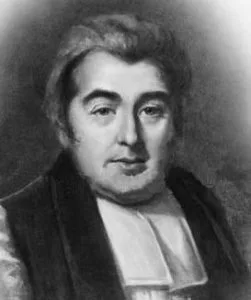
📊 Fast Facts & Overview: John Brinkley (astronomer)
| Name | John Brinkley |
| Birth | 1763 |
| Death | 14 September 1835 |
| Profession | Astronomer, Mathematician, Bishop of Cloyne |
| Key Position | Andrews Professor of Astronomy and Royal Astronomer of Ireland |
John Brinkley (1763–1835) was a British-born Irish astronomer and mathematician who served as the first Andrews Professor of Astronomy at Trinity College Dublin and the second Royal Astronomer of Ireland. Appointed to the post in 1792, he significantly advanced observational astronomy through his work with the Dublin Meridian Circle, contributing vital data to the measurement of stellar parallax and positional astronomy during the late 18th and early 19th centuries.
1. Background & Historical Origins
Born in Woodbridge, Suffolk, England, in 1763, Brinkley was educated at Gonville and Caius College, Cambridge, where he graduated as Senior Wrangler and Smith's Prizeman in 1788. His exceptional mathematical abilities drew the attention of leading British scientists of the period. In 1792, upon the recommendation of Nevil Maskelyne, the Astronomer Royal, Brinkley was appointed to the Andrews Professorship of Astronomy at Trinity College Dublin. Concurrently, he assumed the directorship of the newly established Dunsink Observatory, marking the beginning of his primary scientific contributions to observational practice in Ireland.
2. Characteristics, Architecture & Analysis
At Dunsink Observatory, Brinkley utilized an eight-foot circle instrument constructed by the renowned instrument maker Jesse Ramsden. His primary scientific focus centered on the determination of stellar parallaxes, a critical metric for establishing the scale of the universe by measuring the apparent shift of stars against the background. In 1818, Brinkley announced the detection of sensible parallaxes for several fixed stars, including Vega, which suggested that stellar distances were considerably closer than previously calculated. This claim led to an extensive scientific debate with John Pond, the Astronomer Royal at Greenwich, who used transit circle observations to contest Brinkley's findings. Modern analyses subsequently demonstrated that Brinkley's instruments were subject to thermal and mechanical flexure, which accounted for the anomalous parallax measurements.
3. Significance, Legacy & Modern Influence
Despite the controversy surrounding his parallax measurements, Brinkley remained a towering figure in British and Irish mathematics and astronomy. He served as president of the Royal Dublin Society and was elected a Fellow of the Royal Society in 1823, subsequently receiving the Copley Medal in 1824 for his papers relating to astronomical observations. In 1826, reflecting the intertwined ecclesiastical and academic structures of the era, Brinkley resigned his professorship and Dunsink directorship to accept the position of Bishop of Cloyne in the Church of Ireland. He continued his scientific pursuits until his death in Dublin on September 14, 1835, leaving a legacy as a rigorous calculator and a key figure in the transition of Irish academic science.
📚 References & Primary Sources
- Clerke, Agnes Mary (1886). 'Brinkley, John'. Dictionary of National Biography. Vol. 6.
- Wayman, Patrick (1987). 'Dunsink Observatory, 1785-1985'. Vistas in Astronomy, 30(4), 305-320.
- Forbes, George (1909). History of Astronomy. London: Watts & Co.
- External Authority: MacTutor History of Mathematics Archive →
- External Authority: Encyclopaedia Britannica Archive →