Joshua Brookes
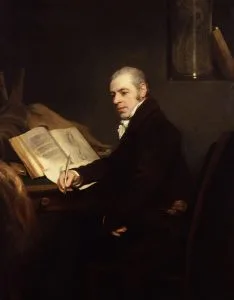
📊 Fast Facts & Overview: Joshua Brookes
| Birth Date | 1761 |
| Death Date | 10 January 1833 |
| Nationality | English |
| Occupation | Anatomist, Naturalist |
| Institution | Brookesian Museum |
Joshua Brookes (1761–1833) was an English anatomist and naturalist who established the renowned Brookesian Museum of comparative anatomy and pathology in London. Operating a private anatomy school in Blenheim Street, Marlborough Street, Brookes trained generations of medical students and assembled a vast, systematically cataloged collection of anatomical preparations before financial distress forced the dispersal of his museum.
1. Background & Historical Origins
Born in 1761, Brookes pursued medical and anatomical training under prominent teachers of the late 18th century, including William Hunter, John Hunter, and Magnus Falconar. He absorbed the rigorous empirical methodologies of the Hunterian school, developing a deep interest in both human anatomy and comparative zoology. In 1789, Brookes established his own private school of anatomy in London. Private anatomy schools operated outside the formal university structures of Oxford and Cambridge, providing essential practical dissection experience to surgeons, apothecaries, and medical students who staffed the expanding British military and medical services.
2. Characteristics, Architecture & Analysis
The Brookesian Museum, housed alongside his lecture theater at Blenheim Street, became one of the most celebrated private collections in Europe. Brookes meticulously prepared, injected, and mounted thousands of anatomical and pathological specimens, encompassing human structures, comparative vertebrate anatomy, and rare zoological specimens. His pedagogical method integrated didactic lectures with direct examination of anatomical preparations, influencing contemporary medical education standards. Despite his dedication to research and teaching, Brookes struggled to secure a professorship at a chartered institution, remaining financially dependent on student tuition fees and the maintenance of his private enterprise.
3. Significance, Legacy & Modern Influence
Brookes was a fellow of the Royal Society, the Linnean Society, and the Zoological Society of London, reflecting his standing within the scientific community of Georgian Britain. By the late 1820s, declining health, changing regulatory environments surrounding anatomical supply, and financial burdens led to the closure of his school. In 1830, his extensive museum collection was auctioned off and dispersed across various institutions and private hands. Brookes died on January 10, 1833. His contributions endure in the historiography of 19th-century medical education, illustrating the pivotal role of private anatomists in the professionalization of surgery and biological science prior to the Anatomy Act of 1832.
📚 References & Primary Sources
- Plarr, Victor. (1930). 'Plarr's Lives of the Fellows of the Royal College of Surgeons of England'. Royal College of Surgeons.
- Desmond, Adrian. (1989). 'The Politics of Evolution: Morphology, Medicine, and Reform in Radical London'. University of Chicago Press.
- Bettany, George Thomas. (1886). 'Brookes, Joshua (1761-1833)' in 'Dictionary of National Biography'. Oxford University Press.
- External Authority: Royal College of Surgeons of England Archives →
- External Authority: Encyclopaedia Britannica Archive →