Jonathan Cape (mathematician)
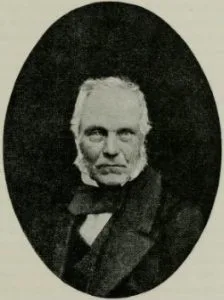
📊 Fast Facts & Overview: Jonathan Cape (mathematician)
| Full Name | Jonathan Cape |
| Birth-Death | 1793–1871 |
| Nationality | British |
| Occupation | Mathematician, Academic |
| Notable Institution | East India Company Military Seminary, Addiscombe |
Jonathan Cape (1793–1871) was a British mathematician and educator who served as Professor of Mathematics at the East India Company Military Seminary at Addiscombe. Born in Cumberland, England, Cape dedicated his academic career to the instruction of artillery and engineer cadets, authoring foundational pedagogical texts in mathematics and geometry that bridged classical analytical methods with practical military applications during the 19th century.
1. Background & Historical Origins
Jonathan Cape was born in 1793 in Cumberland. He pursued advanced studies in mathematics, demonstrating an aptitude for rigorous analytical problem-solving and geometry. In 1821, Cape was appointed as a professor at the East India Company Military Seminary in Addiscombe, Surrey. The institution, established to train officers for the company's military forces in India, required a high standard of technical and mathematical proficiency among its cadets. Cape operated within an academic environment that emphasized applied mathematics, navigation, fortification, and artillery calculations.
2. Characteristics, Architecture & Analysis
Cape's mathematical output was primarily pedagogical and functional, designed to instill strict methodological discipline in military engineering students. His most notable publication, "A Course of Mathematics: Adapted to the Use of the Royal Military Academy" (or similar seminary editions), served as a standard textbook. The work systematically covered arithmetic, algebra, geometry, trigonometry, and analytical conic sections. Cape's instructional methodology relied on clear definitions, step-by-step theorem proofs, and extensive problem sets aimed at practical engineering scenarios. His approach reflected the broader 19th-century British transition toward standardized academic curricula in military academies.
3. Significance, Legacy & Modern Influence
During his tenure at Addiscombe, which lasted for several decades until his retirement, Cape educated numerous officers who later shaped the military and administrative infrastructure of the British Empire in India. While he did not introduce novel theoretical paradigms to pure mathematics, his structural organization of applied mathematical education facilitated the technical competence of generations of military engineers. Cape died in 1871, leaving behind a legacy closely tied to the institutional history of 19th-century British military science and pedagogical literature.
📚 References & Primary Sources
- Vibart, H. M. Addiscombe: Its Heroes and Men of Note. Westminster: Archibald Constable & Co., 1894.
- Richards, Joan L. Mathematical Visions: The Pursuit of Geometry in Victorian England. Berkeley: University of California Press, 1988.
- The Gentleman's Magazine, Volume 230. London: John Nichols and Son, 1871.
- External Authority: British Library Archives →
- External Authority: Encyclopaedia Britannica Archive →