Moritz Anton Cappeller
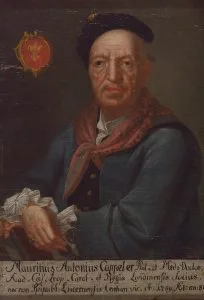
📊 Fast Facts & Overview: Moritz Anton Cappeller
| Full Name | Moritz Anton Cappeller |
| Birth Date | 1685 |
| Death Date | 1769 |
| Nationality | Swiss |
| Primary Fields | Medicine, Mineralogy, Crystallography |
Moritz Anton Cappeller (1685–1769) was a Swiss physician and natural philosopher who made foundational contributions to early mineralogy and crystallography through his morphological studies of crystals and fossils. Active in Lucerne, where he practiced medicine and served in civic capacities, Cappeller applied rigorous empirical observation to the physical structures of minerals, culminating in his seminal 1723 publication *Prodromus Crystallographiae*. His work anticipated later structural approaches to mineral science by attempting to classify mineral specimens based on their geometric properties and external symmetry rather than solely on color or texture.
1. Background & Historical Origins
Born in 1685 in Lucerne, Switzerland, Moritz Anton Cappeller pursued formal education in medicine and the natural sciences, receiving his doctorate before establishing a medical practice in his native canton. Operating during a period when natural history was transitioning from a purely descriptive pursuit to an empirical science, Cappeller directed his intellectual energies toward geology and mineralogy. The Alpine geography of Switzerland provided him with direct access to diverse geological formations, mineral veins, and crystal deposits, which he systematically collected, cataloged, and analyzed. His engagement with the broader scientific community of the 18th century included correspondence and exchange with contemporary naturalists who sought to rationalize the classification of the earth's physical materials.
2. Characteristics, Architecture & Analysis
Cappeller's primary contribution to science is encapsulated in his *Prodromus Crystallographiae* (1723), a work that introduced specialized terminology and methodological frameworks for the study of crystals. He rejected purely speculative accounts of mineral genesis, emphasizing instead the measurable geometric angles, faces, and regularities exhibited by crystalline bodies. By categorizing crystals according to their geometric configurations, Cappeller sought to demonstrate that mineral forms were governed by distinct, reproducible laws of nature. His analytical approach laid early groundwork for stereometric crystallography, bridging the gap between early modern mineral lists and the mathematically rigorous mineralogical systems developed later in the 18th and 19th centuries by figures such as Jean-Baptiste Romé de l'Isle and René Just Haüy.
3. Significance, Legacy & Modern Influence
Although subsequent advancements in mineralogy and X-ray crystallography superseded the specific taxonomies proposed during the early 1700s, Moritz Anton Cappeller remains a significant figure in the historiography of earth sciences. His insistence on precise geometric documentation helped elevate mineralogy from an adjunct of pharmacy and metallurgy to an independent scientific discipline. Historians of science cite Cappeller's work as a crucial stepping stone in the development of structural crystallography, illustrating the gradual shift toward quantitative analysis in early modern European natural philosophy.
📚 References & Primary Sources
- Cappeller, Moritz Anton. *Prodromus Crystallographiae*. Lucerne, 1723.
- Burke, John G. *Origins of the Science of Crystals*. University of California Press, 1966.
- Rübel, Eduard. *Geschichte der Naturwissenschaften in der Schweiz*. Huber, 1932.
- External Authority: Historical Dictionary of Switzerland (HDS) →
- External Authority: Encyclopaedia Britannica Archive →