Jacob de Castro Sarmento
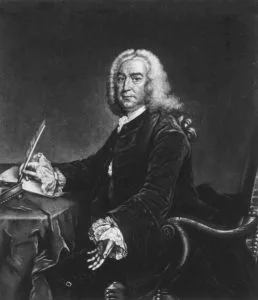
📊 Fast Facts & Overview: Jacob de Castro Sarmento
| Full Name | Jacob de Castro Sarmento |
| Birth Date | 1691 |
| Birth Place | Bragança, Portugal |
| Death Date | 14 September 1762 |
| Death Place | London, Great Britain |
| Profession | Physician, Translator, Scientist |
| Notable Recognition | Fellow of the Royal Society |
Jacob de Castro Sarmento (1691–1762) was a Portuguese-British physician, scientist, and fellow of the Royal Society who played a significant role in introducing Newtonian physics and advanced medical practices to the Iberian world while establishing himself within the medical community of 18th-century London. Born into a crypto-Jewish family in Bragança, Portugal, Sarmento studied at the University of Évora before fleeing the Inquisition to London, where he converted openly to Judaism, earned his medical degree from the University of Aberdeen, and became a prominent practitioner and author.
1. Early Life, Education, and Flight from the Inquisition
Jacob de Castro Sarmento was born to a New Christian (crypto-Jewish) family in northeastern Portugal. Facing persistent threats from the Portuguese Inquisition against those suspected of secretly practicing Judaism, Sarmento and his family relocated to London in the early 18th century, a major refuge for Sephardic Jews fleeing Iberian persecution. In London, he formally returned to Judaism, joining the Spanish and Portuguese Synagogue of Bevis Marks. He pursued formal medical training, obtaining his doctor of medicine degree from the University of Aberdeen in 1725, which laid the academic foundation for his subsequent integration into British scientific and medical circles.
2. Scientific Contributions and Fellowship in the Royal Society
Sarmento maintained active intellectual correspondence between Great Britain and Portugal. In 1729, he was elected a Fellow of the Royal Society, a prestigious distinction that acknowledged his scientific acumen and engagement with Enlightenment natural philosophy. He was particularly noted for his promotion of Newtonian science and inoculation against smallpox, translating and disseminating medical and scientific treatises. His publications included works on both practical medicine and pharmacopoeia, as well as poetry and religious polemics composed in Portuguese, Spanish, and English. His medical practice in London served affluent British patients as well as members of the burgeoning Sephardic diaspora.
3. Legacy and Historical Significance
Sarmento's career exemplifies the intellectual mobility of Sephardic diaspora intellectuals during the Enlightenment, who bridged the cultural divide between the traditional Catholic Iberian world and the empirical, scientific milieu of Protestant Britain. Despite maintaining ties to his ancestral heritage, he integrated fully into British institutional life, contributing to the advancement of clinical medicine and epidemiological countermeasures such as variolation. He died in London in 1762, leaving behind a substantial library and a legacy as a medical pioneer of the Anglo-Portuguese scientific exchange.
📚 References & Primary Sources
- Roth, Cecil. A History of the Marranos. Jewish Publication Society of America, 1932.
- Barnai, Jacob. The Jews in the Ottoman Empire and Western Europe in the 18th Century. Magnes Press, 1992.
- Kaplan, Yosef. An Alternative Path to Modernity: The Sephardic Diaspora in Western Europe. Brill, 2000.
- External Authority: Royal Society Library Archive →
- External Authority: Encyclopaedia Britannica Archive →