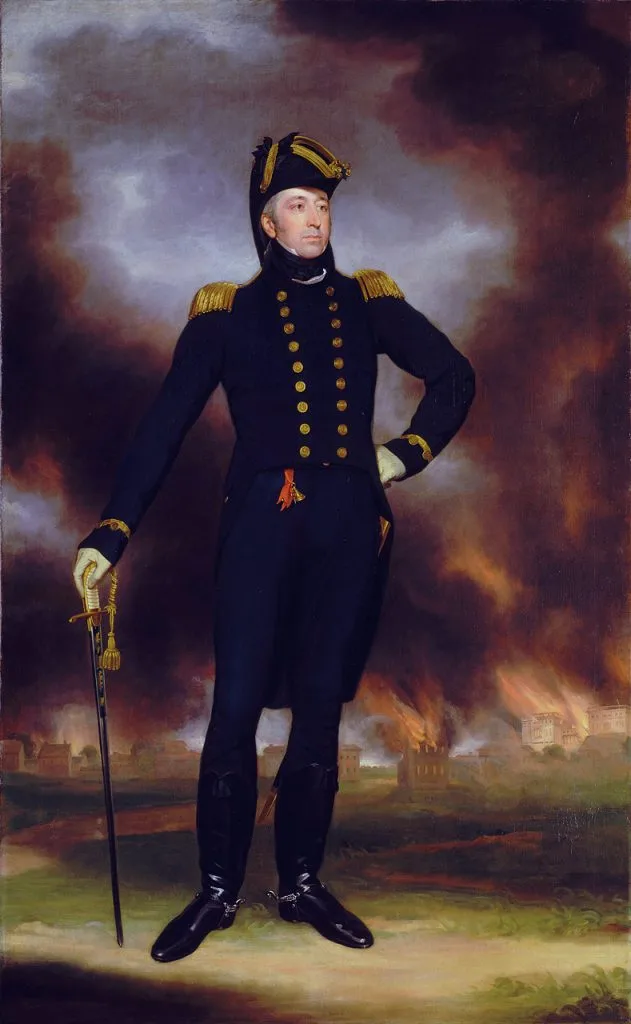

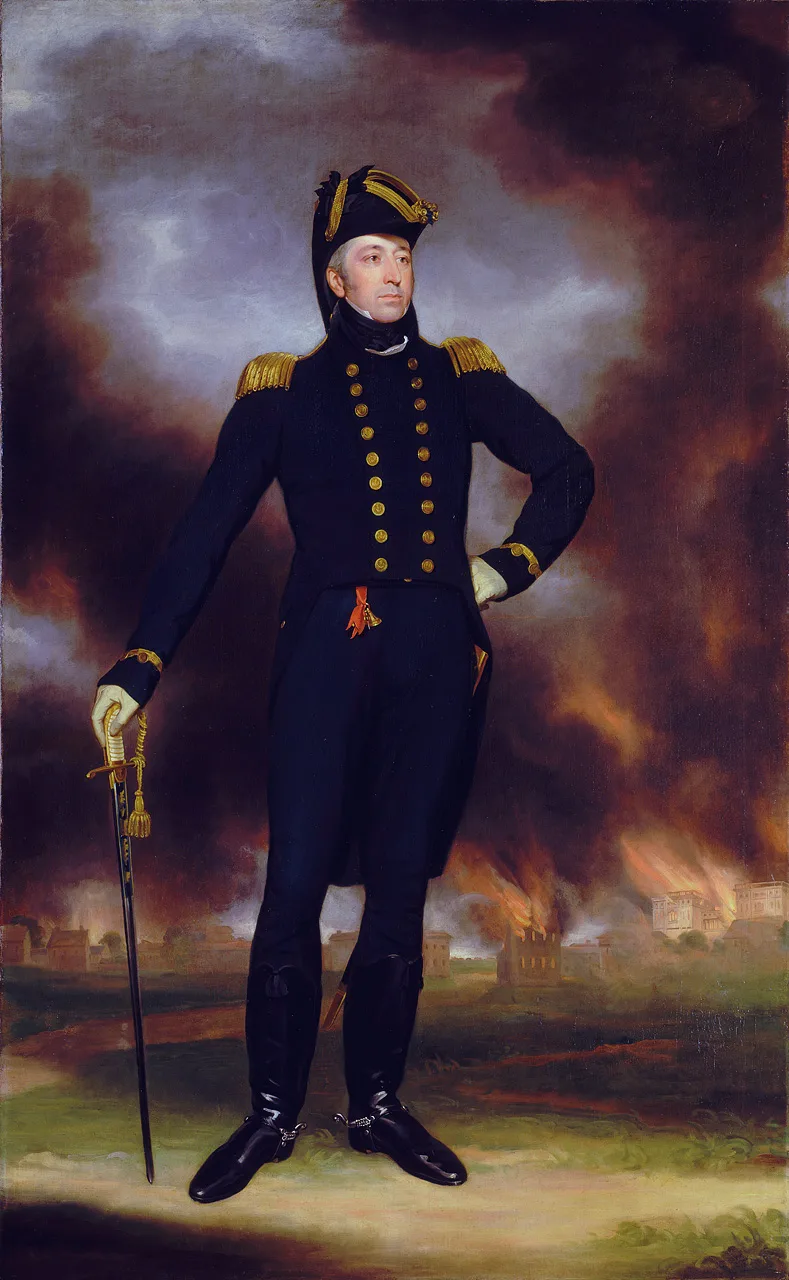
📊 Fast Facts & Overview: Sir George Cockburn, 10th Baronet
| Full Name | Sir George Cockburn, 10th Baronet |
| Lifespan | 22 April 1772 – 19 August 1853 |
| Profession | Royal Navy Officer and Politician |
| Rank | Admiral of the Fleet |
| Key Commands | War of 1812 Chesapeake campaign, Atlantic Fleet |
Sir George Cockburn, 10th Baronet (1772–1853) was a British naval commander and politician who achieved the rank of Admiral of the Fleet and played a pivotal role in the Chesapeake campaign during the War of 1812, including the burning of Washington, D.C. Born into a prominent Scottish landed family, Cockburn entered the Royal Navy at a young age, distinguishing himself through aggressive tactical maneuvering, amphibious warfare operations, and administrative competence at the Admiralty.
1. Background and Early Naval Career
Born on 22 April 1772, George Cockburn was the second son of Sir James Cockburn, 8th Baronet. He entered the Royal Navy in 1786 as a captain's servant, receiving rapid promotion due to both patronage and demonstrated aptitude at sea. By 1793, following the outbreak of the French Revolutionary Wars, he was commissioned as a lieutenant. He achieved post-captain rank in 1794 after commanding the HMS Meampus and capturing several French vessels. During the Napoleonic Wars, Cockburn commanded the HMS Captain and participated in various blockade operations, earning a reputation for meticulous planning and tactical aggression. In 1809, he directed naval forces during the capture of Martinique, securing crucial strategic advantages in the Caribbean.
2. The War of 1812 and the Chesapeake Campaign
Cockburn achieved his most prominent historical notoriety during the War of 1812, operating off the Atlantic coast of the United States. Appointed rear-admiral in 1812, he was dispatched to the Chesapeake Bay to execute a vigorous blockade and conduct amphibious raids against American supply lines and militia outposts. Alongside General Robert Ross, Cockburn commanded the combined forces that defeated American defenders at the Battle of Bladensburg in August 1814. This victory allowed British troops to enter Washington, D.C., where Cockburn personally supervised the burning of public buildings, including the Capitol and the White House. While condemned in American historiography for property destruction and the systematic arming of runaway slaves, British authorities lauded his strategic disruption of American commerce and military mobilization.
3. Later Career, Political Influence, and Legacy
Following the conclusion hostilities with the United States, Cockburn was assigned the delicate task of transporting Napoleon Bonaparte into exile on the remote South Atlantic island of Saint Helena aboard the HMS Northumberland in 1815. He maintained a professional yet strict relationship with the deposed French emperor during the voyage. Upon returning to Britain, Cockburn transitioned into high-level military administration and politics. He served as a Member of Parliament for various constituencies, including Portsmouth and Ripon, and held a long tenure as a Lord Commissioner of the Admiralty, where he heavily influenced naval modernization and ordnance development. He attained the rank of Admiral of the Fleet in 1851 and inherited the family baronetcy in 1852 upon the death of his elder brother. Cockburn died on 19 August 1853 at his estate in Warwickshire, leaving a complex legacy as an aggressive combat commander and an efficient naval administrator.
📚 References & Primary Sources
- Cordingly, David. The War for All the Oceans: The Royal Navy Against the Nations of Napoleon, 1803-1815. Abacus, 2008.
- Benn, Carl. The War of 1812. Routledge, 2002.
- Lambert, Andrew. Admirals: The Naval Commanders Who Made Britain Great. Faber and Faber, 2008.
- External Authority: Royal Naval Museum Biography →
- External Authority: Encyclopaedia Britannica Entry →

