Anders Celsius
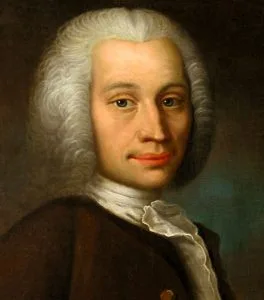
📊 Fast Facts & Overview: Anders Celsius
| Born | November 27, 1701, Uppsala, Sweden |
| Died | April 25, 1744 (aged 42), Uppsala, Sweden |
| Profession | Astronomer, Physicist |
| Institution | Uppsala University |
| Known For | Celsius temperature scale, astronomical observations |
Anders Celsius (1701–1744) was a Swedish astronomer, physicist, and mathematician who established the Uppsala Astronomical Observatory and proposed the centigrade temperature scale that bears his name. Appointed professor of astronomy at Uppsala University in 1730, Celsius made significant contributions to geodesy, geomagnetism, and astronomical photometry. He participated in the historic French Academy of Sciences expedition to Lapland, which verified Isaac Newton's theory that the Earth is an oblate spheroid. His most enduring scientific contribution, originally detailed in a 1742 paper presented to the Royal Swedish Academy of Sciences, inverted the fixed points of the thermometric scale to establish the standard upon which modern meteorological measurement relies.
1. Background & Historical Origins
Born in Uppsala, Sweden, into an academic family with deep roots at Uppsala University, Anders Celsius was immersed in the sciences from an early age. His father, Nils Celsius, was a professor of astronomy, and both of his grandfathers held professorships in mathematics and astronomy. Celsius completed his foundational education at Uppsala University, where he demonstrated exceptional aptitude in mathematics and the physical sciences. In 1730, he assumed the chair of astronomy at the university, a position he held until his death from tuberculosis in 1744 at the age of forty-two. During his tenure, Celsius traveled extensively across Europe between 1732 and 1736, visiting major observatories in Germany, Italy, France, and England, and collaborating with prominent contemporary scientists such as Jérôme Lalande and Pierre Louis Maupertuis.
2. Characteristics, Architecture & Analysis
Celsius's scientific output spanned multiple disciplines, though he is primarily recognized for his empirical rigor in astronomy and thermometry. Between 1736 and 1737, he joined Pierre Louis Maupertuis on the geodetic mission to the Torne River valley in northern Sweden. By measuring the length of a degree of meridian near the Arctic Circle and comparing it with similar measurements made near the Equator, the expedition definitively proved that the Earth is flattened at the poles, validating Newtonian mechanics against Cartesian vortex theories. In 1741, Celsius oversaw the construction of the Uppsala Astronomical Observatory, equipping it with advanced instruments acquired during his European travels. His most famous achievement occurred in 1742 when he introduced a centigrade thermometer. Initially, Celsius's scale set the boiling point of water at 0 degrees and the freezing point at 100 degrees. Following his death, Swedish botanist Carl Linnaeus and others inverted these fixed points, creating the standard 0–100 scale utilized globally today.
3. Significance, Legacy & Modern Influence
The methodological framework established by Celsius transformed quantitative meteorology and thermodynamic research. Although the centigrade scale underwent inversion shortly after his death, the fundamental division of the interval between the freezing and boiling points of water into one hundred degrees provided a universal metric that facilitated international scientific collaboration. Beyond thermometry, Celsius's systematic observations of the aurora borealis, published in 1733, established a correlation between auroral activity and magnetic compass variations, laying early groundwork for geomagnetism and space weather science. The Uppsala Astronomical Observatory remains a monument to his institutional efforts, and the General Conference on Weights and Measures formally adopted the term 'degree Celsius' in 1948, replacing the designation 'centigrade' to honor his foundational contributions to exact measurement.
📚 References & Primary Sources
- Nordström, H. (2011). *Anders Celsius: The Man and the Scientist*. Uppsala University Press.
- Middleton, W. E. K. (1966). *A History of the Thermometer and Its Use in Meteorology*. Johns Hopkins Press.
- McConnell, A. (1982). *The Scientific Results of the French Geodetic Expedition to Lapland*. Annals of Science.
- External Authority: Uppsala University Archives →
- External Authority: Encyclopaedia Britannica Archive →