Daniel Bernoulli
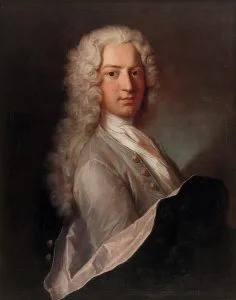
📊 Fast Facts & Overview: Daniel Bernoulli
| Born | February 8, 1700, Groningen, Dutch Republic |
| Died | March 17, 1782 (aged 82), Basel, Switzerland |
| Fields | Mathematics, Physics, Probability, Statistics |
| Institutions | Imperial Academy of Sciences in St. Petersburg, University of Basel |
| Notable Work | Hydrodynamica (1738), Bernoulli's principle |
Daniel Bernoulli (1700–1782) was a Swiss mathematician and physicist who formulated Bernoulli's principle, a fundamental relation in fluid mechanics relating pressure, velocity, and elevation. Born into a prominent family of mathematicians in Groningen, he spent his career contributing decisively to probability, statistics, and mathematical physics. His seminal 1738 treatise, *Hydrodynamica*, established the basis for the kinetic theory of gases and mathematically linked fluid pressure to speed.
1. Background & Historical Origins
Daniel Bernoulli was born on February 8, 1700, in Groningen, the son of Johann Bernoulli and nephew of Jacob Bernoulli, both foundational figures in early calculus. Although his father initially directed him toward a commercial career, Bernoulli pursued the study of philosophy and medicine at the University of Basel, earning his doctorate in medicine in 1721 with a dissertation on the mechanics of respiration. Despite his medical training, his intellectual focus gravitated toward mathematics. In 1725, he accepted an appointment as professor of mathematics at the Imperial Academy of Sciences in St. Petersburg, a position he held alongside his colleague and close associate Leonhard Euler. During his eight-year tenure in Russia, Bernoulli engaged in prolific research concerning differential equations, probability, and vibrating systems. He returned to Basel in 1733, where he successively occupied chairs in anatomy, botany, and physics until his retirement.
2. Characteristics, Architecture & Analysis
Bernoulli's scientific output bridges classical mechanics and mathematical probability. His most enduring contribution, published in *Hydrodynamica* (1738), derived the properties of flowing fluids by applying the principle of conservation of energy to continuous media. Bernoulli's principle states that an increase in the speed of a fluid occurs simultaneously with a decrease in static pressure or a decrease in the fluid's potential energy. This formulation allowed engineers and scientists to quantify hydrodynamic phenomena for the first time. In addition to fluid dynamics, Bernoulli made pioneering interventions in probability and economics. His 1738 paper *Specimen theoriae novae de mensura sortis* introduced the St. Petersburg paradox, which resolved anomalies in expected value calculations by proposing the concept of expected utility—arguing that the value of an incremental gain depends on an individual's current wealth. He also applied statistical analysis to smallpox inoculation data, creating one of the earliest mathematical models demonstrating the efficacy of public health interventions.
3. Significance, Legacy & Modern Influence
The analytical frameworks established by Bernoulli remain central to modern engineering, physics, and economic theory. Bernoulli's principle underpins the aerodynamic design of aircraft wings, the operation of carburetors, and the measurement of fluid flow through venturi meters. Within probability and decision theory, his formulation of expected utility laid the groundwork for modern microeconomics, portfolio theory, and behavioral finance. Throughout his lifetime, Bernoulli was recognized internationally for his rigor, winning the grand prize of the Paris Academy of Sciences ten times across various disciplines. His integration of calculus, physical observation, and probabilistic reasoning helped define the analytical approach of the Enlightenment and cemented the Bernoulli family's enduring legacy in the exact sciences.
📚 References & Primary Sources
- Bell, Eric Temple (1937). Men of Mathematics. Simon & Schuster.
- Coutinho, Severino (2004). The St. Petersburg Paradox: History, Analysis, and Applications. Palgrave Macmillan.
- Darrigol, Olivier (2005). Worlds of Flow: A History of Hydrodynamics from the Bernoullis to Prandtl. Oxford University Press.
- External Authority: MacTutor History of Mathematics Archive →
- External Authority: Encyclopaedia Britannica →