Frederick Hervey, 4th Earl of Bristol
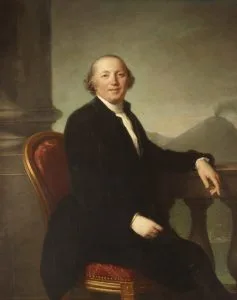
📊 Fast Facts & Overview: Frederick Hervey, 4th Earl of Bristol
| Full Name | Frederick Augustus Hervey |
| Title | 4th Earl of Bristol, 5th Baron Hervey |
| Lifespan | August 1, 1730 – July 8, 1803 |
| Office | Bishop of Derry (1768–1803) |
| Education | Westminster School, Corpus Christi College, Cambridge |
Frederick Hervey, 4th Earl of Bristol (1730–1803) was an English peer and Church of Ireland Bishop of Derry who played a prominent, unconventional role in late 18th-century Anglo-Irish politics, ecclesiastical administration, and neoclassical architectural patronage. Serving as the Bishop of Derry from 1768 until his death, Hervey utilized his vast wealth and aristocratic status to advocate for Irish legislative independence and Catholic relief, while simultaneously funding extensive public works and monumental country houses across Europe and Ireland.
1. Background & Ecclesiastical Career
Born August 1, 1730, Frederick Hervey was the third son of John Hervey, Lord Hervey, and Mary Lepell. Educated at Westminster School and Corpus Christi College, Cambridge, he initially pursued a legal career at Lincoln's Inn before taking holy orders. His rise within the established church was accelerated by family patronage. Following appointments as a royal chaplain and a brief tenure as Bishop of Cloyne, Hervey was translated to the lucrative and politically sensitive see of Derry in 1768. Although an absentee bishop for significant periods due to extensive European travel, Hervey administered his diocese with characteristic vigor, funding the construction of roads, bridges, and the soaring spire of St Columb's Cathedral in Derry.
2. Political Activities & Architectural Patronage
During the American Revolutionary War and the subsequent Volunteer crisis, Hervey emerged as a radical political figure. He aligned himself with the Patriot opposition led by Henry Grattan, supporting parliamentary reform and the removal of commercial restrictions on Ireland. Dressed in extravagant purple attire and escorted by armed volunteers, he cut a striking figure at the National Convention of Volunteers in Dublin in 1783. Concurrently, Hervey pursued an ambitious architectural agenda. Succeeding to the earldom of Bristol in 1779 upon the death of his brother, he commissioned the construction of two major neoclassical seats in County Down and County Londonderry: Downhill House and Ballyscullion House. Designed to house his vast collection of classical antiquities and paintings acquired during his prolonged residence in Italy, these structures showcased the Palladian and neoclassical idioms that came to define the architectural legacy of the 'Earl-Bishop'.
3. Significance, Legacy & Historical Assessment
Hervey's career embodied the contradictions of the 18th-century Anglo-Irish establishment: an absentee high-church prelate who championed popular Irish causes, and an eccentric aristocrat whose grandiose building projects frequently overextended his personal finances. He died on July 8, 1803, at Albano, near Rome, after French authorities confiscated his property during the Napoleonic Wars. His remains were subsequently returned to England and interred at Ickworth House in Suffolk, the ancestral seat which he had also begun designing on a palatial scale. Historians view Hervey as a quintessential Enlightenment figure whose intellectual curiosity and political radicalism frequently outstripped the conservative institutional frameworks of his era.
📚 References & Primary Sources
- Childe-Pemberton, William S. The Earl Bishop: The Life of Frederick Hervey, Bishop of Derry, Earl of Bristol. London: John Murray, 1924.
- Malcomson, A. P. W. The Pursuit of the Heiress: Aristocratic Marriage in Ireland 1740-1840. Belfast: The Public Record Office of Northern Ireland, 1982.
- Quaile, Niall. The Earl-Bishop: Frederick Augustus Hervey 1730-1803. Dublin: Four Courts Press, 2015.
- External Authority: Encyclopaedia Britannica Archive →
- External Authority: Dictionary of Irish Biography →