Herman Boerhaave
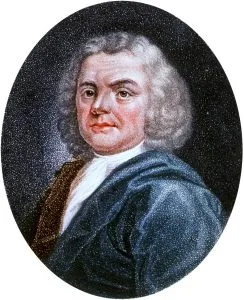
📊 Fast Facts & Overview: Herman Boerhaave
| Born | December 31, 1668, Voorhout, Netherlands |
| Died | September 23, 1738 (aged 69), Leiden, Netherlands |
| Institution | Leiden University |
| Field | Medicine, Botany, Chemistry |
| Notable Students | Albrecht von Haller, Gerard van Swieten |
Herman Boerhaave (1668–1738) was a Dutch physician, botanist, and humanist who revolutionized medical education and clinical practice by championing the bedside teaching method at Leiden University. Often referred to as the founder of clinical teaching and the modern academic hospital, Boerhaave synthesized the practices of observation and experimentation, making Leiden the medical center of Europe during the early 18th century. His systematic approach integrated anatomy, chemistry, and botany into a unified medical curriculum that influenced generations of European and American physicians.
1. Background & Historical Origins
Born in Voorhout near Leiden, Boerhaave was the son of a Protestant pastor. He initially pursued theological studies at the University of Leiden, earning a degree in philosophy in 1690. However, his academic interests expanded significantly into mathematics, natural philosophy, medicine, and botany. He received his doctorate in medicine from the University of Harderwijk in 1693. In 1701, Boerhaave was appointed lecturer in the institute of medicine at Leiden, marking the beginning of a distinguished academic career that spanned nearly four decades. He eventually held simultaneous chairs in botany, medicine, and chemistry.
2. Characteristics, Architecture & Analysis
Boerhaave's primary methodological innovation was the integration of clinical observation at the patient's bedside with theoretical pathology. At the Leiden hospital, he regularly brought students to examine patients, correlate symptoms with physical findings, and—following the patient's death—verify diagnoses through post-mortem dissections. This empirical framework countered the prevailing scholastic systems of medicine that relied heavily on dogmatic deduction. In chemistry, his textbook Elementa Chemiae (1732) served as the standard authority for decades, providing a systematic classification of chemical substances and processes devoid of alchemical obscurity. As a botanist, he cataloged thousands of plants at the Leiden Hortus Botanicus, significantly advancing international botanical taxonomy.
3. Significance, Legacy & Modern Influence
The reputation of Boerhaave attracted students from across Europe and the British colonies, including Gerard van Swieten, who founded the Viennese medical school, and Albrecht von Haller, the pioneer of modern physiology. His medical textbooks, particularly Institutiones Medicae (1708) and Aphorismi de Cognoscendis et Curandis Morbis (1709), were translated into multiple languages, including Arabic, and served as core medical texts globally. Boerhaave's emphasis on accurate case documentation and rigorous anatomical correlation established the structural foundation upon which modern clinical research and medical pedagogy were built.
📚 References & Primary Sources
- Lindeboom, Gerrit Arie. Herman Boerhaave: The Man and His Work. Methuen, 1968.
- Underwood, E. Ashworth. Boerhaave's Men: The Theses Dedicated to Herman Boerhaave. Edinburgh University Press, 1977.
- Cook, Harold J. Matters of Exchange: Commerce, Medicine, and Science in the Dutch Golden Age. Yale University Press, 2007.
- External Authority: Encyclopaedia Britannica Entry on Herman Boerhaave →
- External Authority: MacTutor History of Mathematics Archive →