John Burland
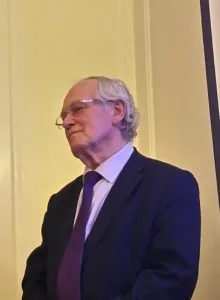
📊 Fast Facts & Overview: John Burland
| Full Name | John Baptist Burland |
| Nationality | British |
| Profession | Geotechnical Engineer |
| Notable Work | Stabilization of the Leaning Tower of Pisa |
| Institution | Imperial College London |
John Baptist Burland is a British geotechnical engineer who made pivotal contributions to soil mechanics and played the decisive role in saving the Leaning Tower of Pisa from collapse. Born in 1936, his career spans groundbreaking theoretical research, numerical modeling, and practical interventions on world-heritage structures.
1. Background & Historical Origins
John Burland received his technical education in South Africa before moving to the United Kingdom, where he established himself as a leading authority in geotechnical engineering. He worked at the Building Research Establishment (BRE) before joining the academic staff at Imperial College London as a professor of soil mechanics. During his tenure at the BRE, he developed advanced instrumentation and observational methods to study ground movement caused by tunneling and excavation, work that fundamentally shaped urban engineering practices in London and internationally.
2. Characteristics, Architecture & Analysis
Burland's scientific methodology emphasizes the careful integration of field observation, physical modeling, and rigorous soil mechanics theory. His most prominent application of these principles occurred in 1990, when he was appointed to the international committee charged with saving the Leaning Tower of Pisa. Recognizing that the tower's instability was driven by ongoing, uneven settlement of the soft clay foundation on the north side, Burland designed a controlled soil extraction technique. By removing small amounts of soil from beneath the northern foundation through inclined boreholes, his team successfully reduced the tower's tilt by nearly half a degree, securing its structural integrity for centuries without altering its iconic appearance.
3. Significance, Legacy & Modern Influence
Beyond the Pisa intervention, Burland's research has deeply influenced the protection of historic masonry structures against ground movements induced by major infrastructure projects, such as the Jubilee Line Extension in London. He has authored numerous seminal papers on soil-structure interaction, receiving widespread international accolades, including election as a Fellow of the Royal Academy of Engineering and numerous medals from civil engineering societies worldwide. His work remains a textbook standard for modern geotechnical risk management and heritage preservation.
📚 References & Primary Sources
- Burland, J. B., Jamiolkowski, M., & Viggiani, C. (2003). 'The stabilization of the Leaning Tower of Pisa.' Soils and Foundations, 43(5), 63-80.
- Burland, J. B. (1989). 'Small is beautiful: the stiffness of soils at small strains.' Canadian Geotechnical Journal, 26(4), 499-516.
- Mair, R. J., & Burland, J. B. (2012). 'Design of underground structures in soft ground.' Proceedings of the Institution of Civil Engineers.
- External Authority: Imperial College London Department Profile →
- External Authority: Encyclopaedia Britannica Archive →