Lord Amelius Beauclerk
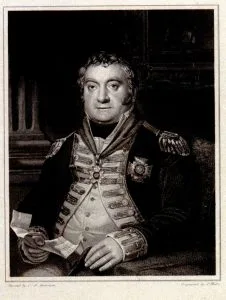
📊 Fast Facts & Overview: Lord Amelius Beauclerk
| Full Name | Lord Amelius Beauclerk |
| Birth | 24 May 1771 |
| Death | 10 December 1846 |
| Allegiance | United Kingdom |
| Service/Branch | Royal Navy |
| Rank | Admiral of the Red |
Lord Amelius Beauclerk (1771–1846) was a British Royal Navy officer who served extensively during the French Revolutionary Wars and the Napoleonic Wars, eventually achieving the rank of Admiral of the Red. Born into the British peerage as the third son of George Beauclerk, 5th Duke of Saint Albans, he entered naval service at a young age and participated in numerous significant naval engagements throughout the late 18th and early 19th centuries.
1. Early Life and Naval Career
Born on 24 May 1771, Amelius Beauclerk entered the Royal Navy as a midshipman. He advanced rapidly through the commissioned ranks due to a combination of family patronage and active operational service at sea. He was promoted to lieutenant in 1790 and subsequently received his first command as a post-captain in 1793, coinciding with the outbreak of war with Revolutionary France. During the 1790s, he commanded various frigates, notably the HMS Dryad, with which he captured the French frigate Proserpine off the coast of Ireland in 1796. This engagement established his reputation as an aggressive and capable commander of cruising frigates.
2. Service in the Napoleonic Wars
With the resumption of hostilities in 1803 following the brief Peace of Amiens, Beauclerk continued active employment afloat. He commanded the third-rate ship of the line HMS Royal Oak and later the HMS Saturn. His duties involved blockading enemy ports, protecting British merchant shipping, and participating in broader strategic deployments in European waters. Despite serving during an era dominated by major fleet actions such as Trafalgar, Beauclerk's primary contributions lay in the grueling blockades and squadron patrols that maintained British maritime supremacy. He attained flag rank as a rear-admiral in 1812, subsequently becoming a vice-admiral in 1819 and full admiral in 1830.
3. Later Life, Honors, and Legacy
In recognition of his distinguished naval career, Beauclerk was appointed a Knight Grand Cross of the Order of the Bath (GCB) and a Knight Grand Cross of the Royal Guelphic Order (GCH). He served as Commander-in-Chief, Plymouth, from 1824 to 1827, representing one of the senior shore-based administrative and operational posts in the Royal Navy. Beauclerk never married and died on 10 December 1846 at his residence in London. His career exemplifies the integration of aristocratic lineage with professional naval advancement during the height of the Royal Navy's sailing era.
📚 References & Primary Sources
- Marshall, John (1823–1835). Royal Naval Biography. London: Longman, Hurst, Rees, Orme, and Brown.
- Clowes, William Laird (1897–1903). The Royal Navy: A History from the Earliest Times to the Present. London: Sampson Low, Marston and Company.
- Colledge, J. J.; Warlow, Ben (2006). Ships of the Royal Navy: The Complete Record of all Fighting Ships of the Royal Navy. London: Chatham Publishing.
- External Authority: Royal Naval Biography Online →
- External Authority: Encyclopaedia Britannica Archive →