Robert Bickersteth (Bishop)
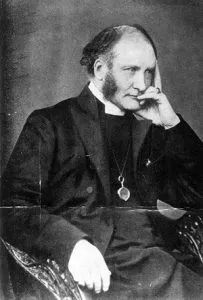
📊 Fast Facts & Overview: Robert Bickersteth (bishop)
| Full Name | Robert Bickersteth |
| Birth Date | 24 August 1816 |
| Death Date | 15 April 1884 |
| Office | Bishop of Ripon |
| Term | 1857–1884 |
Robert Bickersteth (1816–1884) was an English clergyman who served as the Lord Bishop of Ripon, leading the diocesan administration during a period of rapid industrial and demographic change in the West Riding of Yorkshire. Appointed to the episcopate in 1857, he oversaw substantial church building initiatives, the augmentation of pastoral care, and the establishment of new parishes to serve growing urban centers. As a prominent evangelical figure within the Church of England, his tenure was characterized by active engagement in social reforms, educational development, and theological debates of the mid-Victorian era.
1. Background & Historical Origins
Born on 24 August 1816, Robert Bickersteth was the fourth son of John Bickersteth, rector of Sapcote, and Henrietta Smith. He belonged to a prominent clerical family deeply embedded in the evangelical wing of the Church of England; his uncles included the Edward Bickersteth and Henry Bickersteth, 1st Baron Langdale. He received his early education at home before entering Queens' College, Cambridge, where he graduated with a Bachelor of Arts degree in 1841, later proceeding to Master of Arts in 1845. Ordained as a deacon in 1839 and as a priest in 1840, Bickersteth held early curacies in Essex and Leicestershire before securing prominent incumbencies. His ministerial path included charges at St. John's Church, Clapham, and St. Giles-in-the-Fields in London. During these ministries, he earned a reputation as an eloquent and persuasive preacher, drawing large congregations and aligning himself closely with the evangelical platform that emphasized personal piety, scriptural authority, and active pastoral outreach.
2. Characteristics, Architecture & Analysis
Upon the translation of Bishop Charles Longley to the see of Durham, Prime Minister Lord Palmerston nominated Bickersteth to the Bishopric of Ripon in 1857. Consecrated at Westminster Abbey on 1 May 1857, Bickersteth assumed administration over a geographically vast and increasingly industrialized diocese. His episcopate coincided with the height of the Industrial Revolution in the West Riding of Yorkshire, where towns such as Leeds, Bradford, and Sheffield experienced massive population influxes. To address the spiritual deficit caused by this rapid urbanization, Bickersteth initiated aggressive church-building programs. He established the Ripon Diocesan Church Building Society, facilitating the erection of dozens of new churches and parsonages. Politically and theologically, Bickersteth maintained a moderate evangelical stance. While he strongly opposed Tractarian and Ritualistic practices within the Church of England—frequently participating in parliamentary and ecclesiastical debates concerning liturgical conformity—he avoided extreme partisanship, focusing primarily on administrative efficiency, pastoral visitation, and the expansion of educational facilities for the working classes.
3. Significance, Legacy & Modern Influence
Bishop Bickersteth's tenure at Ripon extended over twenty-seven years, concluding with his death on 15 April 1884 at the episcopal palace in Ripon. He was buried in the cemetery at Ripon Cathedral. His legacy within the ecclesiastical history of northern England is defined by his administrative adaptability in managing a diocese strained by industrialization. By prioritizing church extension and pastoral deployment, he laid the organizational groundwork for the later division of the diocese into smaller administrative units, such as the Diocese of Wakefield. Biographers and historians of the Victorian church note that Bickersteth exemplified the mid-19th-century evangelical bishop who combined traditional piety with pragmatic administrative capability, successfully navigating the institutional pressures of the Victorian Church of England.
📚 References & Primary Sources
- Bickersteth, Montague. A Memoir of Robert Bickersteth, Bishop of Ripon. London: Rivingtons, 1887.
- Nockles, Peter Benedict. The Oxford Movement in Context: Anglican High Churchmanship, 1760-1857. Cambridge University Press, 1994.
- Dictionary of National Biography. 'Bickersteth, Robert'. Oxford University Press, 1885–1900.
- External Authority: Church of England Official Record →
- External Authority: Encyclopaedia Britannica Archive →