Willem Buys
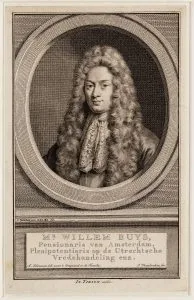
📊 Fast Facts & Overview: Willem Buys
| Name | Willem Buys |
| Birth Year | 1661 |
| Death Year | 1749 |
| Nationality | Dutch |
| Profession | Statesman and Diplomat |
Willem Buys (1661–1749) was a Dutch statesman and diplomat who served as the Grand Pensionary of Gouda and directed significant foreign policy initiatives for the Dutch Republic during the War of the Spanish Succession. Born in Amsterdam, Buys rose to prominence through his administrative acumen, representing Dutch interests in major European congresses and maintaining critical alliances with Great Britain.
1. Background & Historical Origins
Willem Buys was born into a prominent patrician family in Amsterdam during the Dutch Golden Age. He received a rigorous education in law and classical literature, laying the groundwork for a career in municipal administration. Entering the political sphere of Gouda, Buys advanced rapidly through the ranks of the civic magistracy, eventually securing the powerful position of Grand Pensionary. In this capacity, he functioned as the primary legal advisor and chief representative of the city's governing council, positioning himself at the center of Holland's provincial politics.
2. Characteristics, Architecture & Analysis
As a diplomat, Buys was characterized by his pragmatic approach to European balance-of-power politics. He engaged in extensive negotiations with foreign powers, most notably working alongside British plenipotentiaries to draft peace terms during the latter stages of the War of the Spanish Succession. His administrative style favored commercial stability and Protestant solidarity against French hegemony. Buys maintained voluminous correspondence with leading European figures of the era, reflecting a sophisticated understanding of international jurisprudence and geopolitical strategy.
3. Significance, Legacy & Modern Influence
Buys's diplomatic efforts contributed directly to the stabilization of the Dutch Republic's borders and the preservation of its trading interests through the Treaty of Utrecht. Although the Republic faced mounting financial burdens and a relative decline in its global hegemony during the 18th century, statesmen like Buys managed to sustain its diplomatic relevance among European superpowers. Historiographical assessments evaluate him as a quintessential representative of the Dutch regency class: industrious, legally minded, and fiercely protective of civic liberties.
📚 References & Primary Sources
- Israel, Jonathan I. The Dutch Republic: Its Rise, Greatness, and Fall 1477-1806. Oxford University Press, 1995.
- Geyl, Pieter. History of the Low Countries. Ernest Benn Ltd., 1964.
- Rommelse, Gijs. The Second Anglo-Dutch War: (1665-1667). Verloren, 2006.
- External Authority: Encyclopaedia Britannica Archive →
- External Authority: Dutch National Archives →