William Bentinck (Royal Navy officer)
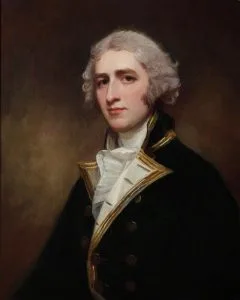
📊 Fast Facts & Overview: William Bentinck (Royal Navy officer)
| Full Name | William Bentinck |
| Birth Year | 1764 |
| Death Year | 1813 |
| Allegiance | United Kingdom |
| Service Branch | Royal Navy |
| Rank | Rear-Admiral |
William Bentinck (1764–1813) was a British Royal Navy officer and Parliamentarian who achieved the rank of rear-admiral, seeing extensive operational service during the late 18th and early 19th-century maritime conflicts. Born into the prominent Anglo-Dutch Bentinck family as the son of Captain John Albert Bentinck, he combined a distinguished naval career with political service in the House of Commons. His commands at sea spanned multiple theaters of the French Revolutionary and Napoleonic Wars before his career was cut short by his death at age 48.
1. Background & Early Life
William Bentinck was born in 1764, the second son of Captain John Albert Bentinck, a Dutch-born naval officer in British service, and Renira van Tuyll van Serooskerken. Belonging to the House of Bentinck—a noble family with close ties to the British and Dutch monarchies—he entered the Royal Navy at an early age. Following the established pattern for young gentlemen of aristocratic lineage, he received practical training aboard various King's ships, gaining foundational experience in seamanship, navigation, and naval gunnery during a period of escalating imperial rivalry.
2. Naval Career & Military Service
Bentinck progressed steadily through the commissioned ranks of the Royal Navy, securing promotion to post-captain in 1792. Throughout the French Revolutionary Wars, he commanded several vessels, undertaking patrols, convoy escorts, and blockade duties in European waters. His administrative and tactical competence earned him favorable dispatches from the Admiralty. In addition to his seagoing duties, Bentinck pursued a parliamentary career, representing constituencies such as Stockbridge in the House of Commons, where his votes generally aligned with naval and government interests. He attained flag rank as a rear-admiral of the blue on August 1, 1810, though failing health ultimately restricted his active flag-command appointments ashore and afloat during the latter stages of the Napoleonic Wars.
3. Significance, Legacy & Death
Rear-Admiral William Bentinck died on February 21, 1813, leaving behind a legacy reflective of the dual roles often assumed by the Georgian naval aristocracy, who balanced military command with political representation. While he did not command a fleet in a major pitched battle of the era, his decades of steady service contributed to the operational readiness and administrative efficiency of the Royal Navy at the height of its global dominance. His lineage ensured his descendants continued prominent roles in British military and civil administration.
📚 References & Primary Sources
- Marshall, John (1823–1835). Royal Naval Biography. London: Longman, Hurst, Rees, Orme, and Brown.
- Rothery, W. (1986). The House of Commons, 1790-1820. Secker & Warburg for the History of Parliament Trust.
- Winfield, Rif (2008). British Warships in the Age of Sail 1793–1817: Design, Construction, Careers and Fates. Seaforth Publishing.
- External Authority: Royal Naval Biography Database →
- External Authority: History of Parliament Online →