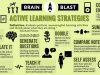
Active Recall Vs. Passive Review: A Comparative Analysis For Students
Executive Summary

This comprehensive analysis meticulously compares the efficacy of active recall and passive review as learning techniques for students. By delving into the cognitive mechanisms underlying each approach, we unveil the myriad benefits of active recall and its superiority in promoting long-term knowledge retention.

Introduction
The pursuit of knowledge demands effective learning strategies that maximize comprehension and retention. Among the plethora of techniques at students’ disposal, active recall and passive review stand out as prominent methodologies. This article will dissect the intricacies of both approaches, highlighting their distinct mechanisms and contrasting their effectiveness in fostering academic success.
FAQs
What is active recall?
- A learning technique that involves actively retrieving information from memory.
- Examples include: flashcards, quizzes, and self-testing.
What is passive review?
- A learning technique that involves passively consuming information.
- Examples include: re-reading notes, highlighting, and spaced repetition.
Which is more effective, active recall or passive review?
- Research consistently demonstrates the superiority of active recall for long-term knowledge retention.
Subtopics
1. Mechanisms of Memory
- Active recall: Strengthens the neural pathways associated with the retrieved information.
- Passive review: Merely reactivates existing neural pathways without enhancing connections.
2. Long-Term Retention
- Active recall: Facilitates the formation of strong, durable memories that can withstand the test of time.
- Passive review: Temporary memory boost that rapidly decays over time.
3. Cognitive Engagement
- Active recall: Demands a higher level of cognitive effort, promoting deeper processing and comprehension.
- Passive review: Minimal cognitive engagement, resulting in superficial learning.
4. Transfer of Learning
- Active recall: Enhances the ability to apply knowledge to new situations and solve problems effectively.
- Passive review: Limited transferability, as knowledge is passively stored and not actively integrated.
5. Metacognition
- Active recall: Fosters metacognitive awareness, helping students understand their strengths and weaknesses.
- Passive review: Does not promote metacognition, as students rely on external cues rather than self-assessment.
Conclusion
The evidence unequivocally points to the superiority of active recall as a learning technique. By actively retrieving information, students forge stronger neural connections that enhance long-term retention, cognitive engagement, transfer of learning, and metacognition. Embracing active recall empowers students to become self-directed learners who retain knowledge effortlessly and apply it confidently in real-world scenarios.
Keyword Tags
- Active recall
- Passive review
- Learning strategies
- Memory techniques
- Student success