
1. Quizzing Yourself Regularly: Create flashcards, use online quizzing platforms, or test yourself with practice questions to actively recall and reinforce concepts.
2. Spaced Repetition: Review material at increasing intervals (e.g., 1 hour, 1 day, 1 week) to strengthen memory recall. Use flashcards or spaced repetition software for this.
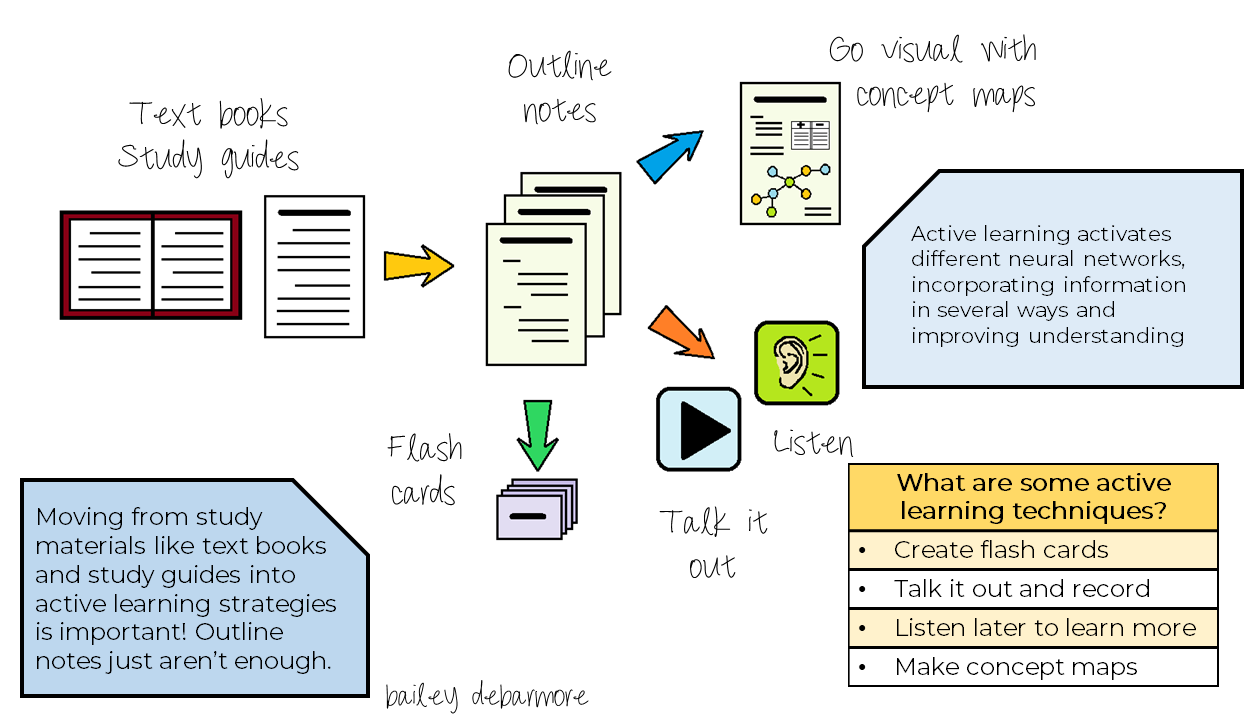
3. Active Recall: Try to recall information without looking at your notes or books. This forces you to think critically and identify areas where you need further understanding.
4. Mind Mapping: Create visual representations of key concepts and their connections. This helps you organize and connect information effectively.
5. Collaborative Learning: Study with classmates, discuss concepts, and test each other to enhance understanding through peer interaction.
6. Teaching Others: Explain concepts to a friend, family member, or study buddy. This forces you to articulate your knowledge and identify gaps in your understanding.
7. Solving Practice Problems: Engage in solving real-world or exam-style problems to apply the concepts you’ve learned and identify areas where you need improvement.
8. Simulations and Role-Playing: Practice responding to real-life scenarios or simulations to develop practical skills and enhance comprehension.
9. Concept Mapping: Identify relationships between concepts and construct a hierarchical diagram that shows the flow of information and connections.
10. Technology-Enhanced Learning: Utilize educational apps, videos, simulations, and online platforms to supplement your learning and engage different learning styles.## Executive Summary
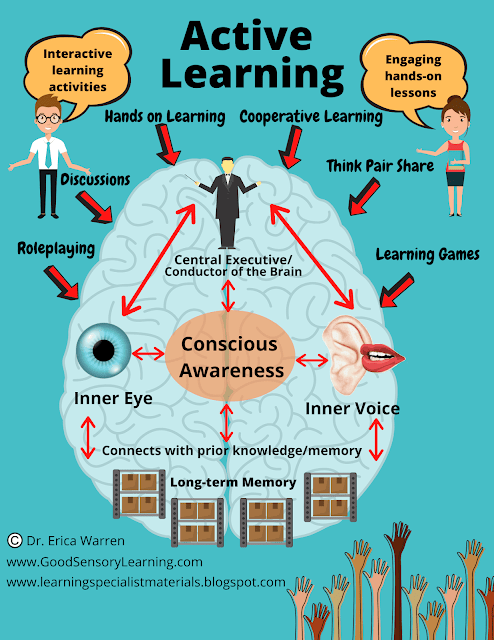
Active learning is a teaching and learning method that encourages students to take an active role in their learning. This can be done through a variety of techniques such as discussions, simulations, problem solving, and games. Active learning has been shown to improve student engagement, motivation, and academic achievement.
Introduction
In today’s competitive academic environment, students are increasingly looking for ways to improve their exam performance. One of the most effective ways to do this is to use active learning techniques. Active learning is a teaching and learning method that encourages students to take an active role in their learning. This can be done through a variety of techniques such as discussions, simulations, problem solving, and games.
FAQs
- What is active learning?
Active learning is a teaching and learning method that encourages students to take an active role in their learning. This can be done through a variety of techniques such as discussions, simulations, problem solving, and games. - Why is active learning important?
Active learning has been shown to improve student engagement, motivation, and academic achievement. - How can I use active learning in my classroom?
There are a variety of active learning techniques that can be used in the classroom. Some of the most common techniques include:- Discussions: Discussions allow students to share their thoughts and ideas with each other. This can help students to learn from each other and to develop their critical thinking skills.
- Simulations: Simulations allow students to experience real-world situations in a safe and controlled environment. This can help students to learn how to solve problems and make decisions.
- Problem solving: Problem solving activities allow students to apply their knowledge and skills to solve real-world problems. This can help students to develop their problem-solving skills and to learn how to think critically.
- Games: Games can be a fun and engaging way to learn. Games can be used to teach a variety of concepts, and they can help students to develop their teamwork and problem-solving skills.
Top 5 Subtopics
Item Pools and Question Banks
Item pools and question banks are collections of practice items and questions that can be used by learners to assess their knowledge and skills. Question banks typically contain a large number of questions organized by topic, difficulty level, or other criteria. Item pools are similar to question banks but may also include items not intended for immediate use, such as questions that are in development or that have been discarded.
- Benefits of using item pools and question banks
- Provide learners with a large number of practice items and questions to choose from
- Allow learners to assess their knowledge and skills in a variety of areas
- Help learners to identify areas where they need additional practice
- Important considerations when using item pools and question banks
- Ensure that the items and questions are relevant to the learning objectives
- Choose items and questions that are of the appropriate difficulty level
- Monitor learner performance to identify areas where additional support is needed
Retrieval Practice
Retrieval practice is the process of actively trying to recall information from memory. This can be done through a variety of methods, such as flashcards, practice tests, or self-quizzing. Retrieval practice has been shown to improve memory retention and retrieval speed.
- Benefits of retrieval practice
- Improves memory retention and retrieval speed
- Helps learners to identify areas where they need additional practice
- Encourages learners to think more deeply about the material
- Important considerations when using retrieval practice
- Space out retrieval practice sessions over time
- Use cues to help learners recall information
- Provide feedback after each retrieval attempt
Elaboration
Elaboration is the process of connecting new information to existing knowledge. This can be done by explaining the new information to someone else, writing about it, or creating a diagram or other visual representation. Elaboration can help learners to understand the new information more deeply and to remember it more easily.
- Benefits of elaboration
- Helps learners to understand new information more deeply
- Improves memory retention
- Promotes critical thinking and problem-solving skills
- Important considerations when using elaboration
- Encourage learners to explain the new information in their own words
- Provide opportunities for learners to share their elaborations with others
- Provide feedback on learners’ elaborations
Interleaving
Interleaving is the process of mixing up different types of questions and problems within a single practice session. This can help learners to improve their ability to transfer knowledge and skills to new situations.
- Benefits of interleaving
- Improves transfer of knowledge and skills to new situations
- Encourages learners to think more flexibly
- Reduces the likelihood of forgetting
- Important considerations when using interleaving
- Start with small amounts of interleaving and gradually increase the amount over time
- Choose questions and problems that are related to the same topic
- Provide feedback on learners’ interleaving practice
Spaced Practice
Spaced practice is the process of distributing learning over time, rather than cramming everything in at once. This can help learners to remember information more easily and for longer periods of time.
- Benefits of spaced practice
- Improves memory retention
- Reduces the likelihood of forgetting
- Promotes better understanding of the material
- Important considerations when using spaced practice
- Space out learning sessions over time
- Use a variety of learning activities
- Provide feedback after each learning session
Conclusion
Active learning techniques can be a powerful tool for improving exam performance. By using these techniques, students can engage more deeply with the material, improve their understanding, and retain information more easily. Teachers can also use active learning techniques to create more engaging and effective learning experiences for their students.
Keyword Tags
active learning, exam performance, learning techniques, spaced practice, retrieval practice