
Pros:
- Convenience: Online learning offers flexibility and convenience, allowing students to learn at their own pace and on their own schedule.
- Accessibility: Online courses are accessible from anywhere with an internet connection, making it ideal for students who cannot attend traditional in-person classes.
- Personalized Learning: Some online platforms provide personalized learning experiences, tailoring content and assignments to individual student needs.
- Cost-Effective: Online learning can be more affordable than traditional in-person classes, as it eliminates transportation and parking costs.
- Global Reach: Online courses connect students with educators and classmates from around the world, fostering global perspectives and cultural exchange.
- Self-Discipline: Online learning requires self-discipline and time management skills, promoting independence and responsibility.
- Career Advancement: Online degrees and certifications can enhance career prospects by providing up-to-date knowledge and skills.
Cons:
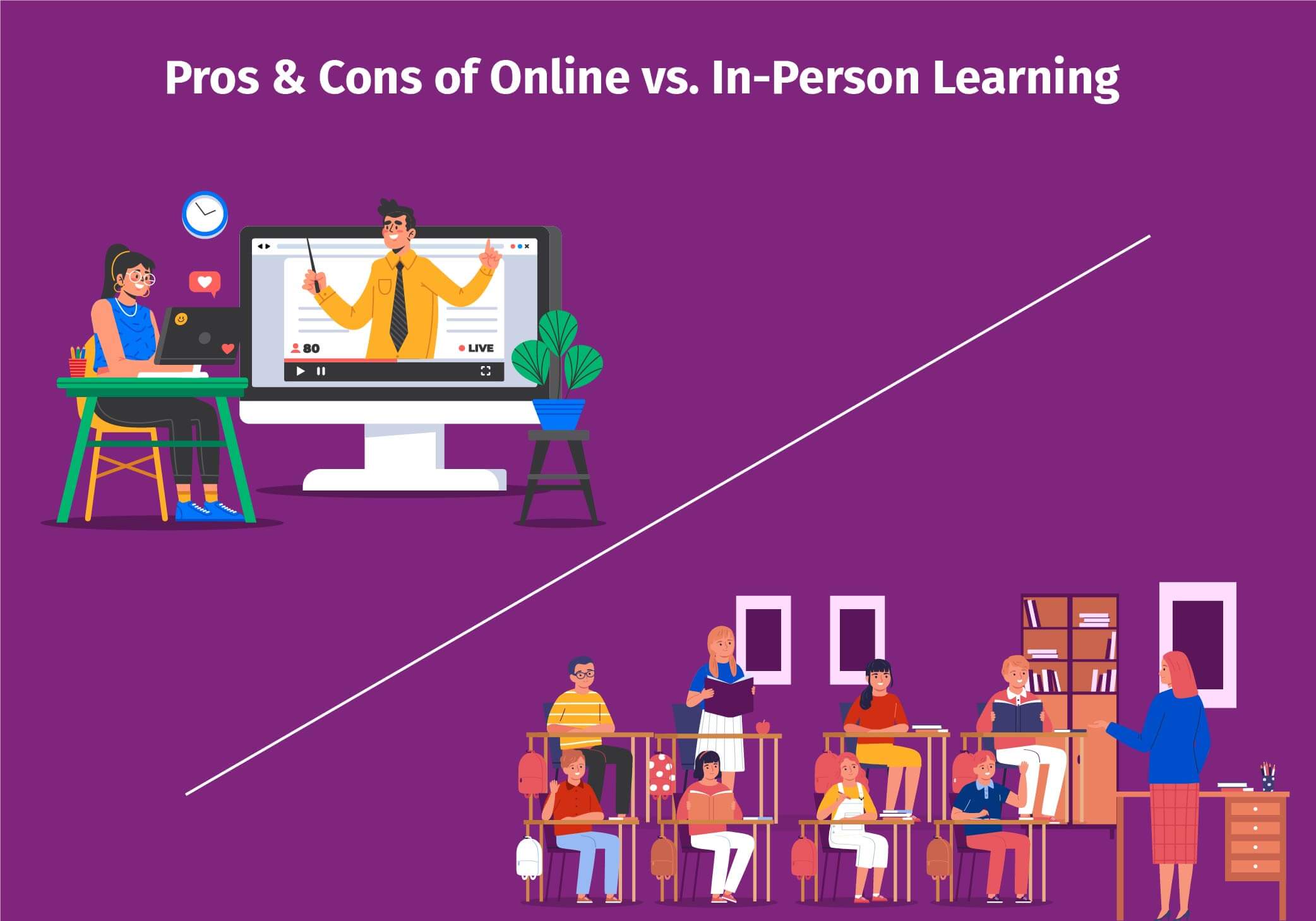
- Lack of In-Person Interaction: Online learning lacks the face-to-face contact with instructors and classmates, which can hinder collaboration, socialization, and peer support.
- Technical Difficulties: Online learning relies on technology, and students may encounter technical issues such as connectivity problems or software glitches.
- Motivation Challenges: Without the structure and motivation of a physical classroom setting, some students may struggle to stay motivated and engaged.
- Limited Hands-On Experiences: Certain subjects, such as laboratory sciences or practical skills, may not translate well to online formats due to the need for hands-on experiences.
- Isolation: Online learning can lead to social isolation, as students may miss out on the social connections and camaraderie of traditional classroom environments.
- Assessment Challenges: Ensuring academic integrity and assessing student work can be more challenging in online settings.
- Equity Concerns: Access to reliable internet and devices may vary, creating equity issues for students from disadvantaged backgrounds.# Online Learning: The Pros And Cons
Executive Summary
Online learning has become increasingly popular in recent years, offering students the flexibility and convenience of studying from anywhere in the world. However, it also has its drawbacks, such as the lack of face-to-face interaction and the need for self-motivation. This article will explore the pros and cons of online learning, helping you decide if it is the right option for you.
Introduction
Online learning is a form of education that takes place over the internet. Students can access course materials, complete assignments, and interact with instructors and classmates virtually. This type of learning has become increasingly popular in recent years, as it offers students a number of advantages over traditional face-to-face instruction.
FAQ
1. What are the benefits of online learning?
There are many benefits to online learning, including:
- Flexibility: Students can learn at their own pace and on their own schedule.
- Convenience: Students can access course materials and complete assignments from anywhere with an internet connection.
- Affordability: Online learning is often more affordable than traditional face-to-face instruction.
- Variety: Students can choose from a wide variety of courses and programs.
2. What are the challenges of online learning?
There are also some challenges to online learning, including:
- Lack of face-to-face interaction: Students may miss out on the social and interactive aspects of traditional face-to-face instruction.
- Need for self-motivation: Students need to be self-motivated to succeed in an online learning environment.
- Technical difficulties: Students may experience technical difficulties that can interfere with their learning.
3. Is online learning right for me?
Whether or not online learning is right for you depends on a number of factors, including:
- Your learning style
- Your schedule
- Your budget
- Your technology skills
Pros
1. Flexibility
One of the biggest advantages of online learning is its flexibility. Students can learn at their own pace and on their own schedule. This is ideal for students who have busy schedules or who live far from a traditional college or university.
2. Convenience
Online learning is also very convenient. Students can access course materials and complete assignments from anywhere with an internet connection. This means that students can learn from home, work, or even while traveling.
3. Affordability
Online learning is often more affordable than traditional face-to-face instruction. This is because online programs do not have to pay for the costs of maintaining a physical campus.
4. Variety
Online learning offers a wide variety of courses and programs. This means that students can find the perfect program for their needs and interests.
5. Accessibility
Online learning is accessible to students with disabilities. Students who have difficulty attending traditional face-to-face classes can often find online programs that meet their needs.
Cons
1. Lack of face-to-face interaction
One of the biggest challenges of online learning is the lack of face-to-face interaction. Students may miss out on the social and interactive aspects of traditional face-to-face instruction.
2. Need for self-motivation
Students need to be self-motivated to succeed in an online learning environment. Students who are not self-motivated may find it difficult to stay on track and complete their coursework.
3. Technical difficulties
Students may experience technical difficulties that can interfere with their learning. These difficulties can include problems with internet connectivity, software compatibility, and hardware issues.
4. Lack of structure
Online learning can lack structure, which can make it difficult for students to stay on track. Students may need to be more self-disciplined and organized in order to succeed in an online learning environment.
5. Assessment challenges
It can be difficult to assess student learning in an online environment. This can make it difficult for instructors to provide feedback and students to track their progress.
Conclusion
Online learning has both pros and cons. It is important to weigh the advantages and disadvantages carefully before making a decision about whether or not online learning is right for you. If you are self-motivated, have a flexible schedule, and are comfortable with technology, then online learning may be a good option for you. However, if you prefer face-to-face interaction, need a lot of structure, or have difficulty with technology, then online learning may not be the best choice for you.
Keyword Tags
- Online learning
- Pros and cons
- Flexibility
- Convenience
- Affordability