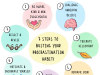
Supercharge Your Productivity: Harnessing the Power of Habits
In the relentless pursuit of productivity, habits play a pivotal role. They automate our actions, freeing up mental energy and allowing us to focus on more complex tasks. By leveraging the power of habits, individuals can significantly enhance their efficiency and achieve greater success.

The Habit Loop and How to Build New Habits

The foundation of habit formation lies in the habit loop. This neurological cycle consists of three distinct phases:
- Cue: A trigger that prompts the habit.
- Routine: The action performed in response to the cue.
- Reward: The positive reinforcement that reinforces the habit.
To establish new habits, individuals must repeat the habit loop consistently. Over time, the brain strengthens the neural pathways associated with the cue and routine, making the habit automatic.
Tips for Creating Effective Habits
- Identify High-Value Activities: Determine which tasks or behaviors contribute most to your goals and focus on building habits around them.
- Set Clear Goals: Define specific, measurable, attainable, relevant, and time-bound goals for your habits.
- Break Down Habits: Large habits can be overwhelming. Break them into smaller, manageable steps to make them easier to implement.
- Find Your Triggers: Identify the cues that naturally prompt you to perform the desired behavior.
- Provide Positive Reinforcement: Reward yourself with something you enjoy after completing the habit. This reinforces the loop and makes it more likely to stick.
- Be Patient and Consistent: Habit formation takes time and consistency. Don’t get discouraged if you slip up occasionally. Simply recommit to the loop and keep practicing.
Benefits of Leveraging Habits for Productivity
- Increased Efficiency: Habits automate tasks, freeing up cognitive resources for more important activities.
- Reduced Decision Fatigue: When actions become automatic, individuals have less need to expend energy on decision-making.
- Improved Consistency: Habits provide a reliable framework for completing tasks, ensuring consistent performance over time.
- Enhanced Focus: By offloading routine tasks to habits, individuals can focus their attention on higher-level strategic thinking.
- Reduced Stress: Habits reduce the uncertainty and stress associated with decision-making, leading to increased peace of mind.
Conclusion
Harnessing the power of habits is an invaluable tool for supercharging productivity. By understanding the habit loop and implementing effective strategies for habit formation, individuals can automate their actions, reduce mental fatigue, and achieve greater success in all areas of life. Remember that consistency and patience are key, and the rewards of established habits will far outweigh the initial effort required to create them.## Executive Summary
This comprehensive guide delves into the transformative power of habits, empowering you to optimize your productivity and achieve remarkable results. By mastering the art of habit formation, you can unlock a wealth of benefits, including increased efficiency, reduced stress, and enhanced motivation.
Introduction
In the tapestry of our lives, habits play a pivotal role. They are the invisible threads that weave together our behaviors, shaping our actions and determining our outcomes. By consciously crafting and cultivating positive habits, we can harness their power to elevate our productivity and propel ourselves towards success.
FAQs
What is a habit?
Habits are ingrained sequences of behavior that occur automatically in response to specific cues. They are formed through repetition and reinforcement, becoming deeply embedded in our neural pathways.
Why are habits important?
Habits serve as automated responses that free up our mental energy for more complex tasks. They provide structure and routine to our lives, reducing decision fatigue and increasing our efficiency.
How can I form new habits?
Forming new habits requires consistency, repetition, and reinforcement. Identify a desired behavior, establish a clear cue, and reward yourself for completing the action. The more you practice the habit, the stronger it will become.
Subtopics
Trigger Identification
Triggers are the cues that initiate a habit. Identifying these triggers is crucial for understanding the underlying mechanisms of your habits.
- Internal Triggers: Emotions, thoughts, or physical sensations that prompt you to act.
- External Triggers: Environmental cues, such as time of day or the presence of others.
- Compound Triggers: Combinations of internal and external triggers that work together to activate a habit.
Cue-Behavior Association
Once a trigger is identified, it needs to be associated with a specific behavior. This is the “cue-behavior” link that forms the foundation of a habit.
- Clarity: Define the desired behavior precisely, leaving no room for ambiguity.
- Consistency: Perform the behavior consistently in response to the trigger.
- Repetition: Repeat the behavior multiple times to strengthen the association.
Reward System
Rewards play a critical role in reinforcing habits. When a behavior leads to a perceived reward, the brain releases neurotransmitters that promote habit formation.
- Intrinsic Rewards: Internal feelings of satisfaction, accomplishment, or fulfillment.
- Extrinsic Rewards: Tangible rewards, such as treats or monetary incentives.
- Delay Gratification: Allowing some time between the behavior and the reward can enhance habit strength.
Behavioral Maintenance
Once a habit is formed, it requires ongoing maintenance to stay strong. This involves continuously repeating the behavior and rewarding yourself for doing so.
- Consistency: Maintain a regular schedule for performing the habit.
- Accountability: Share your habit goals with others or use a tracking tool to stay motivated.
- Adaptability: Be willing to adjust the habit as needed to maintain its effectiveness.
Habit Stacking
Habit stacking is a powerful technique that involves linking new habits to existing ones. By associating a new behavior with an established routine, you can increase its chances of success.
- Identify Anchor Habits: Choose habits that you perform regularly and reliably.
- Add New Habits: Introduce new behaviors that complement or follow the anchor habits.
- Consistency: Repeat the linked behaviors repeatedly to create a strong habit chain.
Conclusion
Harnessing the power of habits is a transformative journey that can lead to remarkable productivity gains. By understanding the mechanisms of habit formation and applying the principles outlined in this guide, you can cultivate positive habits that will empower you to achieve your goals, enhance your well-being, and unlock your full potential.
Keyword Tags
- Productivity
- Habits
- Behavior Change
- Habit Formation
- Habit Stacking