====== Automated grading ======
Automated Grading: Revolutionizing Assessment in Education
In the ever-evolving landscape of education, technology has emerged as a powerful ally, transforming the way we teach, learn, and assess. Among the most significant advancements is the rise of automated grading, a process that utilizes artificial intelligence (AI) to evaluate student work with unparalleled speed, efficiency, and accuracy.
What is Automated Grading?
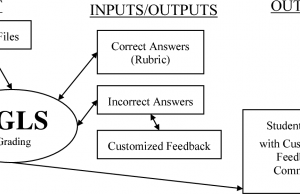
Automated grading employs computer algorithms to analyze and score student responses, providing timely feedback that was once impossible to deliver at scale. This technology can assess various types of assignments, including multiple-choice questions, short answer responses, essays, and even coding assignments.
Benefits of Automated Grading
The adoption of automated grading offers a myriad of benefits for both educators and students:
For Educators:
- Time savings: Automated grading significantly reduces the time spent on manual grading, freeing up educators to focus on more value-added activities, such as providing personalized feedback and support to students.
- Enhanced feedback: Automated grading systems can provide instant feedback to students, allowing them to identify areas for improvement and reinforce concepts in real-time.
- Reduced bias: Unlike human graders, automated grading systems are unbiased and objective, ensuring fair and consistent evaluation for all students.
For Students:
- Rapid feedback: Students receive immediate feedback on their performance, enabling them to adjust their study habits accordingly and improve their understanding of the subject matter.
- Improved understanding: The automated feedback provided by these systems helps students identify areas where they need additional support and provides opportunities for further learning.
- Increased motivation: Automated grading can boost student motivation by providing them with a clear understanding of their progress and the areas where they need to improve.
How Automated Grading Works
Automated grading systems typically use a combination of natural language processing (NLP) and machine learning (ML) algorithms to analyze student responses. Natural language processing allows the system to understand the text of student responses, while machine learning enables the system to learn from examples and improve its accuracy over time.
The Future of Automated Grading
As technology continues to advance, automated grading is expected to become even more sophisticated and widely adopted. AI-powered systems will likely be able to provide more detailed and personalized feedback, analyze complex assignments, and detect plagiarism and other forms of academic dishonesty.
Secondary Keywords:
- Automatic grading
- AI-powered grading
- Automated feedback
- Machine learning in education
- Grading efficiency