
The Future of Education: AI-Powered Personalized Learning
Artificial intelligence (AI) has the potential to revolutionize the way we learn, making education more personalized, engaging, and effective. AI-driven technologies can empower educators to create tailored learning experiences that cater to each student’s unique needs, abilities, and learning styles.
Benefits of AI-Powered Personalized Learning:
- Individualized Learning Paths: AI algorithms can analyze student data, such as assessment results, learning patterns, and preferences, to create customized learning plans that adjust to progress and identify areas for improvement.
- Adaptive Content Delivery: AI-powered systems can deliver content in formats and difficulty levels that are appropriate for each student, ensuring they are challenged but not overwhelmed.
- Real-Time Feedback: AI algorithms can monitor student progress and provide immediate feedback, enabling students to pinpoint errors and make corrections as they learn.
- Targeted Support: AI systems can identify students struggling with specific concepts and provide targeted interventions, such as additional practice or supplemental materials.
- Empowering Educators: AI tools can free up educators from repetitive tasks, allowing them to focus on creating engaging lessons and providing personalized support to students.
Applications of AI in Personalized Learning:
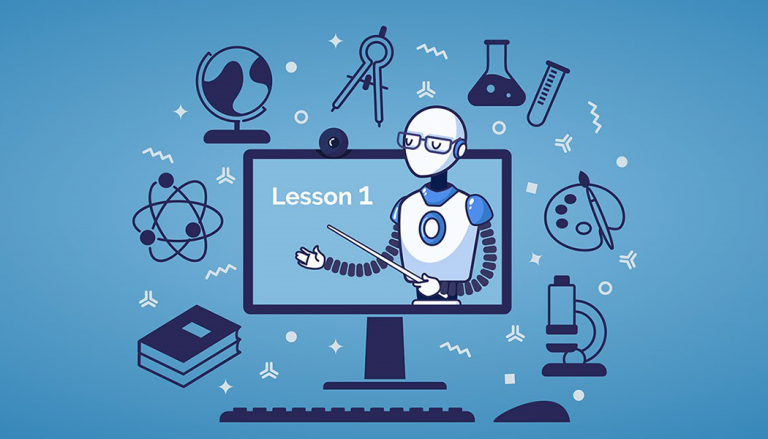
- Intelligent Tutoring Systems: AI-powered tutors provide individualized instruction, answering questions, guiding students through problems, and offering encouragement.
- Adaptive Learning Software: These programs adjust to each student’s progress, providing challenges and support tailored to their needs.
- Learning Analytics Dashboards: AI algorithms analyze student data to provide insights into learning patterns, areas of strength, and opportunities for growth.
- Virtual Reality (VR) and Augmented Reality (AR) Experiences: AI-enhanced VR and AR simulations can create immersive and personalized learning environments.
- Educational Chatbots: AI-powered chatbots can provide students with on-demand assistance, answering questions and offering support.
Challenges and Considerations:
- Data Privacy and Security: AI systems rely on student data, so it is crucial to address data privacy concerns and ensure the secure storage and use of information.
- Bias and Fairness: AI algorithms must be trained on unbiased data to avoid perpetuating existing disparities in education.
- Educator Training and Support: Educators need training in using and integrating AI technologies effectively in the classroom.
- Equity and Accessibility: AI-powered personalized learning should be accessible to all students, regardless of their background or circumstances.
Conclusion:
AI-powered personalized learning has the potential to transform education by making it more tailored, engaging, and effective. As AI technologies continue to advance, we can expect even more innovative and transformative applications in the future of learning. However, it is essential to consider the challenges and ensure that AI is used in an ethical, unbiased, and equitable manner to maximize its benefits for all students.## The Future Of Education: Ai-powered Personalized Learning
Executive Summary
The future of education is here, and it is driven by artificial intelligence (AI). AI-powered personalized learning is a new approach to education that uses data to tailor instruction to the needs of each individual student. This approach has the potential to revolutionize education by making it more effective, efficient, and engaging.
Introduction
Education is at a crossroads. The traditional one-size-fits-all approach is no longer adequate to meet the needs of today’s diverse learners. AI-powered personalized learning offers a way to address this challenge by providing each student with a unique learning experience that is tailored to their individual needs.
FAQs
What is AI-powered personalized learning?
AI-powered personalized learning is a new approach to education that uses data to tailor instruction to the needs of each individual student. This approach leverages AI algorithms to analyze student data, such as their learning style, strengths, and weaknesses. This data is then used to create personalized learning plans that are designed to help each student reach their full potential.
What are the benefits of AI-powered personalized learning?
AI-powered personalized learning has a number of benefits, including:
- Increased student engagement: Students are more likely to be engaged in learning when they are presented with material that is relevant to their interests and needs.
- Improved student outcomes: AI-powered personalized learning can help students to achieve better academic outcomes by providing them with the support and resources they need to succeed.
- Reduced costs: AI-powered personalized learning can help to reduce the cost of education by providing more efficient and effective instruction.
How can I implement AI-powered personalized learning in my classroom?
There are a number of ways to implement AI-powered personalized learning in the classroom. One way is to use an AI-powered learning platform. These platforms provide teachers with the tools they need to create personalized learning plans for their students. Another way to implement AI-powered personalized learning is to use AI-powered tutoring tools. These tools can provide students with personalized support and feedback on their work.
Top 5 Subtopics
1. Adaptive Learning
Adaptive learning is a type of AI-powered personalized learning that uses data to adjust the difficulty of instruction based on the student’s progress. This approach ensures that students are always challenged, but never overwhelmed.
- Real-time feedback: Adaptive learning platforms provide students with real-time feedback on their work, so they can identify areas where they need to improve.
- Personalized learning paths: Adaptive learning platforms create personalized learning paths for each student, based on their individual needs and goals.
- Gamification: Many adaptive learning platforms use gamification to make learning more fun and engaging.
2. Virtual Reality (VR)
VR is a powerful tool that can be used to create immersive learning experiences. VR can be used to take students on virtual field trips, or to allow them to explore historical events or scientific phenomena.
- Immersive experiences: VR can create immersive learning experiences that are not possible in the real world.
- Real-world simulations: VR can be used to create realistic simulations of real-world experiences, allowing students to learn in a safe and controlled environment.
- Increased motivation: VR can be used to increase student motivation by making learning more fun and engaging.
3. Augmented Reality (AR)
AR is another powerful tool that can be used to create interactive learning experiences. AR can be used to overlay digital information onto the real world, allowing students to learn about their surroundings in a new way.
- Interactive experiences: AR can be used to create interactive learning experiences that allow students to explore their surroundings and learn in a more hands-on way.
- Contextual learning: AR can be used to provide contextual learning experiences, by providing students with information about their surroundings.
- Increased engagement: AR can be used to increase student engagement by making learning more fun and interactive.
4. Natural Language Processing (NLP)
NLP is a type of AI that allows computers to understand and generate human language. NLP can be used to develop AI-powered tutoring tools that can provide students with personalized feedback on their work.
- Personalized feedback: NLP-powered tutoring tools can provide students with personalized feedback on their work, so they can identify areas where they need to improve.
- Real-time support: NLP-powered tutoring tools can provide students with real-time support, so they can get help when they need it.
- Automated grading: NLP-powered tutoring tools can be used to automate grading, freeing up teachers to focus on other tasks.
5. Machine Learning (ML)
ML is a type of AI that allows computers to learn from data. ML can be used to develop AI-powered learning platforms that can adapt to the needs of individual students.
- Personalized learning recommendations: ML-powered learning platforms can provide students with personalized learning recommendations, based on their individual needs and goals.
- Early intervention: ML-powered learning platforms can be used to identify students who are at risk of falling behind, so they can receive early intervention.
- Predictive analytics: ML-powered learning platforms can be used to predict student outcomes, so that teachers can better plan their instruction.
Conclusion
AI-powered personalized learning has the potential to revolutionize education by making it more effective, efficient, and engaging. By leveraging AI to tailor instruction to the needs of each individual student, we can help all students reach their full potential.
Keyword Tags
- AI-powered personalized learning
- Adaptive learning
- Virtual reality
- Augmented reality
- Natural language processing
- Machine learning



