
1. Lack of Motivation or Interest
- Cause: Lack of passion or enthusiasm for the task.
- Overcome: Identify the intrinsic value of the task and explore ways to make it more engaging. Break down the task into smaller, manageable steps.
2. Fear of Failure or Success

- Cause: Anxiety about potential negative consequences or the pressure to succeed.
- Overcome: Challenge negative thoughts and focus on the potential benefits of completing the task. Visualize success and develop a plan for managing setbacks.
3. Perfectionism
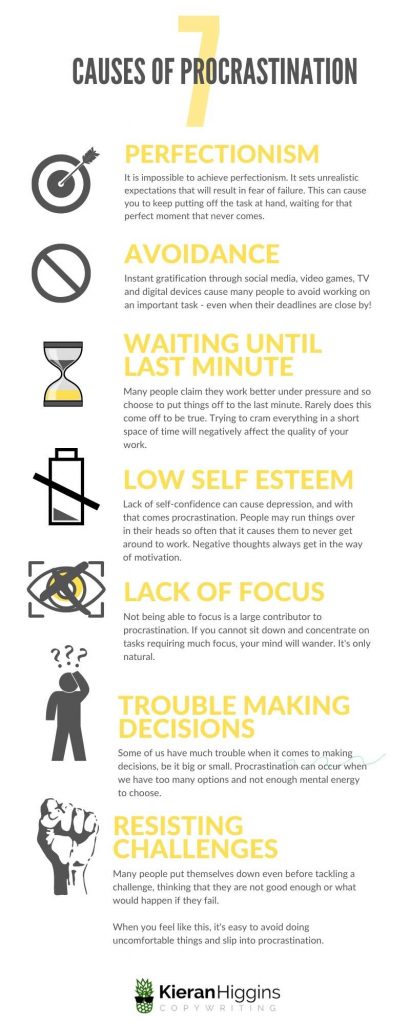
- Cause: Striving for an unattainable level of excellence.
- Overcome: Set realistic expectations and focus on making progress rather than achieving flawless results. Accept that mistakes are a part of the learning process.
4. Time Management Issues
- Cause: Poor planning, unrealistic deadlines, or distractions.
- Overcome: Prioritize tasks based on importance and urgency. Use a calendar or planner to stay organized and break down large projects into smaller chunks.
5. Emotional Dysregulation
- Cause: Feeling overwhelmed, stressed, or depressed.
- Overcome: Practice stress management techniques such as exercise, meditation, or spending time in nature. Seek professional help if needed.
6. Habitual Avoidance
- Cause: Associating the task with unpleasant emotions or past negative experiences.
- Overcome: Gradually expose yourself to the task in small, manageable doses. Build positive associations by linking the task with rewards.
7. Decision Fatigue
- Cause: Exhausting the brain’s cognitive resources by making too many decisions.
- Overcome: Simplify the decision-making process by decluttering your surroundings, automating routine tasks, and delegating responsibilities. Take regular breaks to recharge.## [7 Common Causes Of Procrastination And How To Overcome Them]
Executive Summary
Procrastination is a common problem that can have a negative impact on our lives. It can lead to missed deadlines, poor performance at work or school, and even relationship problems. While there are many different causes of procrastination, there are also a number of effective strategies that can help us overcome it.
Introduction
Procrastination is the act of delaying or postponing a task or set of tasks. It is a common problem that can affect people of all ages and backgrounds. While there are many different reasons why people procrastinate, some of the most common include:
FAQs
1. What are the signs and symptoms of procrastination?
- Putting off tasks until the last minute
- Feeling overwhelmed by tasks
- Avoiding tasks that seem difficult or unpleasant
- Making excuses for not completing tasks
- Feeling guilty or anxious about unfinished tasks
2. What are the consequences of procrastination?
- Missed deadlines
- Poor performance at work or school
- Relationship problems
- Financial problems
- Health problems
3. What are some tips for overcoming procrastination?
- Break down large tasks into smaller ones
- Set realistic goals
- Reward yourself for completing tasks
- Avoid distractions
- Get help from a friend or family member
Fear of failure
One of the most common causes of procrastination is the fear of failure. People who are afraid of failing may avoid tasks that they perceive as being too difficult or challenging. They may also procrastinate on tasks that they are not sure how to do.
- Perfectionism: People who are perfectionists may procrastinate because they are afraid of not being able to do something perfectly.
- Negative self-talk: People who have negative self-talk may procrastinate because they believe that they are not capable of completing a task successfully.
- Fear of criticism: People who are afraid of criticism may procrastinate because they are afraid of what others will think if they fail.
Lack of motivation
Another common cause of procrastination is a lack of motivation. People who are not motivated to do a task may find it difficult to get started or to stay focused. They may also be more likely to give up if they encounter any difficulties.
- Lack of interest: People who are not interested in a task may find it difficult to find the motivation to do it.
- Lack of reward: People who do not see the point in doing a task may find it difficult to find the motivation to do it.
- Lack of confidence: People who do not believe that they can complete a task successfully may find it difficult to find the motivation to do it.
Poor time management
Poor time management can also lead to procrastination. People who do not manage their time well may find themselves feeling overwhelmed and stressed, which can make it difficult to get started on tasks. They may also be more likely to procrastinate on tasks that they do not have time for.
- Lack of planning: People who do not plan their time well may find themselves feeling overwhelmed and stressed, which can make it difficult to get started on tasks.
- Lack of organization: People who are not organized may find it difficult to keep track of their tasks and deadlines, which can lead to procrastination.
- Lack of self-discipline: People who lack self-discipline may find it difficult to stay focused on tasks and to resist distractions, which can lead to procrastination.
Feeling overwhelmed
Feeling overwhelmed can also lead to procrastination. People who feel overwhelmed may find it difficult to focus on tasks and to make decisions. They may also be more likely to procrastinate on tasks that they do not feel confident about completing.
- Too many tasks: People who have too many tasks to do may feel overwhelmed and stressed, which can lead to procrastination.
- Too much stress: People who are under a lot of stress may find it difficult to focus on tasks and to make decisions, which can lead to procrastination.
- Lack of support: People who do not have enough support from friends, family, or colleagues may feel overwhelmed and stressed, which can lead to procrastination.
Distractions
Distractions can also lead to procrastination. People who are easily distracted may find it difficult to stay focused on tasks. They may also be more likely to procrastinate on tasks that require a lot of concentration.
- Technology: Technology can be a major source of distractions, such as social media, email, and video games.
- Noise: Noise can be another major source of distractions, such as traffic noise, construction noise, and people talking.
- Clutter: Clutter can also be a source of distractions, as it can make it difficult to find things and to focus on tasks.
Conclusion
Procrastination is a common problem that can have a negative impact on our lives. However, there are a number of effective strategies that can help us overcome it. By understanding the causes of procrastination and by developing effective coping mechanisms, we can take control of our time and achieve our goals.
Relevant Keyword Tags
- Procrastination
- Fear of failure
- Lack of motivation
- Poor time management
- Feeling overwhelmed
- Distractions