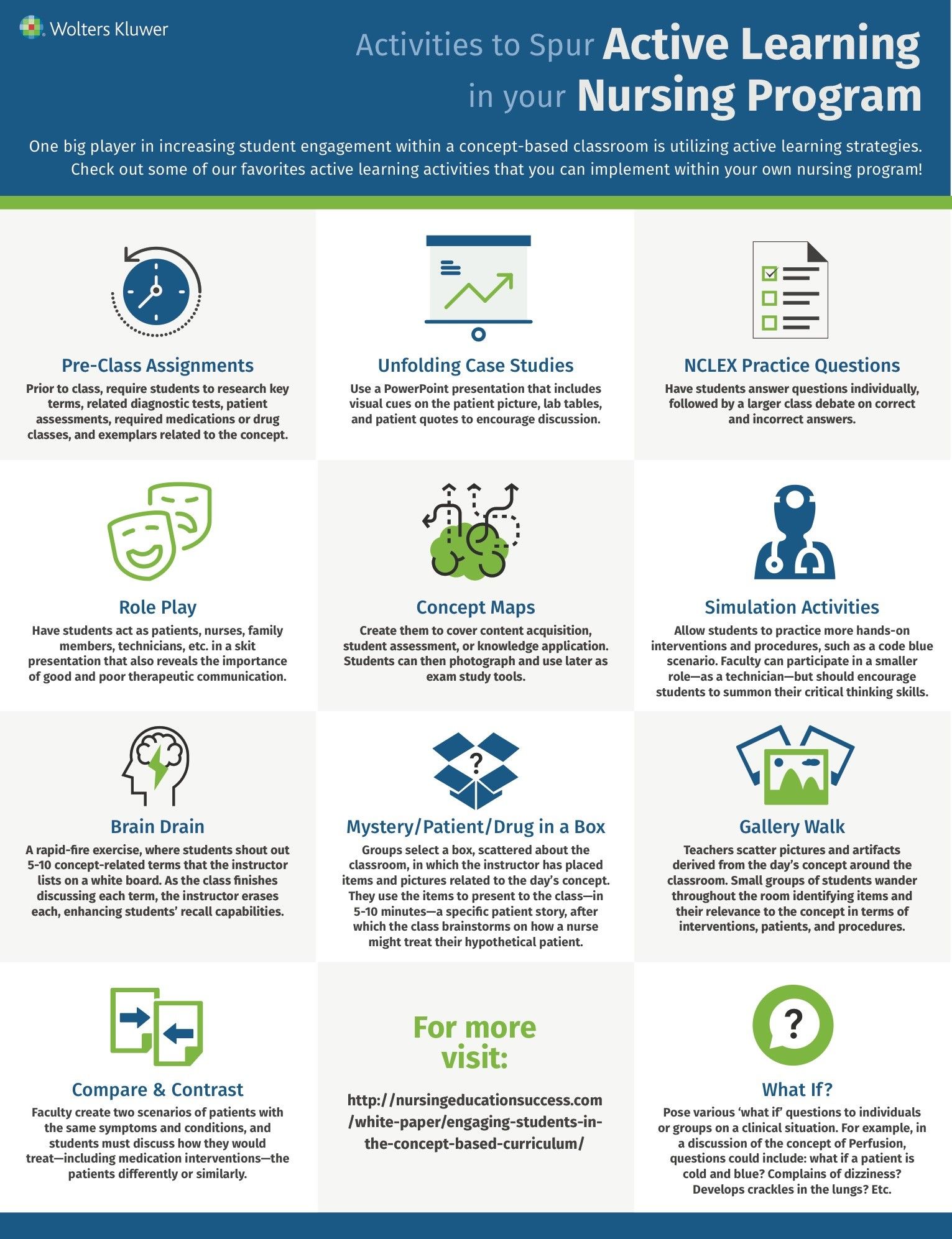
Active Learning through Engaged Note-taking
Introduction:
Active learning empowers students to take ownership of their learning process by engaging in meaningful interactions with the material. Engaged note-taking is a powerful strategy that promotes active learning by fostering deep understanding, critical thinking, and long-term retention.
Strategies for Engaging Note-taking:

1. Preview and Purpose:
- Before reading, scan the text or lecture slides to identify key concepts.
- Set a specific purpose for taking notes, such as summarizing main points or identifying questions.
2. Cornell Method:
- Divide your notebook page into three sections: notes, cues, and summary.
- Take notes in the first section, using concise phrases or symbols.
- In the cues section, list key words or questions to help recall later.
- Write a summary of the material in the last section after reviewing your notes.
3. Concept Mapping:
- Create a visual representation of the material by connecting concepts with lines and arrows.
- Use different colors and shapes to highlight relationships and hierarchies.
4. Outlining:
- Organize notes into a hierarchical structure using Roman numerals, letters, and numbers.
- Indent subtopics to indicate their level of importance.
5. Sketchnoting:
- Combine notes, drawings, and diagrams to create a visual summary of the material.
- Use different colors and shapes to make it more visually appealing and easier to recall.
6. Collaboration and Discussion:
- Share notes with classmates and discuss key concepts.
- Ask questions and engage in constructive dialogue to deepen understanding.
7. Active Recall and Reflection:
- Regularly review your notes and test your understanding through techniques like flashcards or self-questioning.
- Reflect on what you’ve learned and identify areas for further exploration.
8. Technology Integration:
- Use note-taking apps or software to enhance your notes with audio recordings, images, and links.
- Create digital concept maps or outlines for easy accessibility and collaboration.
Benefits of Engaged Note-taking:
- Promotes active learning and critical engagement
- Improves understanding and retention
- Facilitates organization and recall
- Encourages collaboration and discussion
- Develops problem-solving and analytical skills
Conclusion:
Engaged note-taking is a powerful strategy that empowers students to actively engage with their learning materials. By implementing these strategies, educators can foster deep understanding, enhance student motivation, and create a more vibrant and engaging learning environment.# Active Learning Made Easy: Strategies For Engaging Note-taking
Executive Summary
Active learning is a teaching method that encourages students to actively participate in the learning process. This can be done through a variety of methods, such as discussion, problem-solving, and role-playing. Note-taking is an essential part of active learning, as it helps students to remember and understand the material they are learning.
There are a number of different note-taking strategies that students can use. Some of the most effective strategies include:
- Cornell Method: This method involves dividing your notebook page into three sections: notes, cues, and summary. The notes section is where you take notes on the lecture or reading. The cues section is where you write down questions or keywords that will help you to remember your notes. The summary section is where you write a brief overview of the lecture or reading.
- Outline Method: This method involves creating an outline of the lecture or reading. The outline should include the main points of the lecture or reading, as well as any supporting details.
- Sketchnoting Method: This method involves combining drawing and writing to create a visual representation of the lecture or reading. This method can be especially helpful for students who are visual learners.
Introduction
Note-taking is a valuable study skill that can help you learn more effectively. There are many different ways to take notes, and the best method for you will depend on your own learning style and the material you are studying. In this article, we will discuss some of the most effective note-taking strategies and provide tips on how to use them to improve your learning.
FAQs
What is the best way to take notes?
The best way to take notes depends on your own learning style and the material you are studying. Some of the most effective note-taking strategies include the Cornell Method, the Outline Method, and the Sketchnoting Method.How can I improve my note-taking skills?
You can improve your note-taking skills by practicing regularly and experimenting with different methods to find the one that works best for you. You can also ask your teacher or a tutor for feedback on your note-taking.What are some tips for taking effective notes?
Some tips for taking effective notes include:
- Be organised and consistent with your note-taking.
- Use a variety of note-taking strategies.
- Review your notes regularly.
Top 5 Subtopics
1. The Benefits of Active Note-taking
Active note-taking is a more effective way to learn than passive note-taking. This is because active note-taking requires you to engage with the material you are learning, which helps you to remember and understand it better.
4 Important Pieces
- Active note-taking helps you to focus on the material you are learning.
- Active note-taking helps you to identify the key points of the material you are learning.
- Active note-taking helps you to remember the material you are learning.
- Active note-taking helps you to understand the material you are learning.
2. Different Note-taking Methods
There are a variety of different note-taking methods that you can use. The best method for you will depend on your own learning style and the material you are studying.
5 Important Pieces
- The Cornell Method is a popular note-taking method that involves dividing your notebook page into three sections: notes, cues, and summary.
- The Outline Method is a note-taking method that involves creating an outline of the lecture or reading.
- The Sketchnoting Method is a note-taking method that involves combining drawing and writing to create a visual representation of the lecture or reading.
- The Mapping Method is a note-taking method that involves creating a visual representation of the relationships between different concepts.
- The Charting Method is a note-taking method that involves creating a chart to organise information.
3. Tips for Taking Effective Notes
There are a number of tips that you can follow to take effective notes.
6 Important Pieces
- Be organised and consistent with your note-taking.
- Use a variety of note-taking strategies.
- Review your notes regularly.
- Use different colours of ink or highlighters to help you to organise your notes.
- Use abbreviations and symbols to save time.
- Leave space in your notes for additional information.
4. How to Use Note-taking to Improve Your Learning
Note-taking can be a powerful tool for improving your learning. By using effective note-taking strategies, you can:
5 Important Pieces
- Improve your focus and concentration.
- Identify the key points of the material you are learning.
- Remember the material you are learning.
- Understand the material you are learning.
- Apply the material you are learning to new situations.
5. Note-taking for Different Subjects
The best note-taking method for you will depend on the subject you are studying.
4 Important Pieces
- For math and science, you may want to use a charting method to organise information.
- For history and social studies, you may want to use a mapping method to create a visual representation of the relationships between different concepts.
- For English and literature, you may want to use a sketchnoting method to create a visual representation of the story or poem.
- For foreign languages, you may want to use a vocabulary list to keep track of new words and phrases.
Conclusion
Note-taking is a valuable study skill that can help you learn more effectively. By using effective note-taking strategies, you can improve your focus and concentration, identify the key points of the material you are learning, remember the material you are learning, understand the material you are learning, and apply the material you are learning to new situations.
Keyword Tags
- Active learning
- Note-taking
- Cornell Method
- Outline Method
- Sketchnoting Method