Mastering the Cornell Method: An Effective Approach to Note-taking
Introduction:

Effective note-taking plays a crucial role in enhancing comprehension, retention, and critical thinking. The Cornell Method stands out as a highly structured and efficient approach that students can employ to maximize their note-taking skills. This guide will explore the key aspects of the Cornell Method and provide practical tips for its successful implementation.
Steps of the Cornell Method:
1. Dividing the Page:
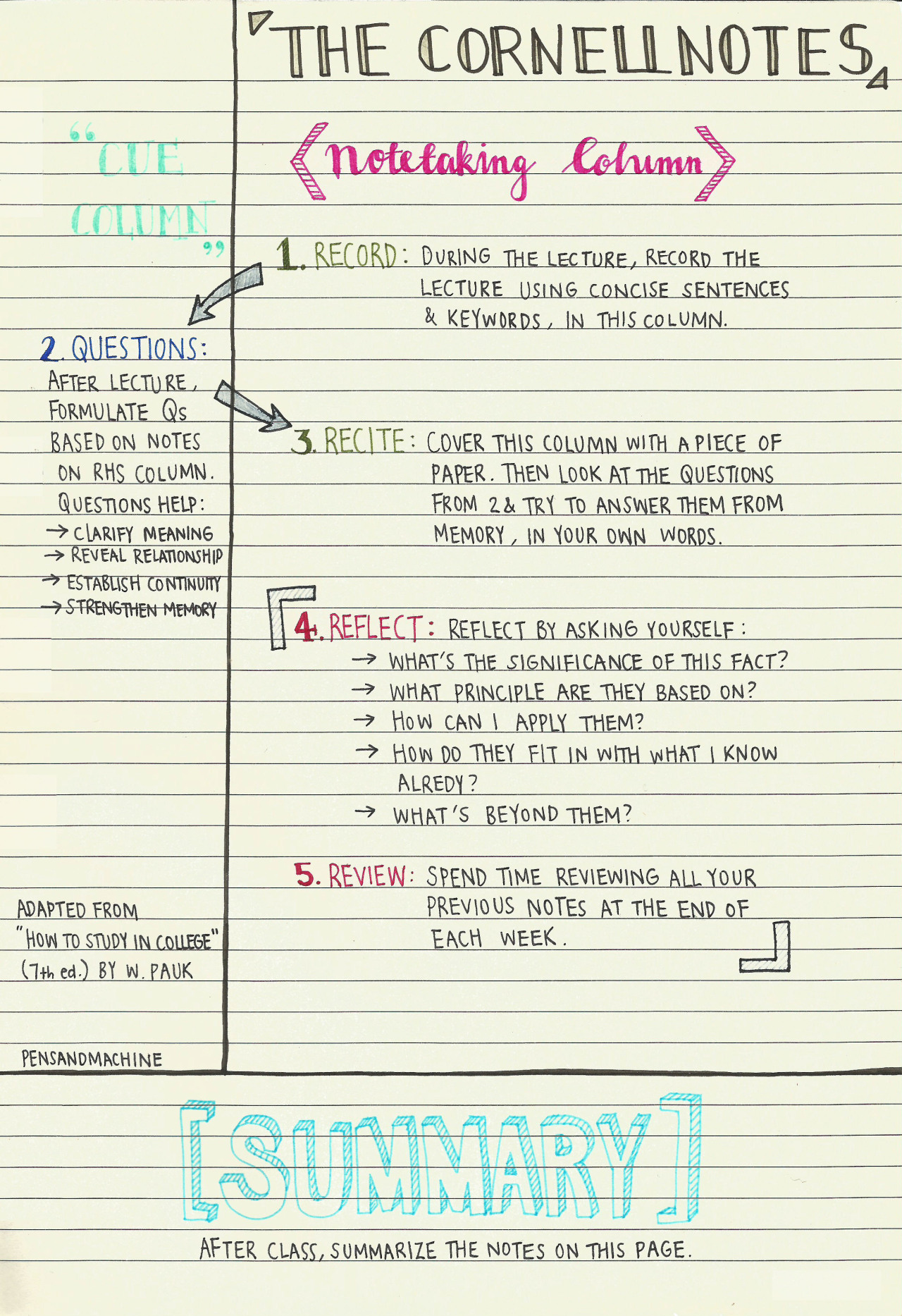
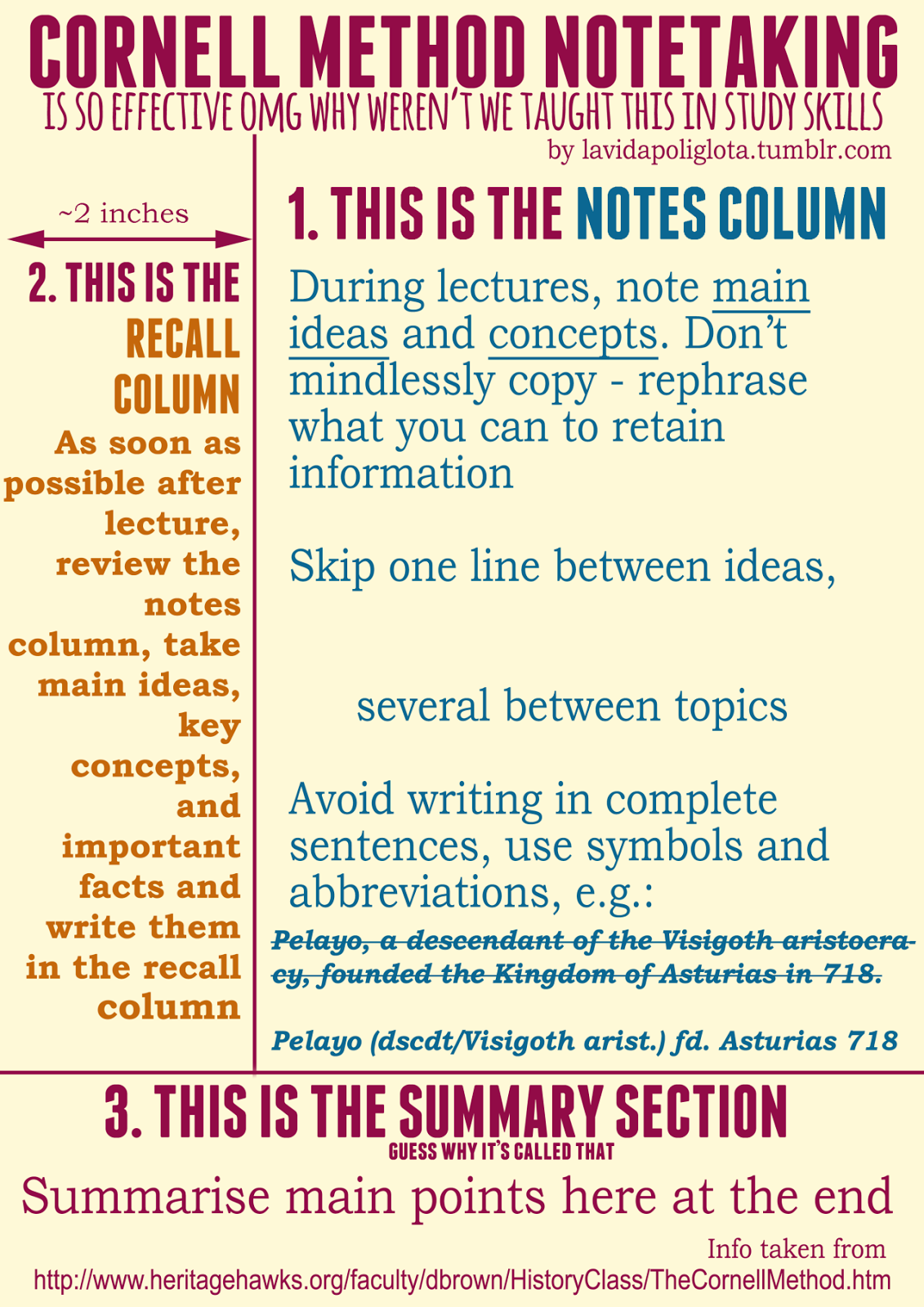
Divide your notebook page into three distinct sections:
- Cue Column: A narrow column on the left margin for keywords and questions.
- Notes Column: The main section for recording notes based on lectures, readings, or discussions.
- Summary Column: A wide column on the right for writing a concise summary and reflecting on the content.
2. Taking Notes:
- Cue Column: Jot down key terms, questions, and specific details that will trigger your memory.
- Notes Column: Use concise language to capture key points, facts, and examples. Indent and use bullet points for organization.
3. Writing the Summary:
- After the lecture or session, take a few minutes to summarize the main ideas in the Summary Column.
- This section should be a concise and cohesive overview of the content covered.
4. Reviewing and Reflecting:
- Regularly review your notes by reciting the information from memory.
- Use the Cue Column to recall the key points.
- In the Summary Column, reflect on the significance of the content and connect it to your prior knowledge.
Benefits of the Cornell Method:
- Improved Focus and Comprehension: Dividing the page into sections helps focus attention and promotes active listening.
- Enhanced Memory and Retention: Reciting and reviewing notes strengthens memory and facilitates long-term retention.
- Critical Thinking and Reflection: The Summary Column encourages critical thinking and personal interpretation of the content.
- Efficient Study Time: Reviewing notes from the Cornell Method takes less time than traditional note-taking methods.
- Versatile Applicability: The method can be used effectively in various academic settings, including lectures, readings, and discussions.
Tips for Effective Implementation:
- Customize to Your Needs: Adjust the size of each column based on your preferences and the type of material being noted.
- Use Color-Coding: Use different colored pens or highlighters to differentiate key terms, examples, and questions.
- Be Concise and Selective: Only record essential information and avoid excessive note-taking.
- Use Abbreviations and Symbols: Develop a system of abbreviations or symbols to save time and space.
- Review Regularly: Make a habit of reviewing your notes within 24 hours of taking them to reinforce memory.
Conclusion:
The Cornell Method is a powerful note-taking technique that can significantly enhance academic success. By dividing the page into specific sections, encouraging active recall, and promoting critical thinking, this method empowers students to maximize their comprehension, retention, and learning outcomes. With consistent practice and personalization, the Cornell Method can become an indispensable tool in the pursuit of academic excellence.## Mastering The Cornell Method: An Effective Approach To Note-Taking
Executive Summary
The Cornell Method is a widely acclaimed note-taking technique designed to enhance comprehension, retention, and recall. Developed by Walter Pauk, a renowned educational psychologist, this method has gained immense popularity among students, researchers, and professionals alike, owing to its systematic and efficient approach to organizing and synthesizing information. By compartmentalizing notes into distinct sections, the Cornell Method facilitates active engagement with the material, promoting deeper understanding and long-term memory.
Introduction
In the realm of academic pursuits and professional development, effective note-taking skills are paramount for success. The ability to capture, organize, and retrieve information efficiently can significantly enhance learning outcomes and productivity. Among the myriad note-taking techniques available, the Cornell Method stands out as a highly effective and widely adopted approach that empowers individuals to maximize their note-taking potential.
FAQ
- What is the Cornell Method?
The Cornell Method is a structured note-taking technique that divides a standard page into three distinct sections: the cue column, the note-taking column, and the summary section. This compartmentalization aids in organizing and categorizing information, facilitating active engagement with the material.
- Why is the Cornell Method effective?
By compartmentalizing notes and promoting active recall, the Cornell Method enhances comprehension, retention, and recall. It encourages students to synthesize and condense information, fostering a deeper understanding of the subject matter.
- How can I implement the Cornell Method?
Implementing the Cornell Method is straightforward. Simply divide a page into three sections: a narrow left-hand column for cues, a wide middle column for note-taking, and a section at the bottom for summarizing. As you take notes, jot down key terms and questions in the cue column, record information in the note-taking column, and synthesize your notes in the summary section.
Key Subtopics
1. Key Terms and Concepts
- Identifying and recording the most important terms, concepts, and ideas.
- Writing them concisely in the cue column.
- Including definitions or brief explanations.
2. Note-Taking
- Captures the main points and details of the lecture or reading material.
- Uses a combination of phrases, sentences, and abbreviations.
- Highlights important information using colors or symbols.
3. Active Recall
- Regularly reviewing notes and attempting to recall the information without looking at them.
- Using the cue column to prompt active recall.
- Enhances retention and deepens understanding.
4. Summarizing
- Condenses the notes into a concise and coherent summary.
- Written at the bottom of the page after reviewing the notes.
- Provides an overview of the main points and key concepts.
5. Reviewing
- Regularly reviewing notes to reinforce learning and identify areas for further clarification.
- Combining spaced repetition and active recall techniques.
- Helps retain information over the long term.
Conclusion
The Cornell Method has proven to be a highly effective note-taking technique that empowers individuals to enhance their comprehension, retention, and recall abilities. Its structured approach, compartmentalized sections, and emphasis on active engagement foster a deep understanding of the subject matter. By adopting the Cornell Method, students, researchers, and professionals can transform their note-taking practices, optimize their learning outcomes, and achieve greater success in their academic and professional pursuits.
Keywords
- Cornell Method
- Note-taking
- Comprehension
- Retention
- Recall