Prioritizing Tasks: How To Get More Done In Less Time
1. Identify High-Value Tasks:
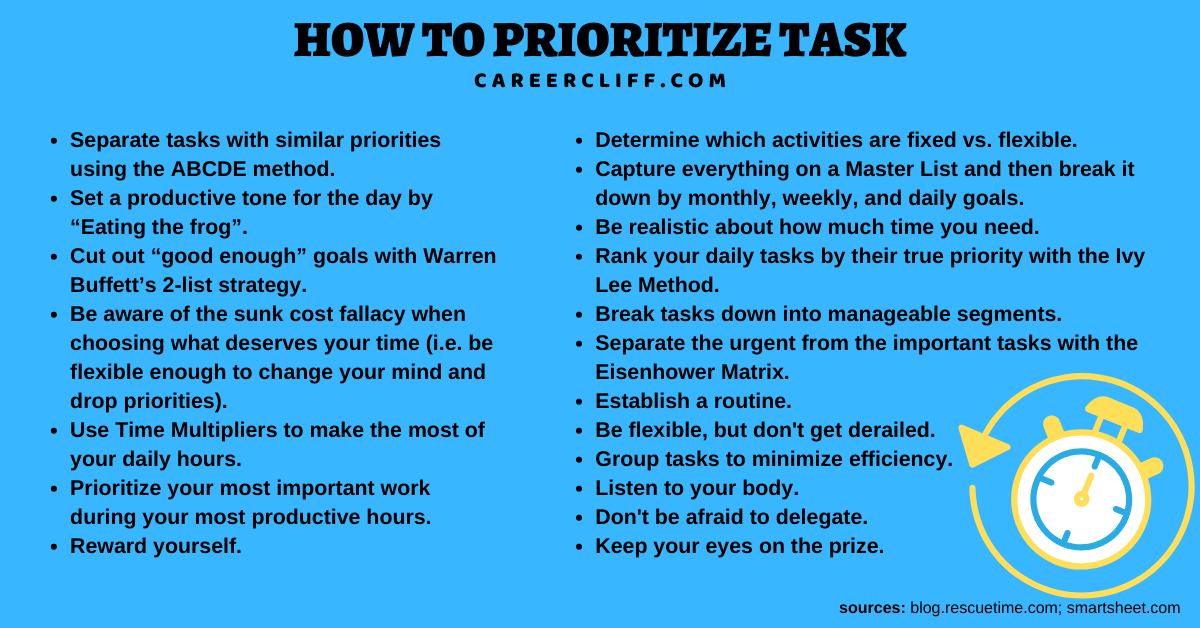
- Determine which tasks contribute most to your long-term goals.
- Focus on completing these tasks first to maximize impact.
2. Use the Eisenhower Matrix:

- Categorize tasks based on urgency and importance:
- Urgent and Important: Do immediately.
- Important but Not Urgent: Schedule for later.
- Urgent but Not Important: Delegate or defer.
- Not Urgent or Important: Discard or defer indefinitely.
3. Apply the ABCDE Method:
- Assign each task a priority level (A, B, C, D, E):
- A: Most important, complete first.
- E: Least important, complete last.
4. Consider the “Pomodoro Technique”:
- Break tasks into 25-minute intervals, followed by 5-minute breaks.
- This helps maintain focus and prevents burnout.
5. Delegate and Outsource:
- Identify tasks that can be assigned to others.
- This frees up your time to focus on more strategic projects.
6. Batch Similar Tasks:
- Group together tasks that require similar skills or resources.
- This reduces context switching and improves efficiency.
7. Use Task Management Tools:
- Utilize productivity apps to keep track of deadlines, prioritize tasks, and stay organized.
- These tools can automate certain tasks, saving time.
8. Eliminate Distractions:
- Create a distraction-free work environment.
- Use noise-canceling headphones or work in a quiet space.
9. Take Breaks:
- Regular breaks throughout the day help prevent burnout and improve focus.
- Use breaks to recharge and return to work refreshed.
10. Evaluate and Adjust:
- Regularly review your tasks and prioritize them based on changing circumstances.
- Don’t be afraid to adjust your schedule or delegate tasks as needed.
Additional Tips:
- Set realistic deadlines to avoid feeling overwhelmed.
- Reward yourself for completing tasks to stay motivated.
- Learn to say no to non-essential tasks.
- Practice time management techniques consistently.
- Prioritizing tasks effectively is a skill that takes practice and continuous improvement. By following these strategies, you can maximize productivity, minimize distractions, and achieve more in less time.## Prioritizing Tasks: How To Get More Done In Less Time
Executive Summary
This article provides a comprehensive guide to prioritizing tasks effectively, enabling individuals to accomplish more within a shorter timeframe. By implementing the strategies outlined in this article, readers can enhance their productivity, reduce stress, and achieve their goals more efficiently.
Introduction
In today’s fast-paced environment, it is essential to prioritize tasks effectively to maximize productivity and achieve desired outcomes. With numerous responsibilities and distractions competing for our attention, it can be challenging to determine which tasks deserve immediate attention and which can be postponed or delegated. By understanding the principles of prioritization and employing effective techniques, we can optimize our time and efforts, leading to greater success and fulfillment.
FAQs
1. What is the most effective way to prioritize tasks?
The Eisenhower Matrix is a valuable tool for prioritizing tasks based on urgency and importance. It divides tasks into four quadrants: Urgent and Important, Important but Not Urgent, Urgent but Not Important, and Not Urgent and Not Important. Focusing on the tasks in the “Urgent and Important” quadrant ensures that crucial responsibilities are addressed promptly.
2. How can I overcome procrastination when prioritizing tasks?
Breaking down large or daunting tasks into smaller, manageable steps can make them less overwhelming and easier to initiate. Additionally, setting realistic deadlines and rewarding oneself for accomplishments can provide motivation and counteract procrastination tendencies.
3. What if I have too many important tasks and not enough time?
Delegation is a powerful strategy for managing a heavy workload. Identifying tasks that can be assigned to others can free up time to focus on the most critical responsibilities. However, it is essential to delegate tasks wisely to ensure their effective completion.
Subtopics
1. Identifying High-Priority Tasks
- Consider Impact and Value: Determine the potential impact and value of each task on achieving your goals and objectives.
- Prioritize Based on Urgency and Importance: Use the Eisenhower Matrix to categorize tasks based on their urgency and importance, focusing on those that are both urgent and important.
- Align with Goals: Ensure that the tasks you prioritize align with your overall goals and contribute to your long-term vision.
- Use a To-Do List or Task Management App: Organize your tasks in a visual format, such as a to-do list or task management app, to track progress and stay organized.
2. Time Management Techniques
- Time Blocking: Allocate specific time slots in your schedule for different tasks, ensuring that important tasks receive adequate attention.
- Pomodoro Technique: Break down work into focused intervals, typically 25 minutes of work followed by a 5-minute break, to maintain concentration and avoid burnout.
- Delegate Responsibilities: Identify tasks that can be assigned to others, enabling you to focus on high-priority responsibilities.
- Automate Tasks: Utilize technology to automate repetitive or time-consuming tasks, freeing up your time for more strategic activities.
3. Overcoming Procrastination
- Break Down Tasks: Divide large or daunting tasks into smaller, more manageable steps to make them less overwhelming.
- Set Realistic Deadlines: Establish specific, achievable deadlines for each task to provide a sense of urgency and motivation.
- Reward Accomplishments: Celebrate your successes and reward yourself for completing tasks to maintain motivation and overcome procrastination.
- Create a Positive Work Environment: Establish a dedicated and distraction-free workspace that promotes productivity and minimizes distractions.
4. Maintaining Discipline and Focus
- Eliminate Distractions: Identify and eliminate distractions from your workspace, such as social media or excessive noise, to maintain focus.
- Practice Mindfulness: Engage in mindfulness techniques, such as meditation or deep breathing, to reduce stress and improve concentration.
- Take Breaks: Step away from work periodically to rest, recharge, and maintain peak performance levels.
- Use Technology Wisely: Leverage technology to support your productivity, but be mindful of its potential to become a distraction.
5. Continuous Improvement
- Track Progress and Analyze Results: Regularly review your task prioritization and time management strategies to identify areas for improvement.
- Seek Feedback and Learn from Others: Engage in self-reflection and seek feedback from colleagues or mentors to gain insights and enhance your productivity.
- Stay Updated on Best Practices: Continuously explore new tools, techniques, and methodologies to optimize your prioritization and time management strategies.
- Adapt and Refine: Regularly adapt and refine your approach based on your experiences and evolving needs to ensure maximum productivity.
Conclusion
Prioritizing tasks effectively is a crucial skill in today’s fast-paced environment. By implementing the strategies outlined in this article, individuals can gain control over their time, reduce stress, and achieve greater productivity. Identifying high-priority tasks, employing effective time management techniques, overcoming procrastination, maintaining discipline and focus, and continuously improving are essential elements for optimizing task prioritization. Embracing these principles will empower individuals to accomplish more within a shorter timeframe, ultimately leading to success and fulfillment in both personal and professional endeavors.
Keyword Tags
- Task Prioritization
- Time Management
- Productivity
- Procrastination
- Goal Achievement