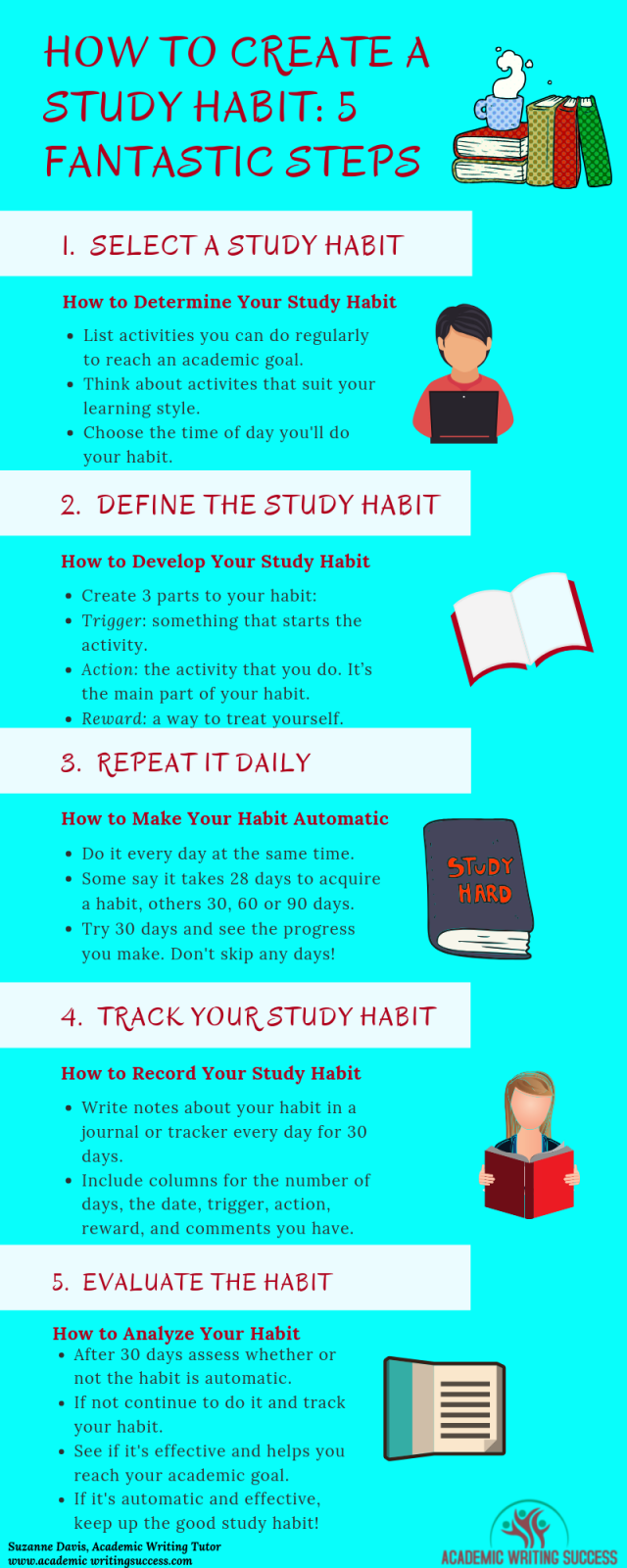
Establish a Dedicated Study Space: Create a specific area in your home or library where you only study. This helps you mentally associate that space with studying, making it easier to focus and avoid distractions.

Plan and Prioritize: Use a planner or to-do list to organize your study time. Break down large assignments into smaller, manageable chunks and prioritize tasks based on importance and deadlines. This prevents procrastination and ensures you cover the most critical material.

Active Learning and Recall: Focus on actively engaging with the material rather than passively reading or re-reading. This can involve techniques like using flashcards, taking notes, creating diagrams or concept maps, and discussing the material with peers or a tutor. By actively recalling information, you strengthen your memory and understanding.

Regular Breaks and Rewards: Avoid long, uninterrupted study sessions that can lead to burnout and reduced productivity. Take short breaks every 45-60 minutes to refresh your mind and prevent mental exhaustion. Reward yourself for completing tasks to maintain motivation and make studying more enjoyable.
Seek Help When Needed: Don’t hesitate to seek assistance when you encounter difficulties. Ask questions in class, consult with your professors or teaching assistants during office hours, or join study groups. Collaborating with others and seeking clarification can often provide valuable insights and help you overcome academic challenges.## [5 Study Habits For Academic Success]

Executive Summary
Students who adopt effective study habits can significantly improve their academic performance. This article presents five research-based study habits that can help students maximize their learning potential, enhance their understanding, and achieve academic success.
Introduction
Academic success is a cornerstone of personal development and career opportunities. Effective study habits are essential for students to grasp complex concepts, retain information, and excel in exams. Implementing the following five study habits can empower students with the skills and strategies to optimize their academic endeavors.
FAQs
- Why is studying effectively important for academic success?
- Enhances understanding, improves retention, and boosts confidence.
- How much time should I spend studying?
- Varies based on individual needs, but experts suggest 2-3 hours per day.
- What is the best way to take notes?
- Active listening, summarizing, and creating visual aids (e.g., mind maps) can enhance note-taking efficiency.
Top 5 Study Habits
1. Active Learning
- Involves engaging with the material beyond passive reading.
- Activities:
- Summarizing key points in your own words.
- Discussing concepts with peers or tutors.
- Applying knowledge through practice problems or simulations.
2. Spaced Repetition
- Technique that involves reviewing material at increasing intervals.
- Method:
- Review material shortly after learning it (e.g., 10 minutes later).
- Gradually increase the interval between reviews (e.g., 1 hour, 1 day, 1 week).
- This strengthens memory by forcing the brain to recall information repeatedly.
3. Elaboration
- Process of connecting new information to existing knowledge.
- Strategies:
- Generating examples or analogies to make concepts more relatable.
- Linking new material to personal experiences or prior learning.
- Explaining concepts to someone else to clarify your understanding.
4. Interleaving
- Practice of mixing up different types of problems or concepts while studying.
- Benefits:
- Prevents boredom and enhances focus.
- Strengthens neural connections and improves problem-solving abilities.
- Forces students to apply knowledge in different contexts, fostering deeper understanding.
5. Retrieval Practice
- Involves actively recalling information from memory without referring to notes.
- Methods:
- Self-quizzing with flashcards or practice tests.
- Reciting concepts aloud without looking at materials.
- Rewriting notes from memory after a period of time.
- This strengthens retention and improves recall during exams.
Conclusion
Implementing these five study habits can transform students’ academic journeys. By actively engaging with material, reviewing frequently, connecting new knowledge to prior learning, interleaving practice, and actively recalling information, students can unlock their full learning potential, achieve academic success, and build a solid foundation for their future endeavors.
Keyword Tags
- Academic Success
- Study Habits
- Active Learning
- Spaced Repetition
- Elaboration