Active Learning Techniques to Enhance Exam Performance
1. Spaced Repetition:
- Review material in gradually increasing intervals (e.g., 10 minutes, 1 hour, 1 day).
- By forcing your brain to actively recall information, you strengthen memories.
2. Flashcards:
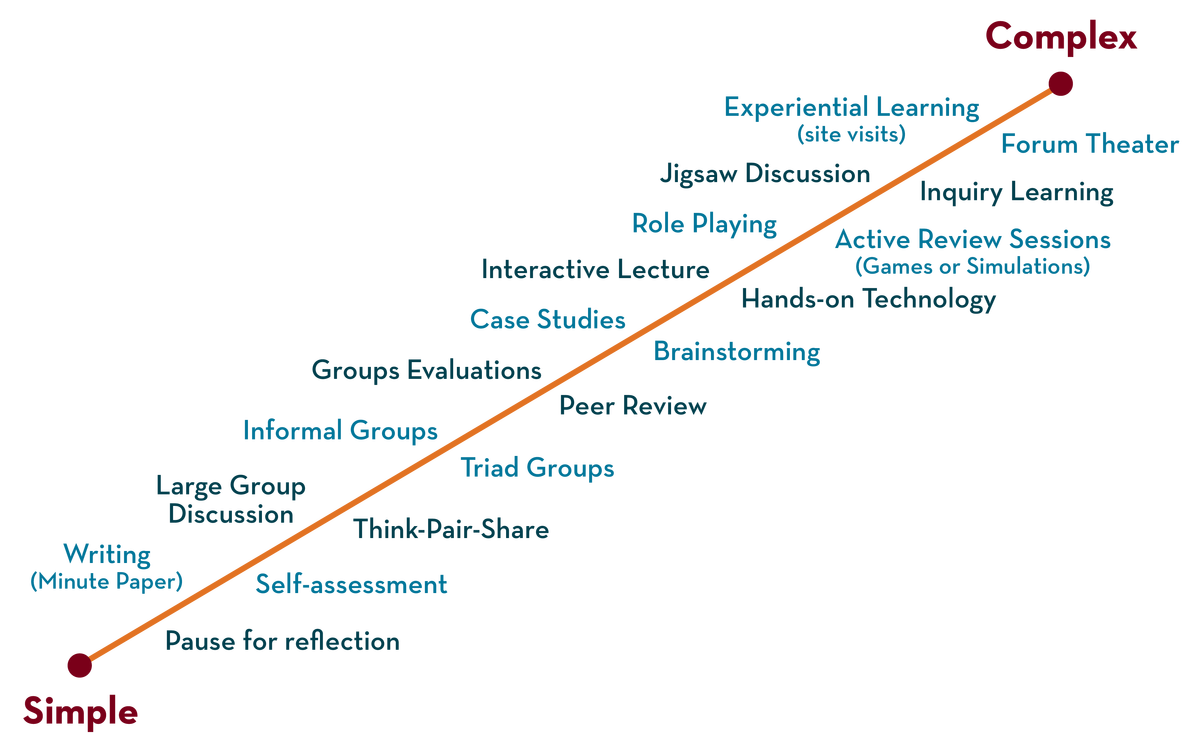
- Write key terms, definitions, formulas, or concepts on one side and the answer on the other.
- Regularly test yourself by flipping the cards and recalling the information.
3. Retrieval Practice:
- Without looking at notes, try to actively recall information you have studied.
- This forces your brain to work harder, improving memory retention.
4. Teach-Back Method:
- Explain concepts to an imaginary audience or a friend.
- By verbalizing information, you reinforce learning and identify areas that need further study.
5. Concept Mapping:
- Create visual representations of connected ideas by drawing nodes and connecting lines.
- This helps organize information and identify relationships between concepts.
6. Active Reading:
- Read actively by highlighting, annotating, and summarizing.
- Engage with the material by asking questions, making connections, and predicting future content.
7. Collaborative Learning:
- Form study groups or work with classmates to discuss the material.
- Different perspectives and explanations enhance understanding and memory.
8. Problem-Solving Exercises:
- Engage in practice problems, simulations, or case studies to apply your knowledge.
- By actively solving real-world problems, you build problem-solving skills and confidence.
9. Interleaving:
- Mix up different subject matter or types of questions during your study sessions.
- This prevents repetitive learning and forces your brain to work more efficiently.
10. Self-Testing:
- Create practice exams or quizzes to simulate the actual test environment.
- By identifying areas of weakness, you can focus your study efforts accordingly.## Boost Your Exam Scores With These Active Learning Techniques
Executive Summary
Active learning is a proven study method that can help you improve your exam scores. By actively engaging with the material, you can strengthen your understanding and retention. This article provides a detailed overview of five effective active learning techniques, along with specific tips for implementing them.
Introduction
Exam success is crucial for academic and professional advancement. While traditional study methods can be effective, active learning techniques have been found to enhance comprehension, retention, and overall exam performance. This article explores the five most impactful active learning strategies, providing a comprehensive guide to boost your exam scores.
FAQs
What is the difference between active learning and traditional study methods?
Active learning involves actively engaging with the material through activities such as discussions, problem-solving, and simulations. Traditional study methods, like reading and highlighting, are more passive.Is active learning effective for all subjects?
Yes, active learning has been shown to be effective for a wide range of subjects, from math and science to social sciences and humanities.How much time should I spend on active learning?
The optimal time spent on active learning varies depending on the subject and individual needs. Aim for at least 30-45 minutes daily, supplementing it with traditional study methods.
Top 5 Active Learning Techniques
1. Spaced Repetition
- Involves reviewing material at increasing intervals to strengthen memory.
- Use flashcards, spaced repetition software, or re-read notes at progressively longer intervals.
- Example: Review material once after learning it, then again after 1 day, 3 days, 1 week, and 1 month.
2. Interleaving
- Mixing different types of questions or tasks while studying.
- For example, instead of solving all math problems at once, alternate with reading comprehension questions or science experiments.
- Interleaving forces your brain to retrieve information from multiple contexts, enhancing overall understanding.
3. Retrieval Practice
- Actively recalling information from memory without looking at notes.
- Use practice questions, self-quizzes, or flashcards.
- This process forces your brain to work harder, improving both learning efficiency and retention.
4. Elaboration
- Connecting new information with existing knowledge.
- Create mind maps, diagrams, or write summaries that explain concepts in your own words.
- Elaboration helps you make sense of the material and identify patterns and connections.
5. Metacognition
- Becoming aware of your own learning process and actively reflecting on it.
- Monitor your progress, identify areas for improvement, and adjust your study strategies as needed.
- Metacognition empowers you to optimize your learning and maximize your exam performance.
Conclusion
Active learning techniques provide a powerful approach to boost your exam scores. By actively engaging with the material, you can strengthen your comprehension, improve your retention, and enhance your overall academic performance. Implementing these techniques into your study routine will significantly increase your chances of exam success and long-term knowledge retention.
Keyword Tags:
- Active learning
- Exam preparation
- Learning techniques
- Spaced repetition
- Retrieval practice