Active Learning Techniques for Mastering Critical Thinking Skills
1. Guided Inquiry:
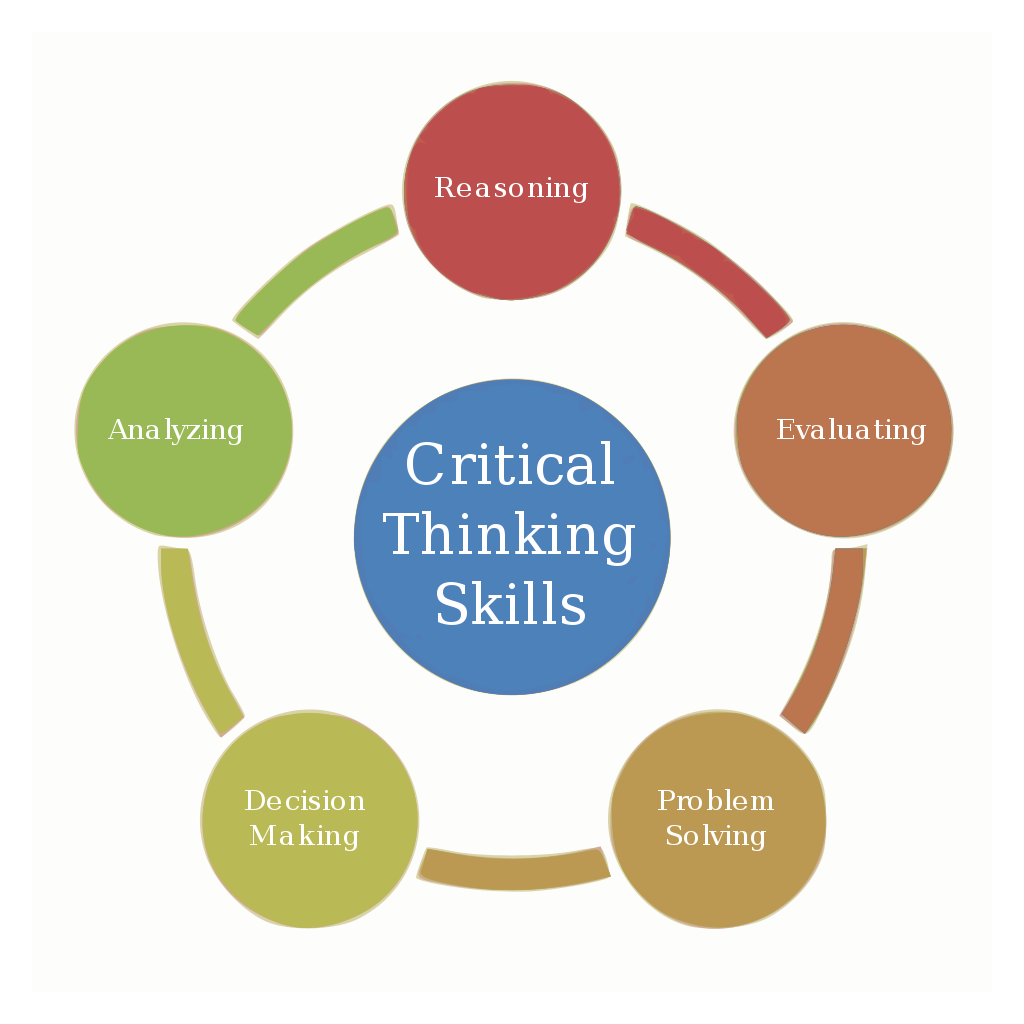
- Students explore a topic and develop their own understanding through guided questioning.
- Active involvement promotes deep thinking and self-directed learning.
2. Socratic Method:

- A teacher asks thought-provoking questions to lead students to question assumptions, identify gaps in knowledge, and form well-reasoned arguments.
- Develops critical analysis, logical thinking, and the ability to defend opinions.
3. Concept Mapping:
- Students create visual representations of concepts and their relationships.
- Encourages pattern recognition, understanding of complex ideas, and the ability to synthesize information.
4. Debate:
- Students engage in structured discussions where they present and defend different perspectives.
- Promotes logical reasoning, perspective-taking, and the ability to evaluate evidence.
5. Problem-Based Learning:
- Students work together to solve real-world problems using critical thinking strategies.
- Develops problem-solving skills, collaboration, and the ability to apply knowledge to practical situations.
6. Simulations and Role-Playing:
- Students participate in simulations or role-playing exercises that require them to analyze situations, make decisions, and justify their choices.
- Encourages empathy, perspective-taking, and the ability to evaluate options.
7. Self-Reflection and Metacognition:
- Students reflect on their own thinking processes and identify areas for improvement.
- Develops self-awareness, critical self-assessment, and the ability to monitor their own cognitive abilities.
8. Case Studies:
- Students analyze real-life case studies and identify patterns, draw conclusions, and develop recommendations.
- Promotes analytical thinking, problem-solving, and the ability to apply knowledge in practical contexts.
9. Collaborative Learning:
- Students work in groups to brainstorm, discuss, and develop solutions.
- Encourages peer feedback, perspective-sharing, and the ability to synthesize diverse thoughts.
10. Technology-Enabled Active Learning:
- Online platforms and educational software can provide interactive activities, discussions, and simulations.
- Facilitates learner engagement, personalization, and the ability to practice critical thinking skills in real time.
Benefits of Active Learning for Critical Thinking:
- Enhances student engagement and motivation.
- Promotes deep understanding and retention.
- Develops higher-order cognitive skills.
- Encourages independent learning and critical self-reflection.
- Prepares students for real-world decision-making and problem-solving.## Mastering Critical Thinking Skills With Active Learning Techniques
Executive Summary
Critical thinking skills are essential for success in today’s rapidly changing world. They allow us to solve problems, make informed decisions, and communicate our ideas effectively. Active learning techniques are a proven way to improve critical thinking skills, and this article will explore the most effective methods.
Introduction
Critical thinking is the ability to think clearly and rationally about what to do or what to believe. It involves skills such as analysis, argumentation, and problem-solving. Critical thinking skills are essential for success in all areas of life, from personal decision-making to professional success.
FAQs
- What are the benefits of critical thinking skills?
- Critical thinking skills are essential for success in today’s rapidly changing world. They allow us to solve problems, make informed decisions, and communicate our ideas effectively.
- How can I improve my critical thinking skills?
- Active learning techniques are a proven way to improve critical thinking skills. These techniques include problem-solving exercises, debates, and simulations.
- What are some examples of active learning techniques?
- Some examples of active learning techniques include problem-solving exercises, debates, simulations, and case studies.
Top 5 Subtopics
1. Problem-Solving Exercises
Problem-solving exercises are a great way to improve your critical thinking skills. These exercises can be simple or complex, and can be done individually or in groups. When solving a problem, it is important to first identify the problem, then brainstorm possible solutions, and finally evaluate the solutions and choose the best one.
- Identify the problem: Clearly define the problem before you start trying to solve it.
- Brainstorm possible solutions: Come up with as many possible solutions as you can, no matter how crazy they may seem.
- Evaluate the solutions: Consider the pros and cons of each solution and choose the one that is most likely to be successful.
- Implement the solution: Put the solution into action and monitor the results.
- Reflect on the process: After you have solved the problem, take some time to reflect on the process and identify areas where you can improve.
2. Debates
Debates are a great way to improve your critical thinking skills because they force you to think about both sides of an issue. When preparing for a debate, it is important to research the topic thoroughly, identify the key arguments, and develop a strong case for your side. During the debate, it is important to be respectful of your opponent’s views and to focus on presenting your own arguments in a clear and concise manner.
- Research the topic thoroughly: Make sure you have a good understanding of the topic before you start debating.
- Identify the key arguments: Determine the main points of contention and focus on these in your debate.
- Develop a strong case for your side: Present your arguments in a clear and concise manner and support them with evidence.
- Be respectful of your opponent’s views: Listen to your opponent’s arguments and respond to them in a respectful manner.
- Focus on presenting your own arguments: Don’t get bogged down in attacking your opponent’s arguments. Instead, focus on presenting your own arguments in the best possible light.
3. Simulations
Simulations are a great way to improve your critical thinking skills because they allow you to experience real-world situations in a safe environment. Simulations can be used to teach a variety of skills, from problem-solving to decision-making. When participating in a simulation, it is important to be engaged and to take the experience seriously. By doing so, you will get the most out of the simulation and improve your critical thinking skills.
- Be engaged: Participate actively in the simulation and take it seriously.
- Pay attention to the details: Observe the environment and the other participants and pay attention to the details.
- Make decisions: Make decisions based on the information that you have and be prepared to justify your decisions.
- Reflect on the experience: After the simulation, take some time to reflect on the experience and identify areas where you can improve your critical thinking skills.
4. Case Studies
Case studies are a great way to improve your critical thinking skills because they allow you to analyze real-world problems. When analyzing a case study, it is important to read the case carefully, identify the key issues, and develop a solution. It is also important to consider the different perspectives involved and to be able to justify your solution.
- Read the case carefully: Make sure you understand the case before you start analyzing it.
- Identify the key issues: Determine the main problems and challenges that are presented in the case.
- Develop a solution: Come up with a solution to the problems and challenges identified in the case.
- Consider the different perspectives: Consider the different perspectives of the people involved in the case and how they might affect the solution.
- Justify your solution: Explain why you think your solution is the best one and support your reasoning with evidence.
5. Critical Reading
Critical reading is the ability to read and understand a text and to evaluate its arguments and evidence. Critical reading skills are essential for success in school, work, and life. To improve your critical reading skills, it is important to be an active reader. This means reading with a purpose, questioning the text, and making connections to your own knowledge and experience.
- Read with a purpose: Have a clear purpose for reading the text, such as to learn about a topic, to find information, or to evaluate an argument.
- Question the text: As you read, ask yourself questions about the text, such as what is the main point, what is the evidence for the claims made, and what are the different perspectives on the topic.
- Make connections: Connect the text to your own knowledge and experience. This will help you to understand the text better and to remember it longer.
- Evaluate the arguments and evidence: Consider the arguments and evidence presented in the text and evaluate their strengths and weaknesses.
- Come to a conclusion: After you have read and evaluated the text, come to a conclusion about the text’s main points and arguments.
Conclusion
Critical thinking skills are essential for success in today’s rapidly changing world. Active learning techniques are a proven way to improve critical thinking skills, and this article has explored the most effective methods. By using these techniques, you can improve your ability to solve problems, make informed decisions, and communicate your ideas effectively.
Keyword Tags
- critical thinking
- active learning
- problem-solving
- debates
- simulations