Tips for Active Learning
1. Engage with the Material:

- Read with intent to understand, not just memorize.
- Take notes, highlight, and summarize key concepts.
- Discuss the material with classmates or a study group.
2. Practice Retrieval:
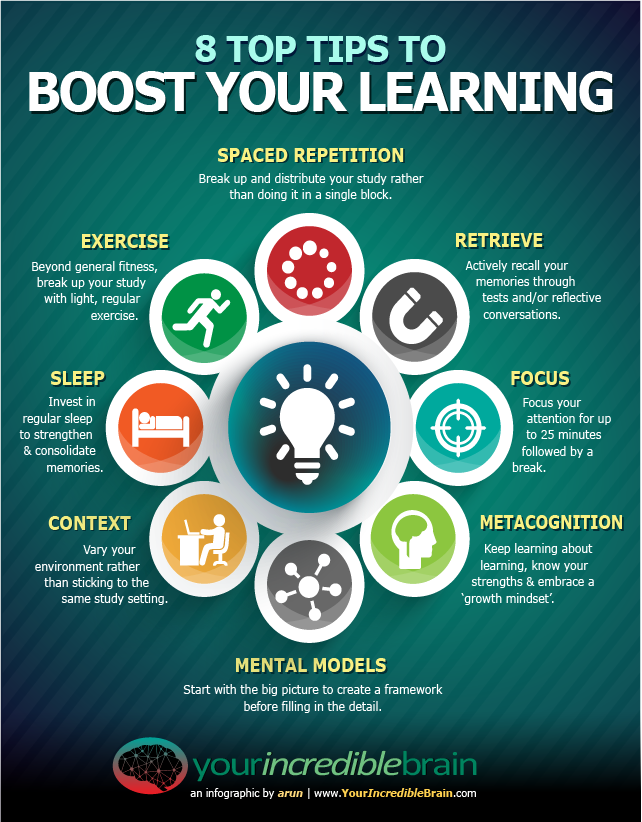
- Regularly test yourself on the material you’ve learned.
- Use flashcards, practice problems, or engage in discussions.
- This forces your brain to actively recall information.
3. Seek Feedback:
- Ask questions in class, during office hours, or through online platforms.
- Submit assignments for feedback and review it carefully.
- This helps you identify areas where you need improvement.
4. Teach Someone Else:
- Explain the concepts you’ve learned to a friend, family member, or study buddy.
- This forces you to process the material in a different way and identify gaps in your understanding.
5. Make Connections:
- Relate new information to what you already know.
- Draw diagrams, create analogies, or find real-world examples.
- This helps you build a deeper understanding of the material.
6. Use Technology Wisely:
- Utilize online resources, simulations, and educational apps.
- Watch videos, listen to podcasts, or participate in online forums.
- Technology can enhance your learning experience and provide additional perspectives.
7. Take Breaks:
- It’s crucial to take breaks and allow your brain to rest.
- Go for a walk, do some physical activity, or engage in a relaxing hobby.
- This helps improve focus and retention.
8. Set Goals and Track Progress:
- Set specific learning goals for yourself.
- Track your progress by keeping a study log or using a learning management system.
- This provides motivation and a sense of accomplishment.
9. Collaborate with Others:
- Form study groups to learn from each other’s perspectives.
- Participate in group projects and discussions to share knowledge and ideas.
- Collaboration fosters critical thinking and problem-solving skills.
10. Reflect and Revise:
- Take time to reflect on what you’ve learned and identify areas where you need further understanding.
- Revise the material regularly to reinforce learning and improve retention.
Remember: Active learning requires effort and persistence. By implementing these tips, you can maximize your learning potential and achieve better academic outcomes.## Executive Summary
Active learning is a method of instruction that involves students in the learning process. It is more effective than traditional passive learning methods, such as listening to a lecture or reading a book. Active learning techniques can be used in any subject area and with students of all ages.
Introduction
In today’s fast-paced world, it is more important than ever to be able to learn quickly and effectively. Active learning is a method of instruction that can help you do just that.
FAQ
- What is active learning?
- Why is active learning important?
- How can I use active learning in my classroom?
Subtopics
1. Engagement
Engaged learning is regarded as one of the core foundations that underpins the effective delivery of educational programs. Engagement within the context of active learning involves utilizing techniques that fully immerse students in the curriculum in a way that goes beyond passive reception of information.
- Increased motivation: Students who are actively engaged in their learning are more likely to be motivated to learn.
- Improved retention: Students who are actively engaged in their learning are more likely to remember what they have learned.
- Increased critical thinking skills: Students who are actively engaged in their learning are more likely to develop critical thinking skills.
- Enhanced problem-solving skills: Students who are actively engaged in their learning are more likely to develop problem-solving skills.
- Improved communication skills: Students who are actively engaged in their learning are more likely to develop communication skills.
2. Collaboration
Collaborative learning is an educational approach that involves groups of students working together on a common goal. Through collaboration, students can share their ideas, learn from each other, and develop a deeper understanding of the material.
- Improved communication skills: Collaborative learning provides students with opportunities to practice their communication skills.
- Increased critical thinking skills: Collaborative learning encourages students to think critically about the material.
- Enhanced problem-solving skills: Collaborative learning helps students develop problem-solving skills.
- Improved teamwork skills: Collaborative learning teaches students how to work effectively in a team.
- Increased motivation: Collaborative learning can help to increase student motivation.
3. Feedback
Feedback is a vital element in the learning process. It helps students to understand what they are doing well and what they need to improve on. Feedback can be given in a variety of ways, such as through verbal comments, written comments, or self-assessment.
- Identify areas for improvement: Feedback helps students to identify areas where they need to improve.
- Reinforce positive behaviors: Feedback can be used to reinforce positive behaviors.
- Provide guidance: Feedback can provide students with guidance on how to improve their work.
- Increase motivation: Feedback can help to motivate students by showing them that their efforts are being recognized and appreciated.
- Improve communication: Feedback can help to improve communication between students and teachers.
4. Reflection
Reflection is the process of thinking about and evaluating one’s own learning. Reflection can help students to identify their strengths and weaknesses, and to develop strategies for improving their learning.
- Increased self-awareness: Reflection helps students to develop self-awareness of their own learning process.
- Improved learning strategies: Reflection can help students to develop more effective learning strategies.
- Enhanced critical thinking skills: Reflection encourages students to think critically about their learning.
- Increased motivation: Reflection can help to increase student motivation by showing them that they are making progress.
- Improved communication: Reflection can help to improve communication between students and teachers.
5. Real-World Application
Real-world application is the process of applying what one has learned in the classroom to real-world situations. Real-world application can help students to see the relevance of what they are learning and to develop the skills they need to be successful in the workplace.
- Increased motivation: Real-world application can help to increase student motivation by showing them that what they are learning is relevant to their lives.
- Improved critical thinking skills: Real-world application encourages students to think critically about the material.
- Enhanced problem-solving skills: Real-world application helps students develop problem-solving skills.
- Improved teamwork skills: Real-world application can teach students how to work effectively in a team.
- Increased communication skills: Real-world application can help students to develop communication skills.
Conclusion
Active learning is a method of instruction that can help you to learn more effectively. By using active learning techniques, you can increase your motivation, improve your retention, develop your critical thinking skills, and enhance your problem-solving skills.
Keyword Tags
- Active learning
- Engagement
- Collaboration
- Feedback
- Reflection
- Real-world application