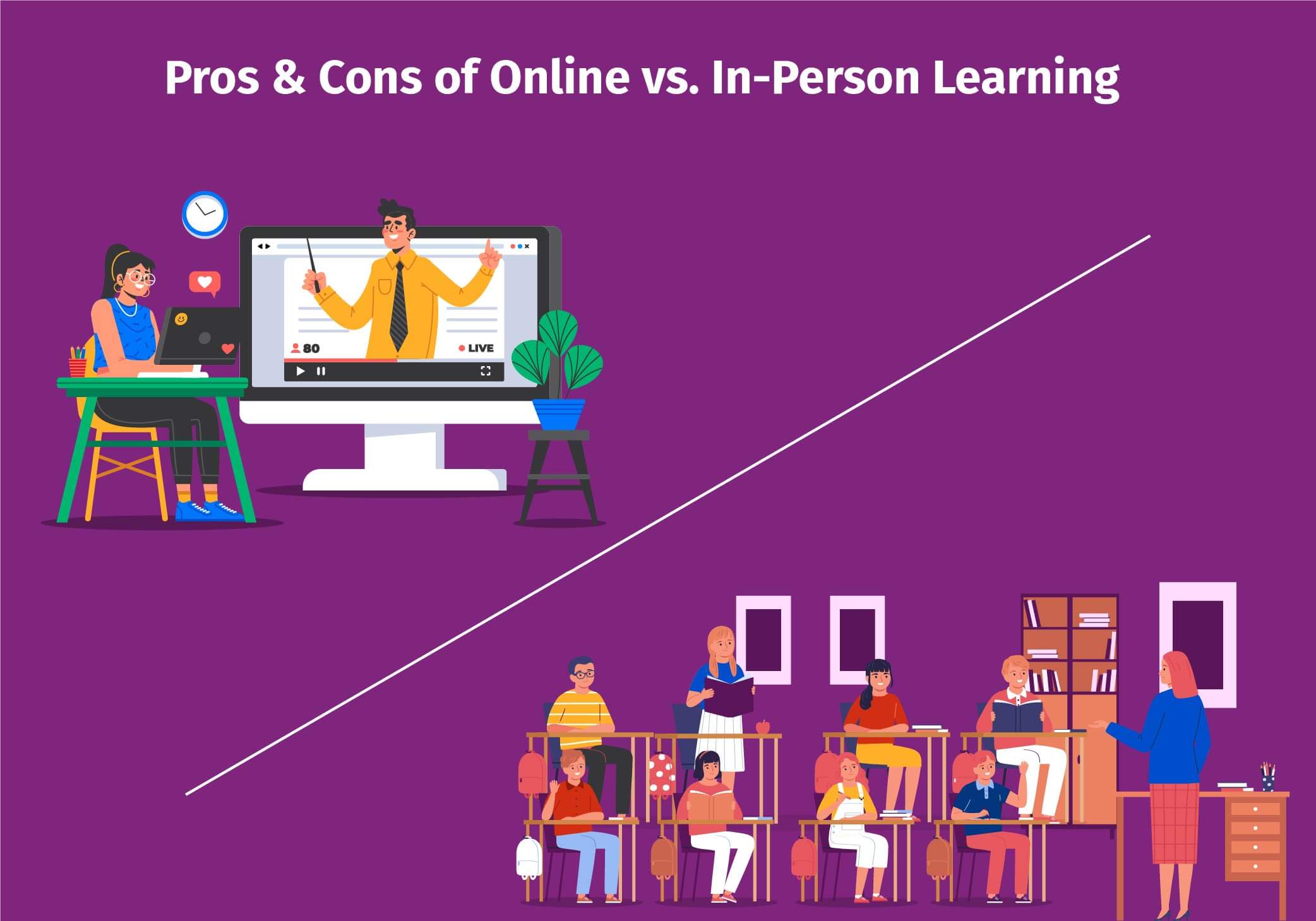
Pros of Online Learning
Flexibility:

- Students can access course materials and complete assignments at their own pace and convenience.
- No need to adhere to fixed schedules or commute to campus.
Accessibility:
- Online learning makes education accessible to people from diverse backgrounds, including those with disabilities, busy professionals, and residents of remote areas.
- Allows students to learn from anywhere with an internet connection.
Personalized Learning:
- Some online programs offer personalized learning experiences tailored to individual learning styles and goals.
- Students can control their learning path and access additional resources as needed.
Convenience:
- Eliminates the need for physical classrooms, providing convenience and flexibility.
- No parking or commuting hassles.
Cost-effectiveness:
- Online programs often have lower tuition fees and fewer associated costs (e.g., transportation, parking).
- Students can save on textbooks by accessing digital materials.
Global Reach:
- Online learning allows students to connect with instructors and classmates from around the world.
- Fosters cultural exchange and global perspectives.
Improved Time Management:
- Students learn to manage their time effectively as they set their own study schedules and deadlines.
- Helps develop independence and responsibility.
Cons of Online Learning
Lack of Face-to-Face Interaction:
- Limited opportunities for personal interaction with instructors and classmates.
- Can lead to feelings of isolation and a lack of connection.
Technical Issues:
- Online learning relies on stable internet connectivity.
- Power outages or network problems can disrupt the learning experience.
Self-Discipline and Motivation:
- May require higher levels of self-discipline and motivation compared to traditional learning settings.
- Students need to be proactive in seeking support and staying engaged.
Limited Hands-on Experience:
- Some programs may lack hands-on components that are essential for practical learning.
- Online simulations or virtual labs may not fully substitute for in-person experiences.
Assessment Challenges:
- Ensuring academic integrity can be difficult in online environments.
- Remote proctoring or plagiarism detection tools may not be fully effective.
Socialization and Networking:
- Online learning offers limited opportunities for students to socialize and network with each other.
- May hinder the development of soft skills and social connections.
Technical Skills Requirement:
- Requires basic technical skills to operate online learning platforms and navigate digital resources.
- Some students may face difficulties if they lack digital literacy.## The Pros And Cons Of Online Learning
Executive Summary
Online learning offers numerous advantages, including flexibility, accessibility, and personalized education. However, it also has potential drawbacks, such as isolation, lack of face-to-face interaction, and technical challenges. Understanding these pros and cons can help individuals make informed decisions about whether online learning is a suitable option for them.
Introduction
Online learning has become increasingly popular, offering a range of opportunities for individuals to pursue education and enhance their skills. While it provides numerous benefits, it is crucial to consider the potential drawbacks before making a decision. This article explores both the advantages and disadvantages of online learning, empowering readers with the necessary information to make informed choices.
FAQs
1. Is online learning as effective as traditional classroom learning?
Online learning can be as effective as traditional classroom learning, as it offers interactive learning materials, discussions, and opportunities for engagement with instructors and peers. However, the effectiveness of online learning may vary depending on the individual’s learning style and the quality of the online program.
2. Is online learning more affordable than traditional education?
Online learning can be more affordable than traditional education in some cases. While there may be costs associated with technology and materials, online programs often have lower tuition and fees compared to on-campus programs. Additionally, online learning eliminates expenses such as transportation and parking.
3. Is there a limit to the types of programs that can be completed online?
While online learning has expanded significantly, there are still limitations on the types of programs that can be completed entirely online. It is more common for associate’s degrees, bachelor’s degrees, and master’s degrees to be offered online. However, some specialized programs, particularly those involving hands-on or practical skills, may not be suitable for online delivery.
Subtopics
Flexibility
- Convenience: Online learning allows students to learn at their own pace and on their own time.
- Accessibility: Online programs can be accessed from anywhere with an internet connection, making education accessible to individuals with geographic or scheduling constraints.
- Reduced time commitments: Online learning eliminates the need for commuting to campus, saving students valuable time.
Accessibility
- Wider range of course options: Online learning often offers a broader selection of courses compared to traditional institutions, allowing students to explore niche or specialized subjects.
- Global reach: Online programs can connect students with instructors and peers from diverse backgrounds, providing global perspectives and networking opportunities.
- Affordability: Online learning can be more affordable than traditional classroom-based education due to lower tuition costs and reduced expenses related to transportation and materials.
Personalization
- Tailored learning: Online learning platforms often use adaptive technologies that personalize the learning experience based on each student’s progress and needs.
- Self-paced learning: Students can control the pace of their learning, allowing them to focus on areas where they need more support or move ahead in areas where they excel.
- Customized feedback: Online learning platforms can provide automated or instructor-led feedback on assignments and assessments, helping students identify strengths and areas for improvement.
Isolation
- Limited social interaction: Online learning can feel isolating as students primarily interact with peers and instructors through online forums and discussions.
- Lack of face-to-face communication: Virtual interactions may not fully replicate the nuanced communication and social dynamics of face-to-face classes.
- Reduced opportunities for collaboration: Online learning environments may provide fewer opportunities for students to collaborate and engage in group projects.
Technical Challenges
- Technology requirements: Online learning requires reliable access to a computer, internet connection, and software, which can be a barrier for individuals with limited access to technology.
- Technical difficulties: Technological issues, such as slow internet speeds or software glitches, can disrupt online learning and create frustration.
- Digital literacy: Students need to be familiar with online learning technologies and platforms to effectively participate and succeed in online courses.
Conclusion
Online learning offers significant benefits, including flexibility, accessibility, and personalization. However, it is not without its drawbacks, such as isolation, limited social interaction, and technical challenges. Understanding both the pros and cons of online learning is crucial to make an informed decision about whether it is the right choice for an individual’s specific needs. By considering the advantages and disadvantages outlined in this article, individuals can weigh the potential benefits against the potential challenges and make a decision that aligns with their learning goals and lifestyle.
Keyword Tags
- Online Learning
- Distance Education
- Flexible Learning
- Advantages of Online Learning
- Disadvantages of Online Learning