What are Mnemonics?
Mnemonics are memory-enhancing techniques that help you organize and retain information more effectively. They use sensory cues, associations, and visual imagery to make learning more engaging and memorable.
Types of Mnemonics:
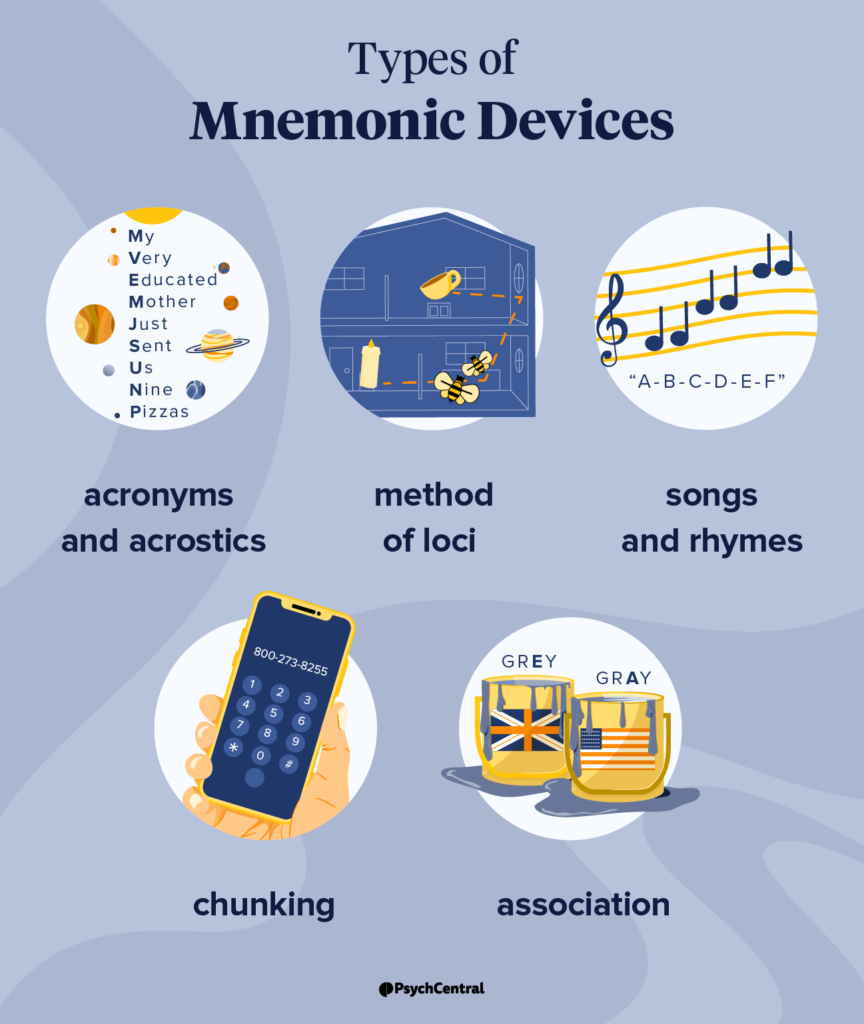
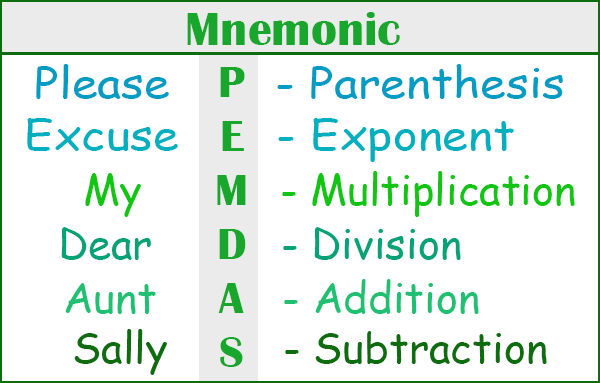
- Acronyms: Form a memorable abbreviation from the first letter of each key word (e.g., PEMDAS for order of operations in math)
- Chunking: Break down large amounts of information into smaller, manageable chunks
- Rhymes and Songs: Create catchy rhymes or songs to remember lists or sequences (e.g., “In fourteen hundred ninety-two, Columbus sailed the ocean blue”)
- Method of Loci: Associate items with specific locations in a familiar place
- Pegword Method: Link new information to a series of familiar words or objects
Benefits of Mnemonics:
- Improved memory recall
- Increased engagement in learning
- Reduced study time
- Enhanced focus and concentration
- Better problem-solving skills
How to Use Mnemonics Effectively:
- Choose a technique that fits your learning style. Different types of mnemonics work better for different individuals.
- Create personal and meaningful associations. The more personalized the mnemonic, the more memorable it will be.
- Rehearse and review regularly. Repetition is key to strengthening memory recall.
- Apply mnemonics to a variety of subjects. They can be useful in all areas of learning, from history to science to language.
Examples of Mnemonics:
- PEMDAS: Parentheses, Exponents, Multiplication, Division, Addition, Subtraction
- ROYGBIV: Red, Orange, Yellow, Green, Blue, Indigo, Violet (colors of the rainbow)
- HOMES: Huron, Ontario, Michigan, Erie, Superior (Great Lakes)
- “I before E” exception list: Weird, height, their, neighbor
- Story Method: Create a story that incorporates all the key points you need to remember
Conclusion:
Mnemonics are powerful tools that can significantly boost your learning potential. By using memory-enhancing techniques, you can improve your memory recall, engage more effectively with learning materials, and achieve greater academic and professional success.## Executive Summary
This article presents the benefits of utilizing mnemonics as a learning tool. It explores different types of mnemonics, their applications, and provides practical tips for their effective implementation. By leveraging the power of mnemonics, individuals can significantly enhance their learning potential, improve their memory, and optimize their learning experiences.
Introduction
In today’s fast-paced information age, our ability to learn and retain information plays a vital role in our personal and professional development. While there are numerous learning strategies available, the use of mnemonics has proven to be highly effective in boosting learning potential. Mnemonics are memory aids that use various techniques to improve recall by associating new information with existing knowledge or memorable cues.
FAQ
What are the key benefits of using mnemonics?
- Enhanced memorization and recall
- Improved understanding and retention of complex concepts
- Increased learning efficiency and speed
- Reduced cognitive load
When should I use mnemonics?
- When memorizing new vocabulary or terminology
- When learning historical events, dates, or names
- When understanding scientific or technical concepts
- When preparing for exams or presentations
Are there any specific types of mnemonics that are more effective than others?
The effectiveness of a mnemonic depends on the individual and the nature of the information being learned. Some commonly used types include:
- Acronyms
- Rhymes
- Chunking
- Image association
Top 5 Subtopics for Using Mnemonics
1. Acronyms
Acronyms are formed by using the first letters of a series of words to create a new word or abbreviation. For example, the acronym “ROY G. BIV” is used to remember the colors of the rainbow (Red, Orange, Yellow, Green, Blue, Indigo, Violet).
- Create acronyms that are easy to pronounce and remember.
- Ensure that the acronym is related to the information being learned.
- Limit acronyms to a manageable length (ideally fewer than 10 letters).
2. Rhymes
Rhymes can make memorizing information more enjoyable and effective. By associating information with a catchy rhyme or melody, it becomes easier to recall later.
- Use rhymes to remember facts, dates, or historical events.
- Create your own rhymes or adapt existing ones to suit the information you need to learn.
- Use rhythm and repetition to make the rhymes more memorable.
3. Chunking
Chunking involves breaking down large amounts of information into smaller, more manageable chunks. This makes it easier to process and store the information in our memory.
- Divide text into smaller paragraphs or sections.
- Break down lists and sequences into smaller groups.
- Organize information into categories or hierarchies.
4. Image Association
Image association involves creating mental images or pictures to represent the information being learned. By associating new information with existing visual cues, we can improve our ability to remember it.
- Create vivid and memorable images that are relevant to the information.
- Use images to represent concepts, ideas, or events.
- Connect images to other information using rhymes, acronyms, or stories.
5. Elaboration
Elaboration involves connecting new information to existing knowledge or experiences. This helps to create a deeper understanding and strengthen memory.
- Relate new information to familiar concepts or situations.
- Provide examples, analogies, or personal stories to illustrate the information.
- Discuss the information with others to enhance understanding and retention.
Conclusion
Incorporating mnemonics into your learning strategy can significantly boost your learning potential. By utilizing a variety of mnemonic techniques, you can enhance your memory, improve your understanding, and make learning more enjoyable and efficient. While there is no one-size-fits-all approach, experimenting with different types of mnemonics will help you identify the most effective methods for your individual learning style. Embrace the power of mnemonics and unlock your full learning potential today.
Keyword Tags
- Mnemonics
- Learning Enhancement
- Memory Improvement
- Learning Strategies
- Cognitive Load Reduction