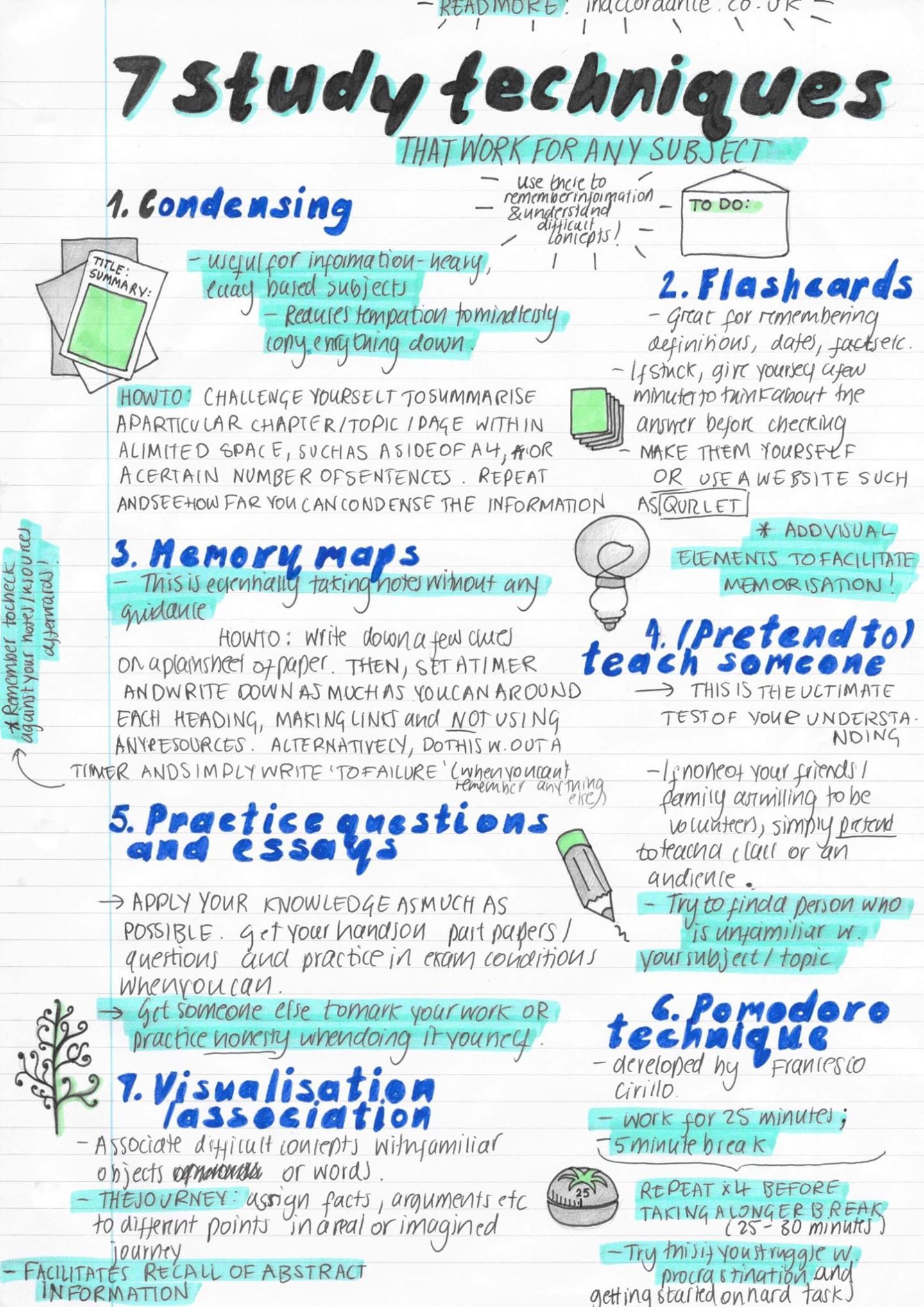
Active Learning Techniques to Enhance Study Effectiveness
1. Retrieval Practice:

- Regularly test yourself on learned material without referring to notes.
- Use flashcards, practice tests, or self-questioning.
- Retrieval forces the brain to actively engage with information, strengthening memory.
2. Spaced Repetition:
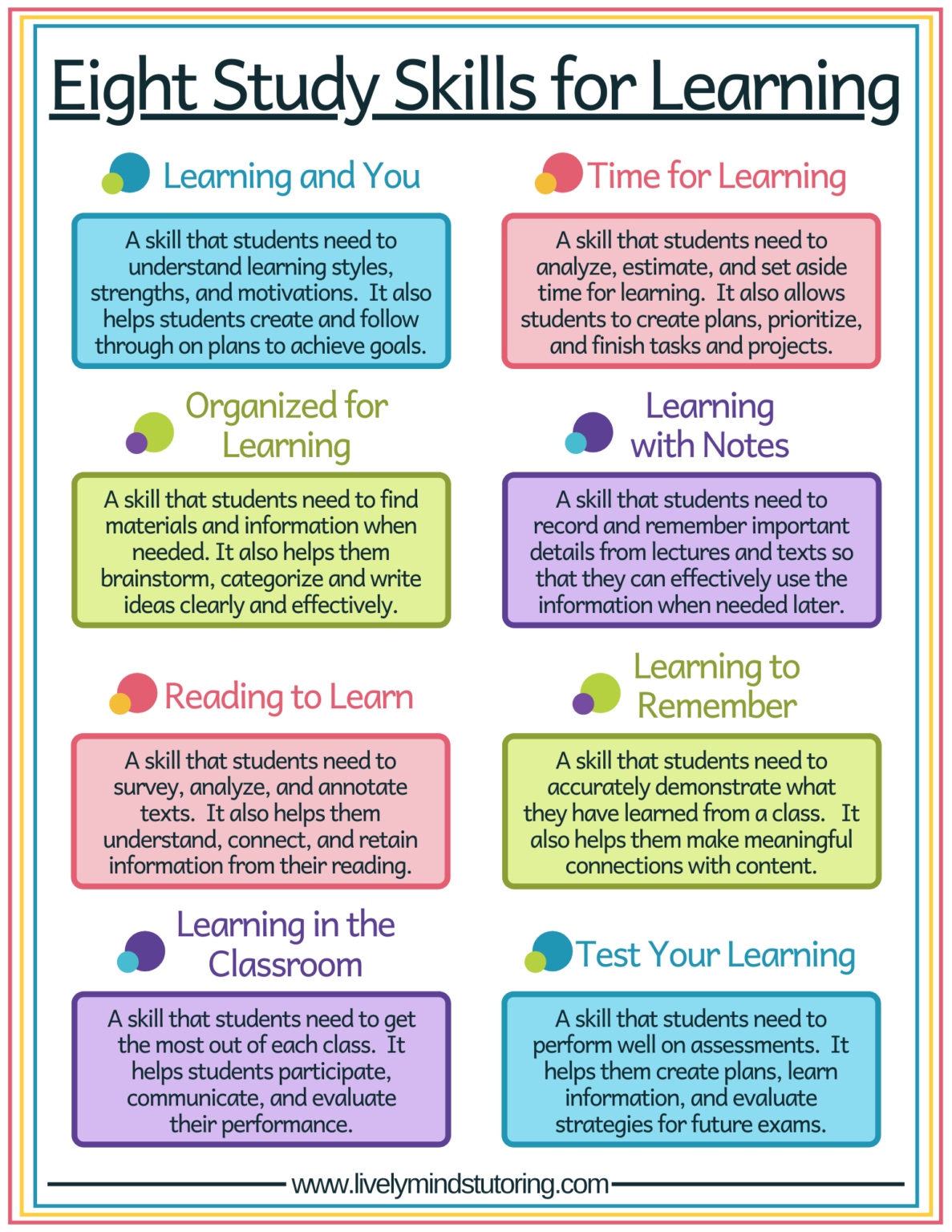
- Review material at increasing intervals of time.
- Start with short intervals (e.g., 5 minutes) and gradually increase them.
- Spaced repetition helps prevent forgetting and improves long-term retention.
3. Elaboration:
- Connect new information to existing knowledge.
- Explain concepts in your own words, make analogies, or create examples.
- Elaboration deepens understanding and improves recall.
4. Interleaving:
- Mix up different subjects or topics while studying.
- Avoid studying one subject for an extended period.
- Interleaving challenges the brain and enhances retrieval ability.
5. Concept Mapping:
- Create visual representations of relationships between ideas.
- Use mind maps, flowcharts, or diagrams to organize and visualize information.
- Concept mapping improves comprehension and aids in problem-solving.
6. Active Reading:
- Read with purpose and actively engage with the text.
- Highlight, annotate, and summarize key points.
- Discuss or debate ideas with peers to deepen understanding.
7. Chunking:
- Break down large amounts of information into smaller, manageable chunks.
- Focus on understanding one chunk at a time.
- Chunking reduces cognitive load and improves retention.
8. Teaching Others:
- Explain concepts to others to reinforce your own learning.
- Identify areas where you need further clarification and seek additional support.
- Teaching fosters a deeper understanding and improves communication skills.
9. Gamification:
- Turn studying into a game by using apps or tools that provide challenges, rewards, and feedback.
- Gamification makes studying more engaging and motivates learners.
10. Mindful Study:
- Pay attention to your thoughts and emotions while studying.
- Identify distractions and find ways to minimize them.
- Practice mindfulness techniques to improve focus and reduce stress.## Effective Study Skills: Incorporating Active Learning Techniques
Executive Summary
Effective study skills are essential for academic success. By incorporating active learning techniques, students can engage with the material more deeply, improve their understanding, and enhance their critical thinking skills. This article explores five key active learning techniques and provides practical tips for implementing them into your study routine.
Introduction
In the fast-paced academic environment, students often resort to passive learning methods such as reading and listening. While these methods can provide a basic understanding of the subject matter, they do not fully engage the learner and limit their ability to retain and apply the information. Active learning techniques, on the other hand, require students to actively participate in the learning process, fostering a deeper understanding and improving overall academic performance.
FAQs
1. What is active learning?
Active learning is an educational approach that engages students in the learning process by requiring them to actively participate, such as through discussions, problem-solving, or hands-on activities.
2. Why is active learning important?
Active learning enhances student engagement, promotes deeper understanding, improves critical thinking skills, and facilitates better retention of information.
3. How can I incorporate active learning into my study routine?
Implement active learning techniques into your study sessions by engaging in discussions with peers, solving problems, creating summaries, and participating in role-playing or simulations.
Top 5 Subtopics
Spaced Repetition
Spaced repetition involves reviewing the material at increasing intervals. This technique helps strengthen memory and improve long-term retention.
- Review material promptly after initial learning to prevent forgetting.
- Space out review sessions progressively (e.g., 10 minutes after learning, then 1 hour, 1 day, 1 week).
- Use flashcards or spaced repetition software to facilitate the process.
Retrieval Practice
Retrieval practice forces students to actively recall information from memory. This process strengthens neural connections and improves long-term retention.
- Self-test regularly by recalling information without looking at notes.
- Use flashcards or quizzes to practice retrieving information.
- Interleave different concepts during retrieval practice to improve understanding.
Interleaving
Interleaving involves studying different concepts or subjects in a mixed order, rather than focusing on one topic at a time. This technique improves comprehension and retention.
- Alternate between different subjects during study sessions.
- Mix up practice problems from different chapters or topics.
- Create concept maps that connect different ideas and concepts.
Elaboration
Elaboration involves connecting new information to existing knowledge and experiences. This technique enhances understanding and facilitates long-term memory.
- Explain concepts to yourself or others in your own words.
- Create analogies or examples to connect new information to familiar concepts.
- Relate new information to personal experiences or previous learning.
Metacognition
Metacognition involves reflecting on your own learning process and making adjustments as needed. This technique improves self-awareness and helps students become more effective learners.
- Monitor your understanding throughout study sessions.
- Identify areas where you need additional support and seek help.
- Experiment with different study techniques to find what works best for you.
Conclusion
By incorporating active learning techniques into your study routine, you can significantly enhance your understanding, improve your retention, and foster critical thinking skills. The five techniques discussed in this article provide practical strategies for active learning, empowering students to become more engaged and successful learners. Remember, the key to effective studying is to actively participate in the process and make learning a meaningful and engaging experience.
Keyword Tags
- Active Learning
- Spaced Repetition
- Retrieval Practice
- Interleaving
- Elaboration