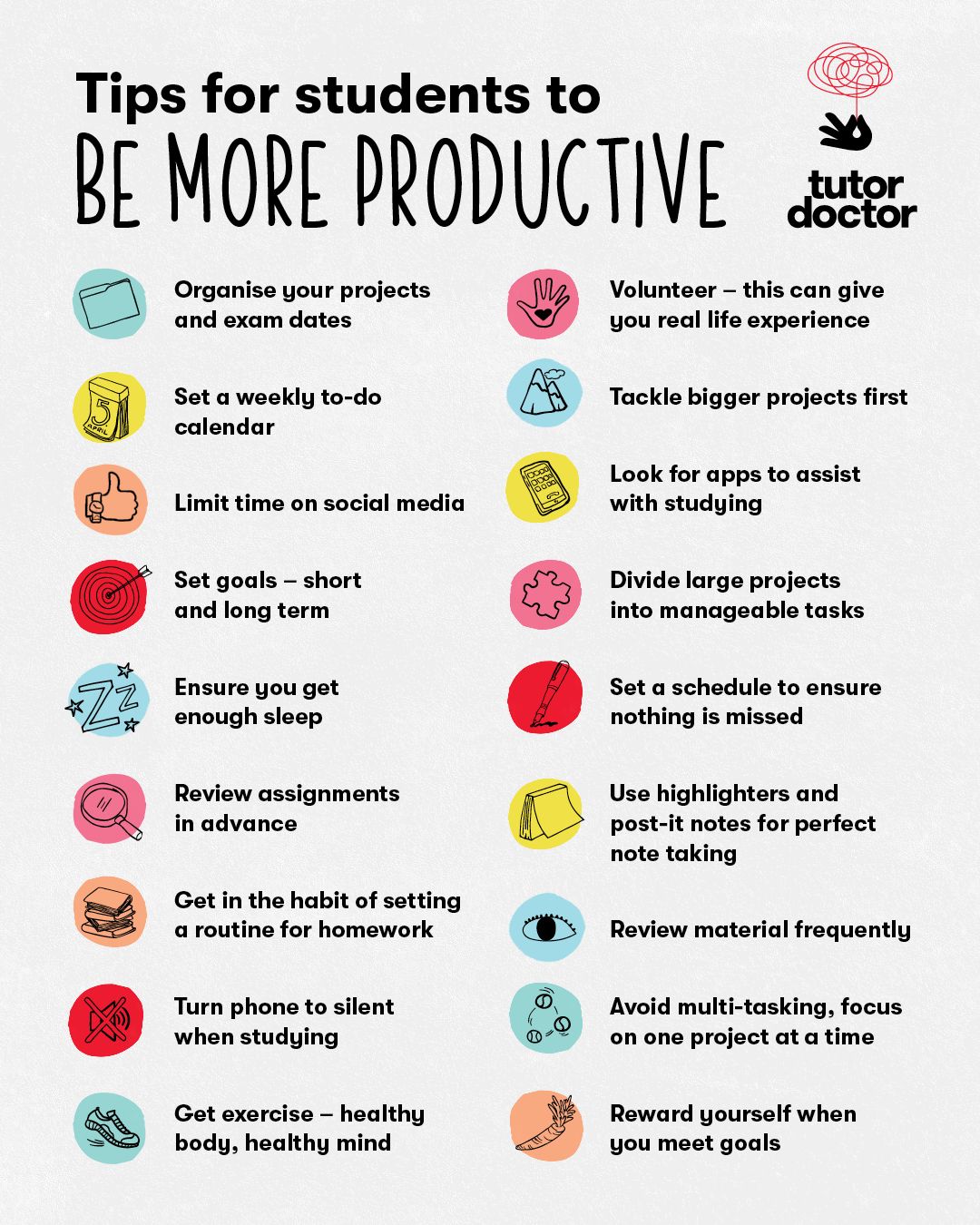
Effective Study Habits for College Students to Maximize Productivity
1. Prioritize and Plan:

- Use a planner or to-do list to organize tasks and assignments.
- Break down large projects into smaller, manageable chunks.
- Set realistic goals and deadlines.
2. Create an Optimal Study Environment:

- Find a quiet and distraction-free spot to study.
- Ensure good lighting and comfortable seating.
- Eliminate distractions such as social media, TV, or music.
3. Active Recall and Spaced Repetition:
- Regularly test yourself on the material through quizzes or flashcards.
- Review notes and materials at increasing intervals to improve memory retention.
- This helps you identify areas of weakness and reinforce learning.
4. Utilize Technology:
- Use note-taking apps, flashcards software, or online study tools.
- Explore educational videos, simulations, or podcasts to supplement your learning.
- Take advantage of online resources like academic databases or library repositories.
5. Collaboration and Peer Support:
- Form study groups with classmates to discuss concepts and share insights.
- Seek help from teachers, professors, or tutors as needed.
- Participate in class discussions and ask questions to clarify understanding.
6. Regular Breaks:
- Take short breaks every hour or so to prevent burnout and maintain focus.
- Engage in activities that refresh your mind, such as going for a walk or listening to music.
7. Active Learning Techniques:
- Rewrite notes in your own words.
- Create concept maps or diagrams to visualize connections between ideas.
- Summarize key points and make connections to real-world examples.
8. Sleep and Exercise:
- Get sufficient sleep (7-9 hours per night).
- Engage in regular exercise to reduce stress and improve cognitive function.
- Take care of your physical and mental well-being.
9. Revision and Reflection:
- Regularly review your notes and summaries to reinforce learning.
- Reflect on your study techniques and make adjustments as needed.
- Identify areas where you struggled and seek ways to improve.
10. Reward and Recognition:
- Celebrate your accomplishments and reward yourself for completing tasks.
- This will motivate you to stay on track and maintain productivity.## Maximizing Productivity: Study Tips For College Students
Executive Summary
This article provides a comprehensive guide to effective study habits for college students. By implementing these strategies, students can optimize their time, improve their focus, and achieve academic success.
Introduction
College life demands a high level of academic rigor and personal responsibility. To succeed in this challenging environment, students must adopt efficient study habits that maximize productivity and knowledge retention. This article outlines key study tips and strategies designed to enhance student performance and academic outcomes.
FAQ
1. How many hours should I study each day?
The amount of study time required varies depending on factors such as the difficulty of the course, the student’s learning style, and the workload. As a general guideline, aim for at least two hours of focused study for every hour of lecture.
2. What is active learning, and why is it important?
Active learning involves engaging with the material in a meaningful way, rather than passively listening or reading. It includes methods such as note-taking, discussing the material with peers, and applying it to real-world situations. Active learning enhances understanding and long-term retention.
3. How can I stay motivated to study?
Motivation is crucial for maintaining consistent study habits. Set realistic goals, reward yourself for achievements, and find a study environment that fosters focus. Additionally, consider forming study groups or connecting with classmates to enhance motivation and accountability.
Subtopics
Time Management
- Create a study schedule: Allocate specific time slots for studying and stick to them.
- Prioritize tasks: Identify the most important tasks and complete them first.
- Use a to-do list: Write down assignments and deadlines to stay organized.
- Take breaks: Regular breaks help improve focus and prevent burnout.
- Minimize distractions: Create a study environment free from noise, social media, and other distractions.
Active Learning Strategies
- Take effective notes: Annotate lectures, summarize key points, and actively engage with the material.
- Engage in discussions: Discuss concepts with peers, ask questions, and participate in class activities.
- Apply knowledge: Practice solving problems, applying concepts to real-world situations, and testing yourself through self-quizzes.
- Use flashcards: Create flashcards to memorize key terms, definitions, and formulas.
- Teach the material: Explain concepts to others to reinforce your understanding.
Focus and Concentration
- Choose an optimal study environment: Find a quiet, comfortable place with minimal distractions.
- Set short-term goals: Break down large tasks into smaller, more manageable chunks.
- Eliminate distractions: Put away electronic devices, close unnecessary tabs, and create a distraction-free study zone.
- Practice mindfulness: Take a few minutes each day to practice mindfulness meditation or deep breathing exercises to improve focus.
- Reward yourself: Acknowledge your accomplishments and reward yourself with something you enjoy to maintain motivation.
Note-Taking Techniques
- Use different colors: Assign specific colors to headings, main points, and supporting details.
- Draw diagrams and mind maps: Visualize concepts and connections to enhance understanding.
- Summarize and highlight: Condense key points into concise summaries and highlight important sections.
- Review notes regularly: Revisit your notes within 24 hours to reinforce memory and fill in any gaps.
- Use a note-taking app: Explore note-taking apps that offer features such as organization, collaboration, and search functions.
Test Preparation
- Start early: Begin studying for exams well in advance to avoid last-minute cramming.
- Review lecture notes and textbooks: Revisit your notes and highlight key concepts.
- Practice past papers and practice questions: Simulate exam conditions and identify areas for improvement.
- Form study groups: Collaborate with peers to review material, test each other, and share insights.
- Seek help from professors and TAs: Feel comfortable reaching out to instructors for clarification or additional support.
Conclusion
By implementing the study tips outlined in this article, college students can maximize their productivity, improve their focus, and achieve academic excellence. These strategies provide a comprehensive approach to effective studying, allowing students to optimize their time, engage with the material, and enhance their overall learning experience. Remember, consistency and determination are key to reaping the benefits of these study tips and achieving academic success.
Keyword Tags
- College Study Tips
- Study Habits
- Productivity
- Focus
- Time Management