Virtual Reality in Education: Beyond the Classroom
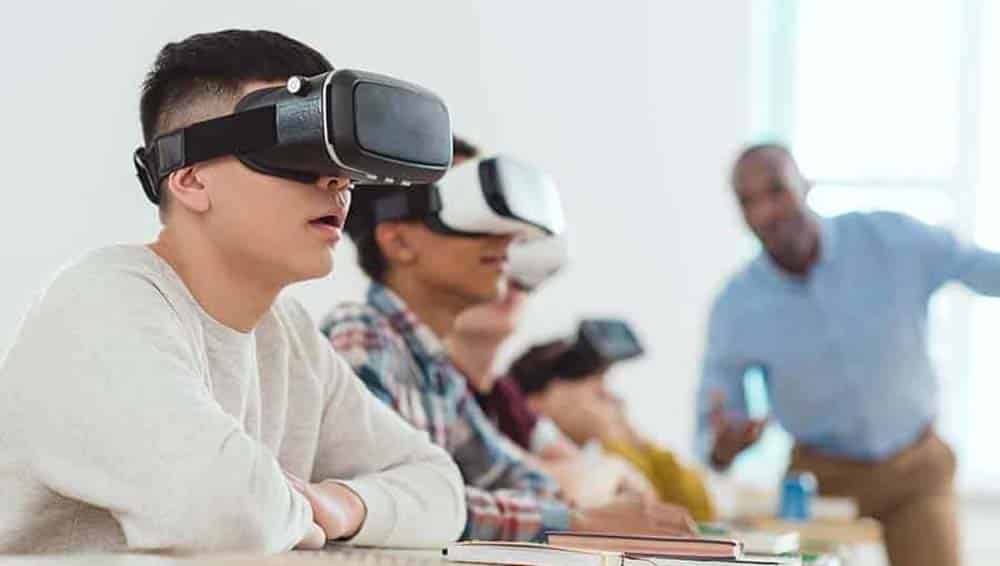
Virtual Reality (VR) has emerged as a transformative tool in the educational landscape, offering immersive and engaging learning experiences that transcend the limitations of traditional classrooms.

Benefits of VR in Education:
1. Immersive and Engaging:
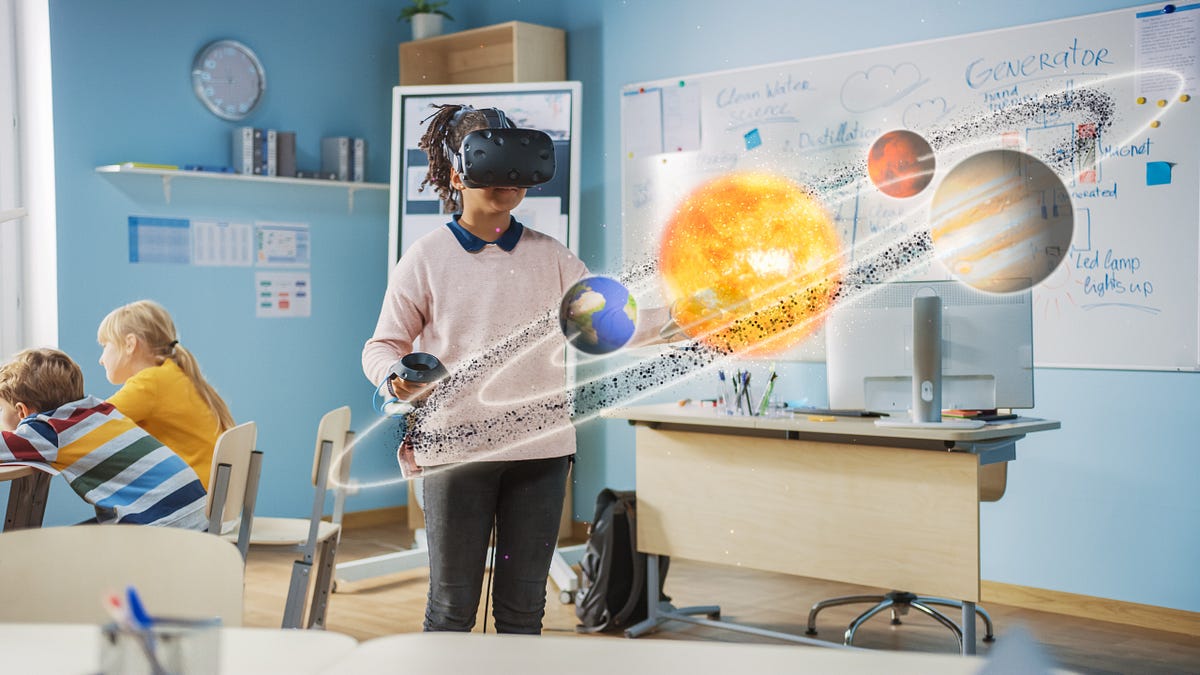
VR transports students into realistic, interactive environments, fostering deeper comprehension and retention of concepts.
2. Personalized Learning:
VR allows for individualized learning paths, catering to different learning styles and paces. Students can explore content at their own speed and focus on areas that challenge them.
3. Safe and Risk-Free Exploration:
VR provides a safe and controlled environment for students to engage in virtual field trips, experiments, and simulations.
4. Collaboration and Teamwork:
Multi-user VR experiences facilitate collaboration and teamwork, allowing students to work together on projects and solve problems in virtual spaces.
Applications of VR in Education:
1. Science and STEM Education:
VR allows students to visualize complex scientific concepts, conduct virtual experiments, and explore the human body in unprecedented detail.
2. History and Social Studies:
Students can travel back in time and experience historical events firsthand, explore different cultures, and study social issues in an immersive way.
3. Language Learning:
VR creates realistic foreign language learning environments, allowing students to interact with native speakers and practice their language skills in an authentic context.
4. Arts and Music:
VR provides opportunities for students to explore art galleries, music performances, and other creative experiences that enhance their appreciation and understanding of the arts.
Challenges and Considerations:
1. Cost and Accessibility:
VR headsets and software can be expensive, which may limit access to all students.
2. Motion Sickness:
Some users may experience motion sickness or discomfort in VR environments.
3. Educational Content:
There is a need for high-quality educational content specifically designed for VR.
Future Prospects:
The future of VR in education holds exciting possibilities, including:
1. Haptics and Multisensory Feedback:
VR experiences will incorporate haptics and multisensory feedback to provide more immersive and interactive experiences.
2. Adaptive Learning:
VR will be integrated with adaptive learning platforms, allowing for personalized learning plans based on student progress.
3. Virtual Assessments:
VR will be used for assessments, providing real-time feedback and evaluation.
4. Augmented Reality (AR) Integration:
VR will merge with AR to create hybrid experiences that blend virtual and real-world environments.
Conclusion:
Virtual Reality has the potential to revolutionize education by providing immersive, engaging, and personalized learning experiences. As the technology continues to advance and educational content becomes more widely available, VR is poised to transform classrooms and empower students to explore the world and learn in ways that were once unimaginable.## Beyond The Classroom: Exploring Virtual Reality In Education
Executive Summary
Virtual reality (VR) is rapidly transforming the educational landscape, offering immersive and engaging learning experiences that extend beyond the traditional classroom walls. This article delves into the transformative power of VR in education, examining its benefits, applications, and the future of this innovative technology in shaping the way we learn.
Introduction
Education is at the cusp of a revolution, one that is being driven by the advent of immersive technologies such as virtual reality. VR is not just a passing trend; it is a game-changer with the potential to revolutionize the way we learn, interact, and experience the world around us.
FAQ
1. What is Virtual Reality (VR)?
VR is a cutting-edge technology that creates immersive, computer-generated environments that users can explore and interact with using specialized headsets and controllers.
2. How is VR Used in Education?
In education, VR is being used to create immersive learning experiences that allow students to explore historical events, conduct scientific experiments, and even travel to faraway destinations, all from the comfort of their classrooms or homes.
3. What are the Benefits of VR in Education?
VR offers numerous benefits in education, including enhanced engagement, improved retention, increased motivation, and the development of essential skills like problem-solving and collaboration.
Subtopics
1. Immersive Learning Experiences
VR transports learners into immersive virtual environments, providing a more engaging and interactive learning experience.
- 360-Degree Exploration: Students can explore virtual worlds from any angle, gaining a deeper understanding of complex concepts.
- Interactive Simulations: VR simulations allow students to safely practice skills in realistic environments, such as performing virtual surgery or conducting scientific experiments.
- Virtual Field Trips: Students can embark on virtual field trips to historical sites, museums, and faraway destinations, enriching their learning experiences.
2. Enhanced Engagement and Motivation
VR captivates learners with its immersive and interactive nature, boosting engagement and motivation.
- Gamification and Storytelling: VR can incorporate game-like elements and compelling narratives to make learning more enjoyable and memorable.
- Real-World Connections: By simulating real-world scenarios, VR helps students connect their learning to practical applications.
- Personalized Learning: VR allows students to learn at their own pace and explore topics that interest them most, fostering a more personalized learning experience.
3. Improved Retention and Comprehension
VR helps learners retain and comprehend information more effectively.
- Multisensory Learning: VR engages multiple senses, creating a more immersive and memorable learning experience.
- Interactive Exploration: Students can interact with virtual environments and manipulate objects, aiding in the consolidation of knowledge.
- Reduced Cognitive Load: VR can present complex information in a visually appealing and interactive way, reducing cognitive load and improving understanding.
4. Skill Development and Training
VR provides opportunities for students to develop essential skills and train for real-world scenarios.
- Problem-Solving and Decision-Making: Virtual simulations allow students to practice problem-solving and decision-making in immersive environments.
- Collaboration and Communication: VR can foster collaboration among learners, enhancing communication and teamwork skills.
- Empathy and Perspective-Taking: VR simulations can help students develop empathy and perspective-taking by immersing them in different environments and perspectives.
5. Accessibility and Inclusivity
VR makes learning more accessible and inclusive.
- Overcoming Geographical Barriers: VR can bring educational experiences to students regardless of their physical location or disabilities.
- Personalized Support: VR can provide personalized support to students with learning difficulties or special needs, allowing them to learn at their own pace.
- Diverse and Culturally Relevant Content: VR can create diverse and culturally relevant content, reflecting the needs of all learners.
Conclusion
Virtual reality is transforming education, offering limitless possibilities for immersive, engaging, and impactful learning experiences. By embracing the power of VR, we can create a more dynamic, accessible, and transformative educational landscape that prepares learners for the challenges and opportunities of the 21st century.
Relevant Keyword Tags
- Virtual Reality in Education
- Immersive Learning
- Educational VR Applications
- Benefits of VR in Education
- Future of VR in Education