Effective Time Management Tips for Student Success
1. Create a Master Schedule:
- Plot out all your commitments (classes, study time, work, extracurriculars, social events) in one place.
- Use a physical planner, digital calendar, or scheduling app.
- Color-code different categories for easy visualization.
2. Prioritize Tasks:
- Use the Eisenhower Matrix to categorize tasks as urgent/important, urgent/not important, not urgent/important, and not urgent/not important.
- Focus on completing the most critical tasks first.
3. Break Down Large Assignments:
- Dividing complex tasks into smaller, manageable chunks makes them less daunting.
- Set realistic deadlines for each subtask.
4. Use the Pomodoro Technique:
- Work in focused intervals (e.g., 25 minutes) separated by short breaks (e.g., 5 minutes).
- This helps maintain concentration and prevents burnout.
5. Delegate and Ask for Help:
- Identify tasks that can be outsourced or shared with others (e.g., study groups, study buddies).
- Don’t hesitate to reach out to professors, TAs, or classmates for clarification or support.
6. Leverage Technology:
- Use productivity apps for task management, note-taking, and calendar syncing.
- Consider using a noise-canceling app or website to minimize distractions.
7. Establish a Consistent Study Routine:
- Set aside specific time slots for studying each day.
- Create a dedicated study space that is free from distractions.
8. Avoid Procrastination:
- Tackle tasks as soon as they are assigned to prevent them from piling up.
- Reward yourself for completing tasks on time to stay motivated.
9. Learn to Say No:
- Protect your time by saying no to non-essential commitments that conflict with your priorities.
- Politely decline invitations or requests that you don’t have time for.
10. Evaluate and Adjust:
- Regularly review your time management strategies and make adjustments as needed.
- If a particular technique is not working, try something else.
Additional Tips:
- Get enough sleep to stay focused and productive.
- Exercise regularly to reduce stress and improve concentration.
- Take breaks to prevent burnout and recharge.
- Practice mindfulness techniques to stay present and reduce distractions.
- Seek support from friends, family, or a mentor if needed.## Effective Time Management Tips For Student Success
Executive Summary
Time management is a crucial skill for students to master, as it enables them to effectively balance academic responsibilities, personal commitments, and well-being. By implementing strategic time management techniques, students can enhance their productivity, reduce stress, and achieve greater academic success. This article provides comprehensive time management tips tailored specifically for students, empowering them to maximize their potential and thrive in their academic pursuits.
Introduction
In the fast-paced and demanding environment of academic life, effective time management is paramount for student success. Balancing lectures, assignments, extracurricular activities, and personal responsibilities can be challenging, leading to stress, procrastination, and diminished academic performance. However, by adopting a proactive approach to time management, students can harness the power of their time, optimize their schedules, and excel in their studies.
FAQs
- Q: Why is time management important for students?
- A: Time management allows students to prioritize tasks, optimize their schedules, reduce stress, and achieve a healthy work-life balance.
- Q: What are common time management challenges faced by students?
- A: Procrastination, distractions, poor planning, and lack of prioritization are common time management obstacles for students.
- Q: How can students improve their time management skills?
- A: Setting realistic goals, creating a structured schedule, utilizing productivity tools, and seeking support can enhance time management capabilities.
Top Time Management Subtopics
Goal Setting
Effective goal setting forms the foundation of time management.
- Define specific, measurable, achievable, relevant, and time-bound goals. This framework ensures clarity and provides a roadmap for action.
- Prioritize goals based on importance and urgency. Focus on completing the most critical tasks first.
- Break down large goals into smaller, manageable steps. This makes daunting tasks seem less overwhelming.
- Set deadlines for each step. Deadlines provide a sense of urgency and accountability.
Creating a Schedule
A structured schedule provides a blueprint for allocating time effectively.
- Plan your day in advance. Use a calendar or planner to schedule tasks, appointments, and study sessions.
- Be realistic about time estimates. Don’t overcommit yourself; allow for unexpected interruptions or delays.
- Include breaks in your schedule. Regular breaks prevent burnout and maintain focus.
- Stick to your schedule as much as possible. Consistency is key to forming good time management habits.
Task Management
Efficient task management involves organizing and prioritizing tasks effectively.
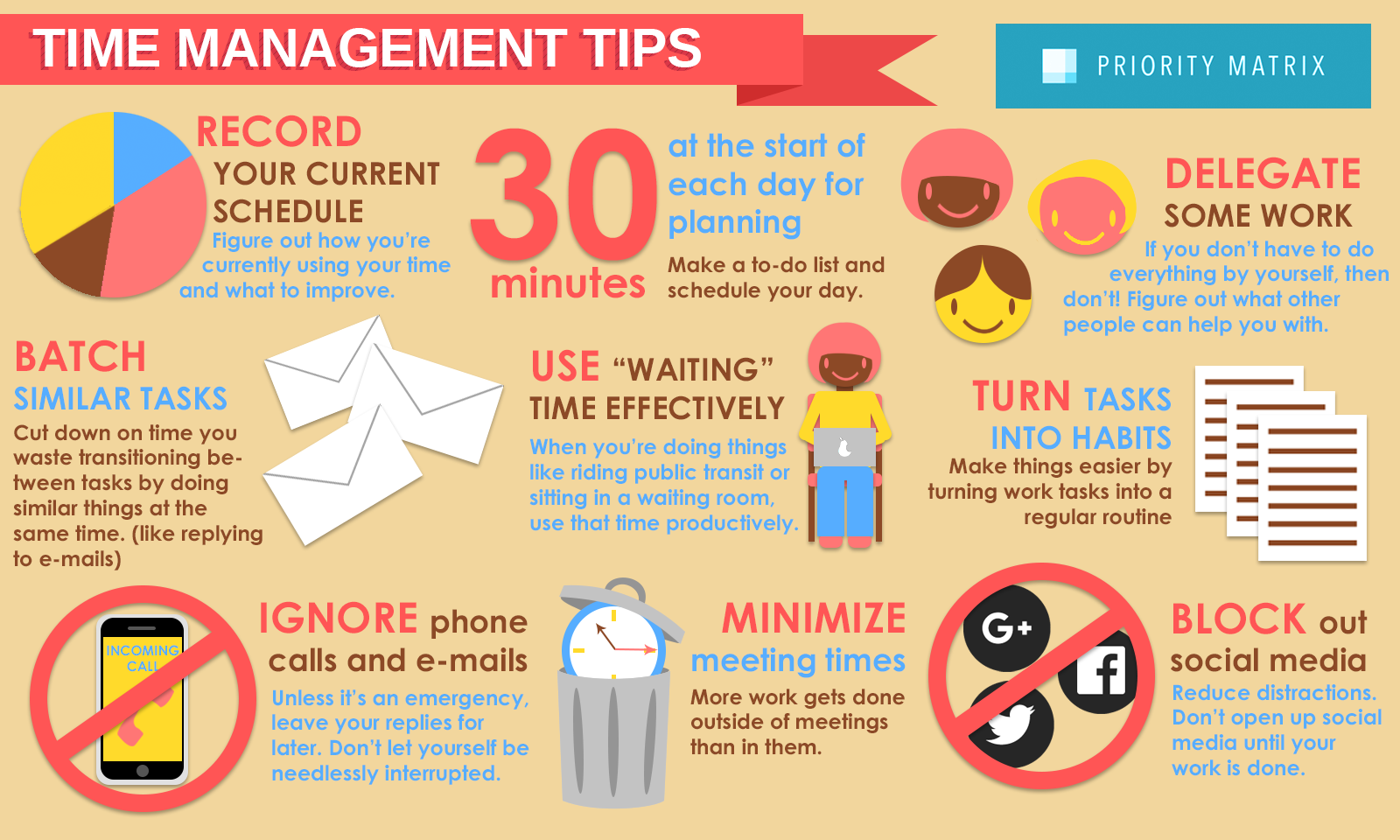
- Use a to-do list or task manager. This helps visualize tasks and keep track of progress.
- Prioritize tasks using the Eisenhower Matrix. Categorize tasks based on urgency and importance to determine what to focus on first.
- Delegate tasks when possible. If you have multiple responsibilities, delegate tasks to others to lighten your load.
- Use the Pomodoro Technique. Work for focused intervals (usually 25 minutes) followed by short breaks.
Minimizing Distractions
Distractions can sabotage time management efforts.
- Identify common distractions. Determine what typically diverts your attention, such as social media, noise, or cluttered spaces.
- Create a distraction-free study environment. Remove or minimize distractions during study sessions.
- Use distraction blocking apps. These apps can block access to distracting websites or notifications.
- Take regular breaks. Step away from your work periodically to clear your head and refocus.
Seeking Support
Time management can be challenging, and seeking support can boost your efforts.
- Join a study group. Collaboration and accountability can enhance motivation and time management skills.
- Consult with a tutor or advisor. They can provide guidance, support, and time management strategies.
- Utilize university resources. Many universities offer time management workshops, counseling services, or online resources.
- Ask for help from friends or family. They can provide encouragement, assistance with tasks, or simply lend an ear.
Conclusion
Effective time management is an essential skill for academic success. By implementing the strategies outlined in this article, students can maximize their time, reduce stress, and achieve their academic goals. Remember, time management is a journey, not a destination. It requires consistency, adaptation, and a willingness to learn from both successes and setbacks. By embracing these time management principles, students can unlock their potential and pave the way for future success.
Keyword Tags
Academic Success, Time Management, Goal Setting, Scheduling, Student Success