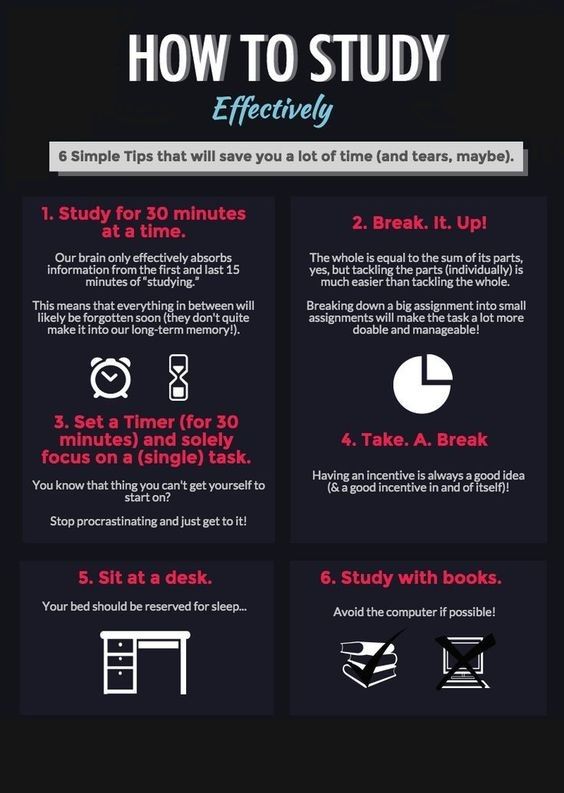
Effective Study Techniques for Maximizing Study Time
Active Recall:

- Retrieve information from memory by actively trying to remember it, without looking at notes.
- Use flashcards, write summaries, or explain concepts to yourself or others.
Spaced Repetition:

- Review material at increasing intervals (e.g., 10 minutes, 1 hour, 1 day) to strengthen memory retention.
- Use software or apps designed for spaced repetition.
Pomodoro Technique:
- Break down studying into focused sessions of 25 minutes, followed by a 5-minute break.
- After 4 Pomodoro cycles, take a longer break of 20-30 minutes.
SQ3R Method:
- Survey: Preview material by scanning headings, subheadings, and images.
- Question: Generate questions about the material to focus your reading.
- Read: Actively read the material, searching for answers to your questions.
- Recite: Close the book and summarize key concepts or answer your own questions.
- Review: Regularly go back over the material to reinforce learning.
Interleaving:
- Alternate studying different subjects or topics within a session, rather than focusing on one subject for extended periods.
- This improves memory and comprehension by preventing interference between similar concepts.
Chunking:
- Break down large amounts of information into smaller, manageable chunks.
- Focus on understanding one chunk at a time, then move on to the next.
Active Learning:
- Engage in activities that require you to apply or demonstrate your knowledge.
- Participate in discussions, complete assignments, or work on projects.
Visual Aids:
- Create diagrams, charts, or concept maps to represent information visually.
- These aids help organize thoughts and improve memory.
Collaboration:
- Study with classmates or peers.
- Explain concepts to each other, ask questions, and quiz each other.
- Collaboration can deepen understanding and identify areas where additional study is needed.
Environment Optimization:
- Create a dedicated study space with minimal distractions.
- Ensure the space has good lighting and ventilation.
- Minimize noise and avoid using electronic devices that can interfere with focus.## Executive Summary
This comprehensive guide explores effective study techniques to help students optimize their study time, improve retention, and achieve academic success. By implementing these techniques, students can maximize their learning potential and excel in their studies.
Introduction
Studying effectively is a crucial skill for academic success. With limited time and competing priorities, it’s essential to adopt study techniques that enhance comprehension, minimize distractions, and promote long-term memory. This article presents proven study methods that empower students to maximize their study time and achieve their academic goals.
FAQ
1. What is the best time to study?
Research suggests that studying in the morning or early afternoon is most effective for retaining information.
2. How long should I study for each subject?
Optimal study sessions range from 25 to 45 minutes, with short breaks in between.
3. What is the difference between active and passive studying?
Active studying involves engaging with the material through techniques like note-taking, summarizing, and practice questions, while passive studying is simply reading and re-reading.
Top 5 Study Techniques for Maximized Learning
1. Active Recall
Active recall forces students to retrieve information from memory without looking at their notes. This process strengthens neural pathways and improves long-term retention.
- Spaced Retrieval: Reviewing material at increasing intervals (e.g., 10 minutes, 1 hour, 1 day) enhances recall by reducing the fading of memory traces.
- Flashcards: Writing key terms and concepts on flashcards and quizzing oneself tests understanding and promotes active recall.
- Self-Testing: Regularly taking practice quizzes or creating exam-style questions helps students identify knowledge gaps and improve recall.
2. Pomodoro Technique
This time management method alternates between focused study sessions and short breaks.
- Session Duration: Study for 25 minutes without distractions.
- Break Duration: Take a 5-minute break to rest and refresh.
- Long Break: After four Pomodoro cycles, take a longer break of 15-30 minutes.
3. SQ3R Method
This systematic approach to reading and comprehending text involves five steps.
- Survey: Preview the material by reading headings, subheadings, and any summaries.
- Question: Formulate questions based on the survey to guide your reading.
- Read: Read the text actively, looking for answers to your questions.
- Recite: Close the text and recite what you have learned from memory.
- Review: Regularly review the material to reinforce understanding and improve retention.
4. Elaboration
Elaboration involves connecting new information to existing knowledge and experiences.
- Explanation: Explain concepts and ideas to yourself or others in your own words.
- Examples: Provide real-life examples or analogies to make concepts more relatable.
- Personalization: Relate the material to your personal life or interests to enhance comprehension.
5. Retrieval Practice
Regularly testing oneself on the material improves retrieval ability and strengthens memory consolidation.
- Practice Questions: Solve practice questions or complete assignments to reinforce understanding.
- Summary Writing: Summarize the material in your own words to test your comprehension.
- Teaching Others: Explain the material to someone else to identify areas where your understanding is weak.
Conclusion
By implementing these proven study techniques, students can maximize their study time, enhance comprehension, and achieve academic excellence. Active recall, the Pomodoro technique, the SQ3R method, elaboration, and retrieval practice provide effective strategies to improve retention, minimize distractions, and promote a deeper understanding of the material. By adopting these techniques, students can unlock their full learning potential and achieve their academic goals.
Keyword Tags
- Effective Study Techniques
- Active Recall
- Pomodoro Technique
- SQ3R Method
- Elaboration
- Retrieval Practice