
Enhanced Memory Capacity:
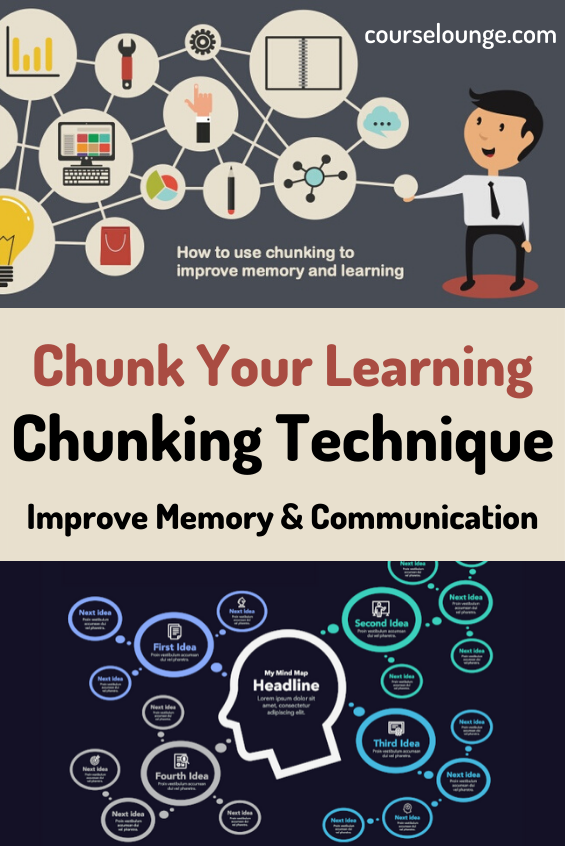
- Chunking breaks down large amounts of information into smaller, manageable units.
- Smaller units are easier for the brain to process and store, increasing overall memory capacity.
Improved Recall:

- Chunked information is organized in a logical way, making it easier to retrieve.
- When you need to recall information, you can focus on individual chunks rather than the entire body of text.
Reduced Cognitive Load:
- Chunking reduces the amount of information the brain has to process at once.
- This frees up cognitive resources, allowing for more effective learning and reasoning.
Increased Comprehension:
- As you chunk information, you actively process it, making connections between ideas.
- This deeper understanding improves comprehension and helps you retain information better.
Faster Learning:
- Chunking makes information more accessible, allowing for faster acquisition of knowledge.
- By breaking down complex concepts, you can grasp them more quickly and efficiently.
Better Memory Consolidation:
- Chunking promotes memory consolidation, which is the process of transferring information from short-term memory to long-term memory.
- By organizing information into chunks, you make it easier for the brain to consolidate it and retain it for longer periods.
Examples of Chunking:
- Memorizing a phone number by dividing it into smaller chunks: 555-1212
- Grouping items on a grocery list into categories: fruits, vegetables, dairy
- Breaking down a complex text into chapters and sections
- Summarizing a lecture into key concepts and supporting details## The Benefits Of Chunking For Retaining Information
Executive Summary
Chunking is a powerful learning technique that can help you retain information more effectively. By breaking down information into smaller, more manageable chunks, you can make it easier for your brain to process and store the information. This can lead to improved memory, better understanding, and increased academic success.
Introduction
In today’s fast-paced world, we are constantly bombarded with information. From the moment we wake up until the moment we go to bed, we are exposed to a never-ending stream of data. This can make it difficult to focus and to retain the information that we learn.
Chunking is a learning technique that can help you overcome this challenge. By breaking down information into smaller, more manageable chunks, you can make it easier for your brain to process and store the information. This can lead to improved memory, better understanding, and increased academic success.
FAQs
What is chunking?
Chunking is a learning technique that involves breaking down information into smaller, more manageable pieces. This can be done by grouping related items together, creating acronyms, or using other methods to make the information easier to remember.
Why is chunking effective?
Chunking is effective because it makes it easier for your brain to process and store information. When you break down information into smaller chunks, your brain can more easily identify the relationships between the different pieces of information. This makes it easier to remember the information and to retrieve it later.
How can I use chunking to improve my learning?
There are many different ways to use chunking to improve your learning. Some common techniques include:
- Grouping related items together. When you are studying, try to group related items together. For example, if you are studying for a history test, you might group together all of the information about the American Revolution.
- Creating acronyms. Acronyms are a great way to remember information. For example, the acronym HOMES can be used to remember the Great Lakes (Huron, Ontario, Michigan, Erie, and Superior).
- Using other methods to make the information easier to remember. There are many other methods that you can use to make the information easier to remember, such as using visual aids, creating flashcards, or singing songs.
Top 5 Benefits of Chunking
1. Improved Memory
Chunking can help you to improve your memory by making it easier for your brain to process and store information. When you break down information into smaller chunks, your brain can more easily identify the relationships between the different pieces of information. This makes it easier to remember the information and to retrieve it later.
2. Better Understanding
Chunking can also help you to better understand the information that you are learning. By breaking down information into smaller chunks, you can more easily see the structure and organization of the information. This can help you to better understand the relationships between the different pieces of information and to see how they fit together.
3. Increased Academic Success
Chunking can help you to achieve increased academic success by making it easier for you to learn and retain information. This can lead to better grades, higher test scores, and a greater understanding of the material that you are learning.
4. Improved Problem-Solving Skills
Chunking can also help you to improve your problem-solving skills. By breaking down problems into smaller chunks, you can more easily identify the different steps that need to be taken to solve the problem. This can make it easier to find solutions and to develop effective strategies for solving problems.
5. Enhanced Critical Thinking Skills
Chunking can also help you to enhance your critical thinking skills. By breaking down information into smaller chunks, you can more easily analyze the information and to identify the different perspectives and arguments that are being presented. This can help you to develop a more nuanced understanding of the information and to make more informed decisions.
Conclusion
Chunking is a powerful learning technique that can help you to improve your memory, better understand the information that you are learning, and achieve increased academic success. By breaking down information into smaller, more manageable chunks, you can make it easier for your brain to process and store the information. This can lead to improved memory, better understanding, and increased academic success.
Keyword Tags
- Chunking
- Learning
- Memory
- Retention
- Information