The Strong Correlation Between Attendance and Academic Success

Regular school attendance is a crucial factor in academic achievement. Numerous studies have established a consistent and positive correlation between the two.
How Attendance Impacts Success:
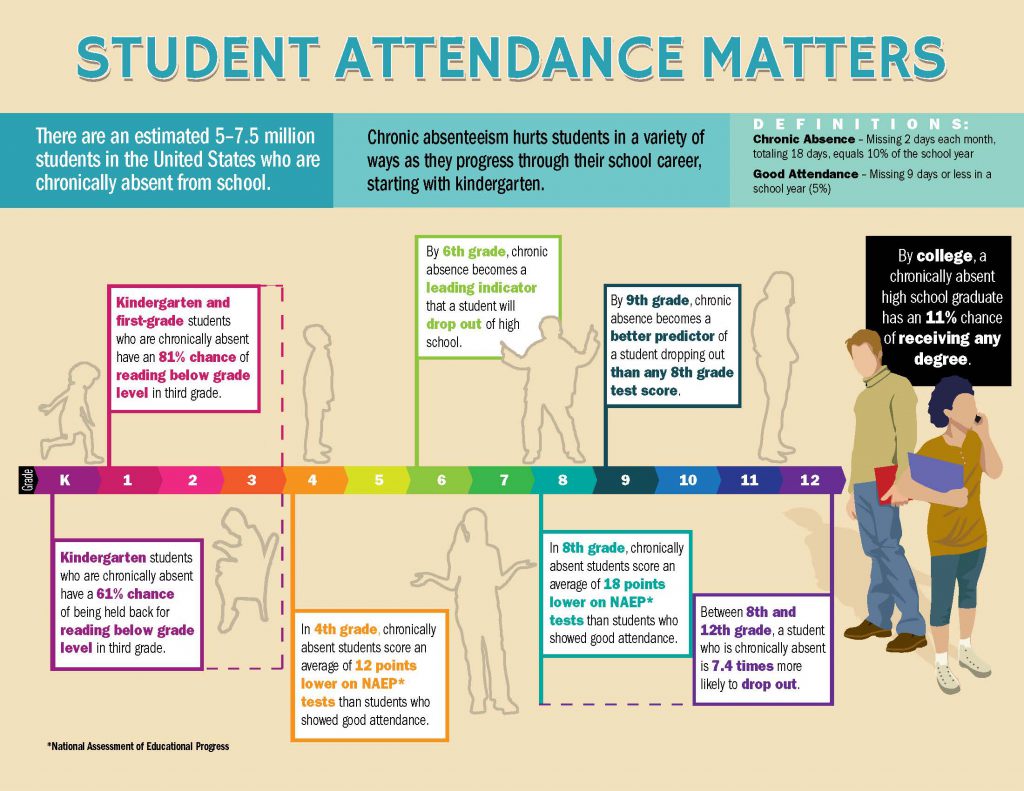
- Reduced Educational Gaps: Students who attend school regularly have fewer academic gaps and are more likely to catch up with their peers.
- Improved Concentration and Focus: Attending school consistently allows students to establish a routine, which enhances their ability to concentrate in class.
- Increased Opportunities for Learning: Regular attendance ensures that students have the opportunity to engage with new material, participate in discussions, and complete assignments.
- Teacher Support and Feedback: Students who attend school frequently have more opportunities to interact with teachers, receive feedback, and clarify concepts.
- Peer Support and Collaboration: Regular attendance facilitates social connections with peers, which can foster collaboration and shared learning experiences.
Consequences of Poor Attendance:
- Academic Delays and Learning Loss: Missed lessons can lead to significant gaps in understanding, making it more challenging for students to follow future lessons.
- Lower Grades and Test Scores: Students with poor attendance typically have lower grades and test scores due to missed content and reduced exposure to the curriculum.
- Increased Discipline Issues: Absent students are more likely to engage in disruptive behaviors in class due to feeling disconnected and out of touch.
- Higher Dropout Rates: Chronic absenteeism is a warning sign for potential dropout risk. Students who miss a significant number of school days are less likely to graduate.
Addressing Attendance Issues:
Recognizing the importance of attendance, schools and parents should collaborate to address attendance issues effectively:
- Identify Underlying Causes: Explore reasons for absences, such as family circumstances, transportation issues, or health problems.
- Implement Intervention Strategies: Implement early warning systems, attendance monitoring, and individualized support plans to promote regular attendance.
- Encourage Parental Involvement: Engage parents in the attendance decision-making process and provide them with resources to support their children’s attendance.
- Foster a Positive School Culture: Create a welcoming and supportive school environment where students feel connected and valued.
Conclusion:
The connection between attendance and academic success is undeniable. Regular attendance is essential for students to maximize their learning potential and achieve academic excellence. Addressing attendance issues through effective interventions and collaboration between schools and parents is crucial for ensuring positive outcomes for students.## The Connection Between Attendance And Academic Success
Executive Summary
This page analyzes the relationship between school attendance and academic performance. It highlights five key factors that contribute to this relationship, including:
- Engagement and Participation: Regular attendance allows students to engage actively in lessons, participate in discussions, and seek clarification from teachers.
- Content Coverage: Continuous presence ensures that students don’t miss crucial lessons and can grasp the entire curriculum effectively.
- Note Taking and Revision: Attentive students take effective notes, facilitating revision and retention of important concepts.
- Assessment Preparedness: Regular attendance provides ample time for students to prepare for assessments and seek support when needed.
- Peer Interactions and Support: School provides a platform for students to collaborate with peers, share knowledge, and receive assistance.
Introduction
Regular school attendance is widely recognized as a critical factor in achieving academic success. Research has consistently shown a strong positive correlation between attendance rates and student performance. This article delves into the intricate connection between attendance and academic success, exploring the key mechanisms and factors that contribute to this relationship.
FAQs
- Why is attendance so important for academic success?
- Attendance ensures consistent engagement, content coverage, note-taking, assessment preparedness, and peer interactions.
- How does attendance influence student engagement and participation?
- Present students actively participate in lessons, ask questions, and engage in group discussions, fostering deeper understanding.
- What are the cognitive benefits of regular attendance?
- Attentive students retain information better, develop higher-order thinking skills, and demonstrate improved problem-solving abilities.
Key Subtopics
Engagement and Participation
- Active Learning: Regular attendance allows students to actively engage in lessons, participate in discussions, and ask questions.
- Personalized Feedback: Teachers can provide personalized feedback to students who attend regularly, addressing individual needs.
- Collaboration and Peer Learning: Classrooms promote collaboration and peer learning, where students can share ideas and support each other.
- Motivation and Focus: Attending school consistently helps students develop self-discipline, motivation, and focus, enhancing their learning process.
- Social Skills Development: School attendance facilitates the development of social skills, such as communication, teamwork, and negotiation.
Content Coverage
- Curriculum Completion: Regular attendance ensures that students don’t miss crucial lessons, enabling them to cover the entire curriculum effectively.
- Reduced Learning Gaps: Continuous presence minimizes learning gaps, as students have the opportunity to grasp concepts as they are introduced.
- Building a Strong Foundation: Attending classes consistently helps build a strong academic foundation, upon which students can continue to build knowledge.
- Preparation for Higher Education and Careers: Adequate content coverage prepares students for higher education and future careers, where they need to possess a comprehensive understanding of core subjects.
- Reduced Risk of Dropping Out: Students who attend regularly are less likely to drop out of school, as they feel connected and supported.
Note Taking and Revision
- Effective Note-Taking Skills: Attentive students develop effective note-taking skills, capturing key concepts and ideas during lessons.
- Enhanced Recall and Retention: Regularly reviewing notes aids in recalling and retaining information over time.
- Preparation for Assessments: Reviewing notes helps students prepare for assessments, improve their understanding, and boost their confidence.
- Development of Analytical Skills: Note-taking encourages critical thinking and analytical skills, as students identify and organize important information.
- Improved Study Habits: Regular note-taking reinforces study habits, promoting effective revision and retention of knowledge.
Assessment Preparedness
- Timely Completion of Assignments: Regular attendance allows students ample time to complete assignments, seek clarification from teachers, and receive feedback.
- Reduced Anxiety and Stress: Prepared students experience reduced anxiety and stress during assessments, as they have had sufficient time to grasp the concepts.
- Improved Performance: Students who attend regularly tend to perform better on assessments, as they have a solid understanding of the material.
- Developing Test-Taking Strategies: Regular attendance provides opportunities to develop effective test-taking strategies, improving students’ performance on exams.
- Increased Confidence: Prepared students are more confident in their abilities, which leads to improved academic performance.
Peer Interactions and Support
- Collaboration and Knowledge Sharing: School attendance enables students to collaborate with peers, share knowledge, and learn from others’ perspectives.
- Peer Support and Encouragement: Classmates can provide emotional support, encouragement, and motivation to each other.
- Diversity of Perspectives: Classrooms are diverse environments where students encounter different perspectives and viewpoints, broadening their understanding.
- Social and Emotional Development: Regular attendance promotes social and emotional development, helping students develop skills such as empathy, cooperation, and conflict resolution.
- Sense of Belonging: School attendance fosters a sense of belonging and community, which positively impacts students’ overall well-being and academic performance.
Conclusion
In conclusion, there is a strong and multifaceted connection between school attendance and academic success. Regular attendance allows students to engage actively in their learning, ensuring comprehensive content coverage, effective note-taking, adequate assessment preparedness, and invaluable peer interactions. By recognizing the importance of attendance and addressing the factors that contribute to it, educators and parents can work together to create a supportive and engaging educational environment that fosters student success.
Keyword Tags:
- Attendance and Academic Success
- Engagement and Participation
- Content Coverage
- Assessment Preparedness
- Peer Interactions