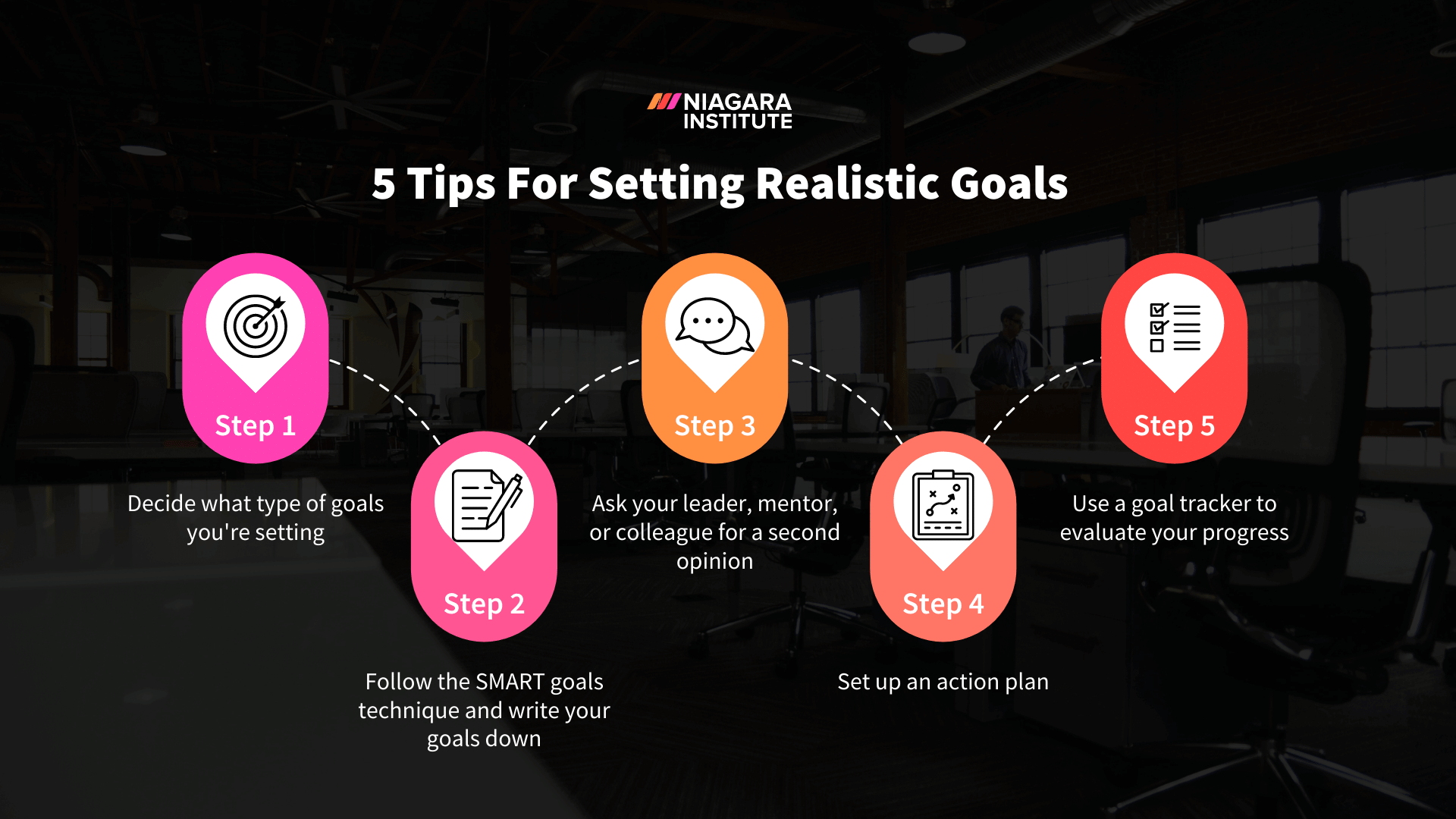
How to Set Realistic Goals and Avoid Feeling Overwhelmed
1. Break Down Big Goals:

- Divide large, daunting goals into smaller, manageable chunks.
- Focus on completing one smaller step at a time to avoid feeling overwhelmed.
2. Set SMART Goals:

- Ensure your goals are:
- Specific: Clearly defined and precise.
- Measurable: Quantifiable and trackable.
- Attainable: Realistic and within your capabilities.
- Relevant: Aligned with your values and priorities.
- Time-bound: Set a specific deadline.
3. Prioritize and Focus:
- Identify the most important goal for the day or week.
- Allocate time and resources accordingly to avoid multitasking and getting sidetracked.
4. Break Tasks into Smaller Steps:
- For complex tasks, create a step-by-step plan.
- Each step should be specific, actionable, and not too large.
5. Delegate and Seek Support:
- If possible, break down tasks and delegate them to others.
- Reach out to friends, family, or colleagues for support. Don’t try to do everything on your own.
6. Track Your Progress:
- Monitor your progress on a regular basis.
- Adjust your goals and strategies as needed.
- Celebrate milestones to stay motivated and avoid burnout.
7. Reward Yourself:
- Acknowledge your accomplishments, both large and small.
- Treat yourself to something that brings you joy and motivation.
8. Say “No” to Non-essential Tasks:
- Learn to decline additional commitments that conflict with your goals.
- Protect your time and energy for the things that truly matter.
9. Practice Self-Care:
- Prioritize your physical and mental well-being.
- Engage in activities that reduce stress and recharge your energy.
10. Adjust Goals Along the Way:
- Circumstances change, so don’t be afraid to adjust your goals as necessary.
- Re-evaluate and refine your plans to ensure they remain realistic and achievable.
Remember:
- The key to avoiding feeling overwhelmed is to break down your goals, prioritize, and focus on completing small steps consistently.
- Don’t hesitate to adjust your goals or seek support when needed.
- By following these strategies, you can set realistic goals and achieve them without feeling overwhelmed.## Executive Summary
Setting realistic goals is crucial for success. It helps you stay motivated, avoid feeling overwhelmed, and achieve your desired outcomes. This article provides a comprehensive guide on how to set realistic goals and overcome the challenges associated with goal setting.
Introduction
Setting goals is an essential part of personal and professional development. However, many individuals struggle to set realistic goals and often feel overwhelmed in the pursuit of unrealistic targets. This article will explore effective strategies to establish achievable goals and overcome the obstacles that impede progress.
FAQ
What are the benefits of setting realistic goals?
- Increased motivation
- Reduced frustration and stress
- Improved time management
- Greater sense of accomplishment
How do I know if my goal is realistic?
- It aligns with your values and interests
- It is specific, measurable, achievable, relevant, and time-bound (SMART)
- It is challenging yet attainable
What should I do if I feel overwhelmed by my goals?
- Break down goals into smaller steps
- Prioritize tasks based on importance
- Delegate responsibilities when possible
- Seek support from others
1. Define Your Values and Purpose
Identifying your values and purpose is the foundation for setting meaningful and realistic goals. Ask yourself what is truly important to you and what you want to achieve in life. Your goals should align with your values and serve a larger purpose, providing you with intrinsic motivation and direction.
- Emphasize your core beliefs and principles.
- Explore your passions and interests.
- Identify your unique strengths and talents.
- Consider your long-term aspirations and dreams.
- Align your goals with a higher purpose or cause.
2. Set Specific and Measurable Goals
Vague and ambiguous goals lead to confusion and lack of motivation. Instead, focus on goals that are specific, measurable, achievable, relevant, and time-bound (SMART). This approach ensures clarity, accountability, and a clear path to success.
- Describe your goal in detail, leaving no room for ambiguity.
- Quantify your goals whenever possible using specific metrics.
- Ensure your goals are challenging but achievable within a reasonable timeframe.
- Make sure your goals are relevant to your overall objectives and values.
- Establish clear deadlines to create a sense of urgency and accountability.
3. Break Down Goals into Smaller Steps
Overwhelming goals can paralyze progress. To avoid this, break down your goals into smaller, manageable steps. This makes the journey seem less daunting and provides a sense of accomplishment with each step completed.
- Identify the key tasks necessary to achieve your goal.
- Divide large tasks into smaller, more manageable actions.
- Create a detailed action plan with specific steps and deadlines.
- Prioritize tasks based on importance and urgency.
- Celebrate your progress along the way to stay motivated.
4. Prioritize and Delegate
With limited time and resources, it’s essential to prioritize and delegate tasks effectively. Identify the most critical activities and focus your efforts on them. Consider delegating tasks that can be handled by others, freeing up your time to work on higher-value activities.
- Use a prioritization matrix to identify the most important tasks.
- Allocate time wisely, focusing on high-priority activities.
- Identify tasks that can be delegated to others.
- Provide clear instructions and support to those you delegate to.
- Monitor progress and provide feedback to ensure alignment with goals.
5. Seek Support and Stay Accountable
Setting goals is a personal journey, but seeking support from others can enhance your chances of success. Surround yourself with positive and supportive individuals who believe in your abilities. Share your goals with others and ask for their encouragement and feedback.
- Identify a support system of family, friends, or mentors.
- Join a group or community of like-minded individuals.
- Find an accountability partner to keep you motivated.
- Regularly review your progress with your support system.
- Celebrate your accomplishments and learn from your setbacks with the support of others.
Conclusion
Setting realistic goals is not simply about achieving objectives but about creating a meaningful and fulfilling life. By defining your values, setting SMART goals, breaking them down into smaller steps, prioritizing and delegating effectively, and seeking support from others, you can overcome the challenges of goal setting and achieve your desired outcomes. Remember, the journey of goal setting is an ongoing process that requires flexibility, adaptability, and a commitment to continuous improvement.