Mindfulness and Time Management: Unlocking the Secrets to Effective Task Management
Introduction:
In the fast-paced world of today, effective time management is crucial for productivity, stress reduction, and overall well-being. Mindfulness, a practice of paying attention to the present moment without judgment, has emerged as a powerful tool for enhancing time management skills. By integrating mindfulness into our daily routine, we can unlock the secrets to effective task management, achieve greater focus, and gain a sense of control over our time.
The Benefits of Mindfulness in Time Management:

- Improved Focus and Concentration: Mindfulness helps train the mind to stay present and focused on the task at hand, reducing distractions and increasing productivity.
- Reduced Procrastination: By cultivating awareness of our thoughts and feelings, mindfulness can help us identify and challenge negative patterns of procrastination.
- Increased Self-Awareness: Mindfulness fosters a deeper understanding of our work habits, motivations, and challenges, enabling us to make more informed time management decisions.
- Enhanced Decision-Making: When we are mindful, we approach decisions with greater clarity and objectivity, leading to better time allocation choices.
- Reduced Stress and Anxiety: Time management can be a source of stress, but mindfulness can help regulate emotions and reduce anxiety, allowing us to approach tasks with a more balanced mindset.
Integrating Mindfulness into Time Management:
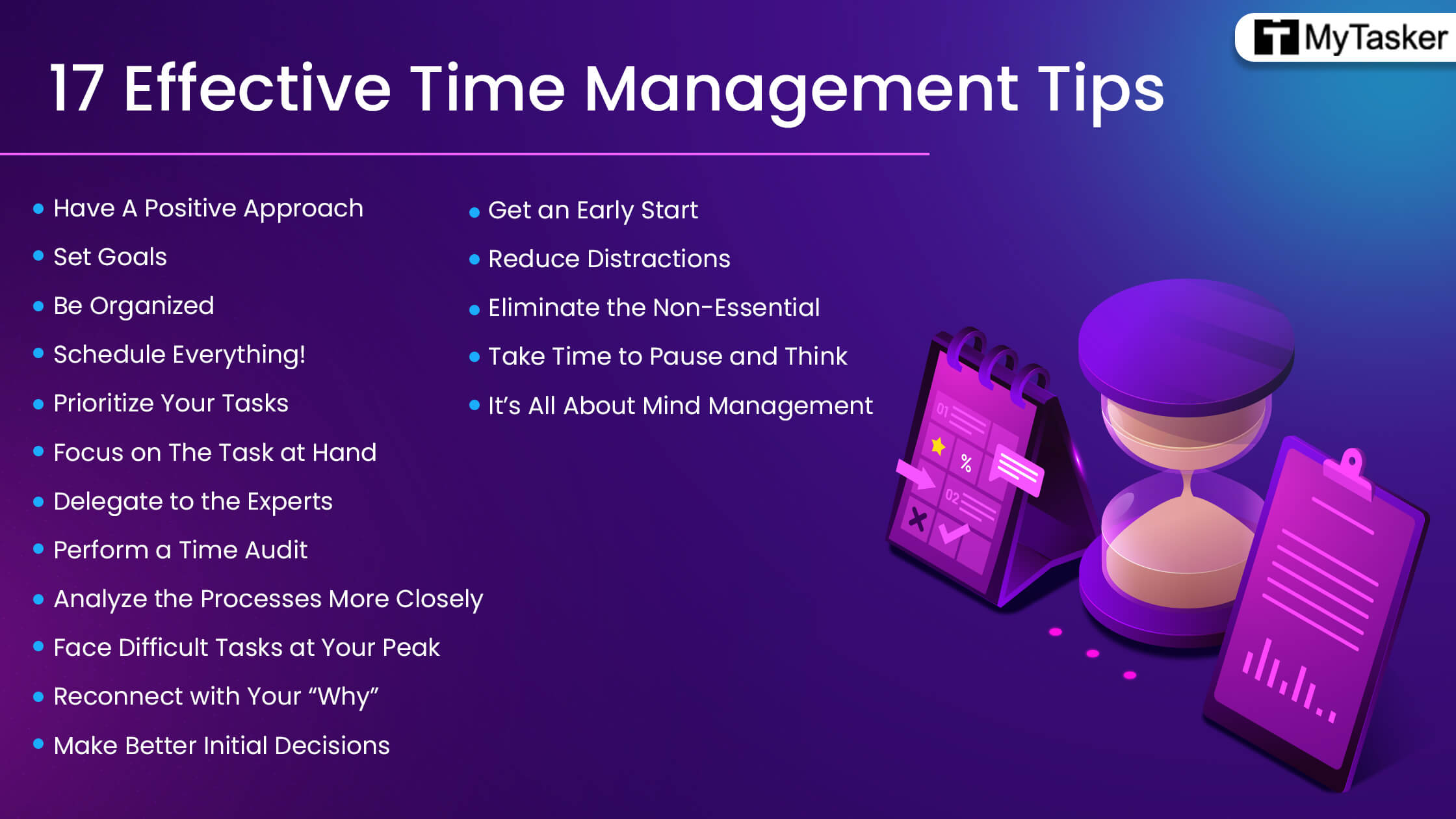
1. Mindfulness Meditation:
- Engage in daily mindfulness meditation to train your mind to stay present and reduce distractions.
- Focus on your breath, body sensations, or external sounds without judgment.
2. Mindful Task Planning:
- Before starting a task, take a moment to set an intention and clearly define the desired outcome.
- Break down large tasks into smaller, manageable chunks to minimize overwhelm.
3. Mindful Time Blocking:
- Schedule specific time slots for different tasks and tasks groups.
- During these time blocks, turn off notifications and distractions to maintain focus.
4. Mindful Task Switching:
- When transitioning between tasks, take a few breaths to mentally prepare for the next one.
- Acknowledge any thoughts or emotions that may arise and let them pass without judgment.
5. Mindful Breaks:
- Take regular short breaks throughout the day to rest and recharge.
- Engage in activities that promote relaxation and mindfulness, such as stretching, walking, or deep breathing.
Conclusion:
By integrating mindfulness into our time management practices, we can unlock the secrets to effective task management. Mindfulness helps us improve focus, reduce procrastination, enhance self-awareness, make better decisions, and approach tasks with reduced stress and anxiety. Through daily mindfulness practices, we can cultivate a more balanced and productive relationship with time. Remember, mindfulness is not a quick fix but a journey of continuous practice and self-discovery. By embracing mindfulness, we empower ourselves to navigate our busy lives with greater clarity, purpose, and a sense of control over our time.## Mindfulness And Time Management: Unlocking The Secrets To Effective Task Management
Executive Summary
Mindfulness and time management go hand-in-hand to empower individuals with increased focus, productivity, and well-being. This article will delve into the intersection of these practices, revealing the techniques and strategies that unlock exceptional task management abilities.
Introduction
In the fast-paced world we live in, effective time management is crucial for personal and professional success. Mindfulness, an ancient practice of present-moment awareness, plays a vital role in enhancing our ability to manage time wisely. By integrating mindfulness into our daily routines, we can overcome distractions, prioritize tasks, and maintain a sense of calm even amidst the most demanding schedules.
Frequently Asked Questions (FAQs)
1. How does mindfulness help in time management?
Mindfulness enhances focus, reduces stress, and improves decision-making, leading to more efficient task completion.
2. Can mindfulness reduce procrastination?
Yes, mindfulness helps us identify and overcome the underlying causes of procrastination, such as fear or overwhelm.
Subtopics
1. Mindful Task Prioritization
- Clearly define your goals: Establish specific, achievable, and meaningful goals to provide direction and motivation.
- Identify urgent vs. important tasks: Use the Eisenhower Matrix to categorize tasks based on urgency and importance, ensuring you focus on the most critical ones first.
- Declutter your to-do list: Regularly review and remove unnecessary tasks or break down large tasks into smaller, manageable chunks.
- Plan ahead: Use a planner or calendar to schedule tasks realistically, allowing for breaks and flexibility.
- Practice mindful delegation: Delegate tasks that others can handle to free up your time for more important matters.
2. Mindful Focus and Concentration
- Eliminate distractions: Create a dedicated workspace free from noise and clutter, and use noise-canceling headphones if needed.
- Set time limits: Use the Pomodoro Technique or similar methods to break down tasks into focused work sessions followed by short breaks.
- Embrace undivided attention: Practice staying present and focused on the task at hand, avoiding multitasking or checking emails during work time.
- Notice and overcome distractions: Gently acknowledge distractions when they arise, then redirect your attention back to the work at hand.
- Cultivate a positive mindset: Replace negative self-talk with positive affirmations to maintain focus and motivation.
3. Mindful Energy Management
- Prioritize tasks based on energy levels: Match tasks to your peaks and troughs of energy throughout the day.
- Take regular breaks: Step away from work periodically to rest, recharge, and clear your mind.
- Practice mindful breathing: Engage in deep breathing exercises to reduce stress and improve concentration.
- Nurture sleep hygiene: Establish a regular sleep-wake cycle to ensure optimal mental and physical well-being.
- Consider mindfulness-based stress reduction: Join a class or practice guided meditations to cultivate resilience and reduce stress levels.
4. Mindful Communication
- Set boundaries: Establish clear communication channels and boundaries to prevent interruptions during focused work sessions.
- Practice mindful listening: Pay full attention to others when they are speaking, avoiding distractions or formulating responses prematurely.
- Communicate clearly and effectively: Express your needs and expectations politely and assertively, ensuring clarity and understanding.
- Use technology mindfully: Set limits on email and social media usage to avoid distractions and maintain focus.
- Foster a positive work environment: Collaborate with colleagues respectfully and create a harmonious work atmosphere.
5. Mindful Reflection and Adjustment
- Regularly review and adjust: Take time at the end of each day or week to reflect on your time management practices and make adjustments as needed.
- Identify areas for improvement: Use a journal or tracking tool to pinpoint areas where you can enhance your time management skills.
- Celebrate successes: Acknowledge and reward your accomplishments to reinforce positive habits and maintain motivation.
- Seek support when needed: Consider working with a coach or therapist if you experience persistent challenges with time management.
- Embrace a growth mindset: View setbacks as opportunities for learning and improvement, and continuously strive for self-enhancement.
Conclusion
Mindfulness and time management are powerful allies that empower individuals to achieve greater productivity, focus, and well-being. By integrating these practices into our daily routines, we can unlock the secrets to effective task management, overcoming distractions, prioritizing wisely, and living a more balanced and fulfilling life.
Keyword Tags
- Mindfulness and time management
- Task prioritization
- Focus and concentration
- Energy management
- Mindful communication