Role of AI in Distance Learning and Online Education
Artificial Intelligence (AI) is revolutionizing distance learning and online education by enhancing accessibility, personalization, and effectiveness. Here’s an overview of its key roles:
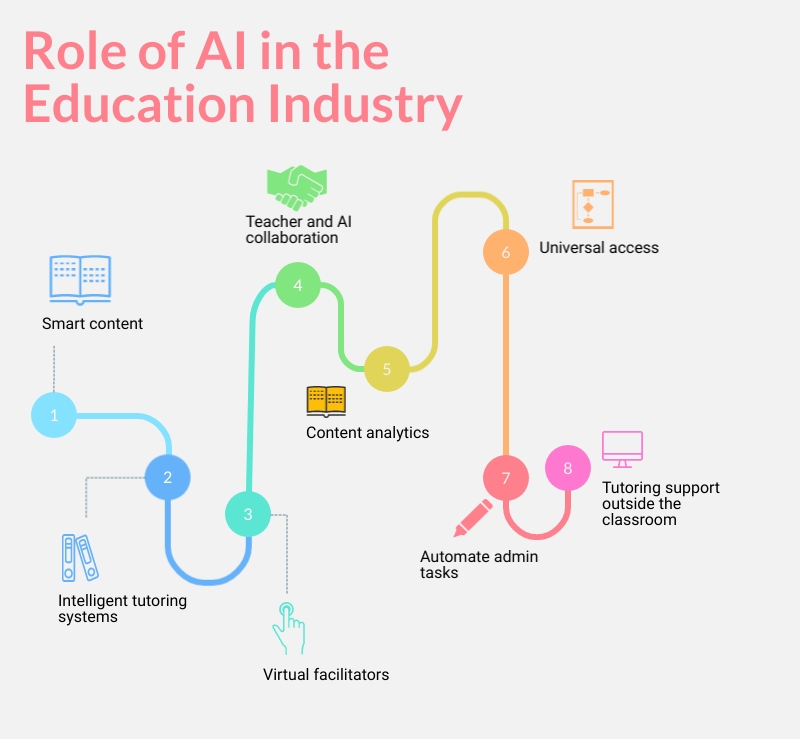
1. Personalized Learning Experiences:
- Adaptive Learning: AI algorithms track student progress and tailor content and activities to their individual needs.
- Personalized Feedback: AI-powered chatbots or virtual assistants provide real-time feedback on assignments and quizzes.
- Recommender Systems: AI algorithms suggest relevant resources and learning paths based on students’ interests and learning history.
2. Accessibility and Equity:
- Digital Assistants: AI-powered digital assistants help students with disabilities navigate online platforms and access learning materials.
- Translation and Localization: AI enables seamless translation of content into multiple languages, making online education more accessible globally.
- Automated Accessibility Checks: AI algorithms can scan course materials for accessibility issues to ensure equal access for all learners.
3. Skill Assessment and Feedback:
- Automated Grading: AI can automatically grade assignments, quizzes, and exams, reducing manual workload and providing timely feedback.
- Virtual Proctors: AI-powered proctoring systems can monitor online exams to prevent cheating and ensure test integrity.
- Skill Analysis: AI algorithms can analyze student responses to identify strengths, weaknesses, and areas for improvement.
4. Content Creation and Delivery:
- Intelligent Content Generation: AI can create textbooks, slides, and interactive learning materials that are tailored to students’ learning styles.
- Chatbot-Assisted Learning: AI-powered chatbots can provide additional context, answer questions, and guide students through learning materials.
- Virtual Reality and Augmented Reality: AI enhances VR and AR experiences, creating immersive learning environments that engage students.
5. Data Analytics and Insights:
- Student Performance Analysis: AI algorithms analyze student data to identify patterns, predict outcomes, and provide insights into their learning progress.
- Instructor Support: AI provides instructors with detailed analytics on student engagement, comprehension, and areas needing improvement.
- Curriculum Optimization: AI can analyze learning outcomes and feedback to optimize curriculum design and delivery.
6. Administrative Efficiency:
- Automated Course Enrollment: AI can streamline course enrollment processes and automate communication with students.
- Chatbot-Supported Student Support: AI-powered chatbots provide 24/7 support to students, answering queries and resolving issues.
- Plagiarism Detection: AI algorithms can detect plagiarism in student submissions, promoting academic integrity.
Conclusion:
AI is transforming distance learning and online education, making it more accessible, personalized, effective, and engaging for both students and instructors. By leveraging the power of AI, educational institutions can enhance the quality of learning, reduce barriers to access, and empower students to succeed in their educational journeys.## The Role Of Ai In Distance Learning And Online Education
Executive Summary
Artificial intelligence (AI) is rapidly transforming the landscape of distance learning and online education. From personalized learning experiences to automated grading and feedback, AI is empowering educators and students alike to achieve greater success. This article explores the multifaceted role of AI in distance learning, highlighting its key applications, benefits, and potential challenges.
Introduction
Distance learning and online education have emerged as powerful tools for expanding access to education and enhancing learning outcomes. With the integration of AI, these modalities are evolving to offer even more personalized, engaging, and effective learning experiences. AI-powered technologies are transforming every aspect of online education, from content delivery to assessment and feedback.
FAQs
- What is AI’s role in distance learning? AI is used to enhance personalization, automate tasks, improve assessment, and provide real-time feedback in distance learning environments.
- How does AI benefit students in online education? AI can personalize learning paths, offer personalized feedback, and provide virtual assistance, empowering students to learn at their own pace and receive tailored support.
- What are the challenges of using AI in distance learning? Ensuring data privacy, addressing potential bias, and providing adequate training for educators are key challenges in implementing AI in distance learning.
Key Applications of AI in Distance Learning
1. Personalized Learning Experiences
- Adaptive Learning Platforms: AI-powered platforms adjust content and assessments based on individual student progress and learning styles.
- Personalized Learning Paths: AI analyzes student data to create customized learning paths that cater to their specific needs and interests.
- Virtual Tutors and Assistants: AI-powered chatbots and virtual assistants provide students with personalized guidance and support.
2. Automated Assessment and Feedback
- Automated Grading: AI algorithms can grade assignments, quizzes, and other assessments objectively and efficiently, freeing up educators’ time.
- Personalized Feedback: AI can provide students with tailored feedback on their work, highlighting areas for improvement and offering suggestions.
- Real-Time Feedback: AI-powered systems offer instant feedback on assignments and discussions, allowing students to correct misunderstandings and improve their learning outcomes.
3. Enhanced Communication and Engagement
- Virtual Classrooms: AI-enabled virtual classrooms provide immersive learning experiences with interactive simulations, collaborative tools, and real-time communication.
- Social Learning Platforms: AI can foster social interaction and collaboration among students by recommending peer connections and facilitating group projects.
- Personalized Communication: AI-powered chatbots and email systems can provide personalized updates, announcements, and reminders to students.
4. Data Analytics and Insights
- Student Progress Tracking: AI can track student progress and identify areas where they may need additional support.
- Educator Performance Evaluation: AI can analyze educator performance and provide insights into effective teaching strategies.
- Program Evaluation: AI can evaluate the effectiveness of distance learning programs and identify areas for improvement.
5. Future Trends in AI for Distance Learning
- Immersive Virtual Reality Learning: AI-powered VR environments will create realistic and engaging learning experiences.
- Adaptive Learning Systems with Gamification: AI will enhance learning with game-like elements to increase student motivation and engagement.
- AI-Powered Content Creation: AI will assist educators in creating personalized and interactive learning content.
Conclusion
AI is revolutionizing distance learning and online education, empowering educators and students to achieve greater success. From personalized learning experiences to automated grading and feedback, AI is transforming every aspect of online education. As AI continues to advance, we can expect even more innovative applications that will enhance the learning experience and make education more accessible and effective for all.
Keywords
- AI in distance learning
- Personalized learning
- Automated assessment
- Virtual classrooms
- Data analytics in education