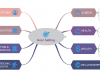
Harnessing AI’s Power for Immersive Learning Experiences
Artificial Intelligence (AI) is revolutionizing the way educational content is created and delivered, transforming it from passive to engaging and interactive. Here’s how you can leverage AI to create captivating content that fosters learning:

1. Personalized Learning Paths:

- AI algorithms analyze learner data to create personalized learning journeys tailored to individual needs and interests.
- By recommending relevant content, adaptive assessments, and personalized feedback, AI empowers learners to progress at their own pace and focus on areas where they need improvement.
2. Immersive Simulations and Virtual Reality (VR):
- AI-powered simulations create realistic and interactive environments where learners can experience real-world scenarios and practice decision-making in a safe and controlled setting.
- VR environments immerse learners in highly engaging experiences, enhancing recall and comprehension.
3. Gamification and Interactive Quizzes:
- AI-designed games and quizzes make learning fun and challenging, motivating learners to engage with the content.
- AI tracks learner progress and provides real-time feedback, fostering a sense of accomplishment and encouraging repetition.
4. Chatbots and Virtual Assistants:
- AI-powered chatbots and virtual assistants provide 24/7 support to learners, answering questions, providing guidance, and empowering them to seek assistance whenever needed.
- This instant and personalized support removes barriers to learning and promotes a sense of accessibility.
5. Automated Content Creation:
- AI can generate engaging and accurate content, freeing up educators to focus on higher-value tasks.
- From automated grading to creating lesson plans and assessments, AI streamlines the content creation process and improves efficiency.
6. Language Translation and Accessibility:
- AI-driven translation tools make educational content accessible to learners from diverse linguistic backgrounds, promoting inclusivity and fostering global collaborations.
- This empowers learners to access information regardless of their native language.
7. Real-Time Feedback and Analytics:
- AI-powered analytics provide insights into learner engagement, content effectiveness, and areas for improvement.
- This data empowers educators to make informed decisions about their teaching methods and tailor content to meet specific learner needs.
Conclusion:
AI offers a wealth of possibilities to create immersive and engaging educational content. By harnessing AI’s capabilities, educators can transform learning into an active, personalized, and unforgettable experience. Embracing AI’s potential will unlock a new era of educational innovation and empower learners to thrive in a rapidly evolving world.## Creating Engaging Educational Content With Ai
Executive Summary
In this guide, we will explore the various ways that AI can be used to create engaging educational content. We will cover the different types of AI that can be used, the benefits of using AI for educational content creation, and the challenges that can be encountered.
Introduction
In recent years, the use of artificial intelligence (AI) in education has grown exponentially. AI can be used to automate tasks, personalize learning, and provide students with feedback and support. One of the most important applications of AI in education is the creation of engaging educational content.
FAQs
Q: What are the benefits of using AI to create educational content?
- AI can help to create more engaging and interactive content.
- AI can help to personalize learning experiences.
- AI can help to provide students with feedback and support.
Q: What are the challenges of using AI to create educational content?
- AI can be expensive to develop and implement.
- AI can be difficult to use and manage.
- AI can be biased.
Q: What are the different types of AI that can be used to create educational content?
- Natural language processing (NLP)
- Machine learning (ML)
- Deep learning (DL)
Subtopics
Natural Language Processing (NLP)
NLP is a branch of AI that focuses on understanding and generating human language. NLP can be used to create educational content in a variety of ways, such as:
- Generating text, such as articles, stories, and poems making it easier to create engaging educational content
- Translating text from one language to another
- Summarizing text making it quicker to generate content
- Answering questions providing students with immediate feedback
- Providing feedback on student writing
Machine Learning (ML)
ML is a branch of AI that focuses on training computers to learn from data. ML can be used to create educational content in a variety of ways, such as:
- Personalizing learning experiences by tracking student progress and adapting content to their individual needs
- Providing students with feedback and support by identifying areas where they need additional help
- Creating intelligent tutoring systems that can provide students with personalized instruction
- Developing educational games that are both fun and educational
- Grading student work
Deep Learning (DL)
DL is a branch of ML that focuses on training computers to learn from large amounts of data. DL can be used to create educational content in a variety of ways, such as:
- Creating realistic simulations that can be used for training purposes
- Developing virtual reality (VR) and augmented reality (AR) experiences that can make learning more immersive
- Creating personalized learning plans that are tailored to each student’s individual needs
- Predicting student outcomes which can assist teachers in taking necessary steps early on
Conclusion
AI has the potential to revolutionize the way that educational content is created and delivered. By using AI, educators can create more engaging and personalized learning experiences for their students. However, it is important to be aware of the challenges that can be encountered when using AI for educational content creation. By carefully considering the benefits and challenges, educators can make informed decisions about when and how to use AI to improve their teaching.
Keywords
- AI-generated content
- Educational content
- Machine learning
- Natural language processing
- Deep learning