Spaced Repetition: Unlocking Long-Term Memory
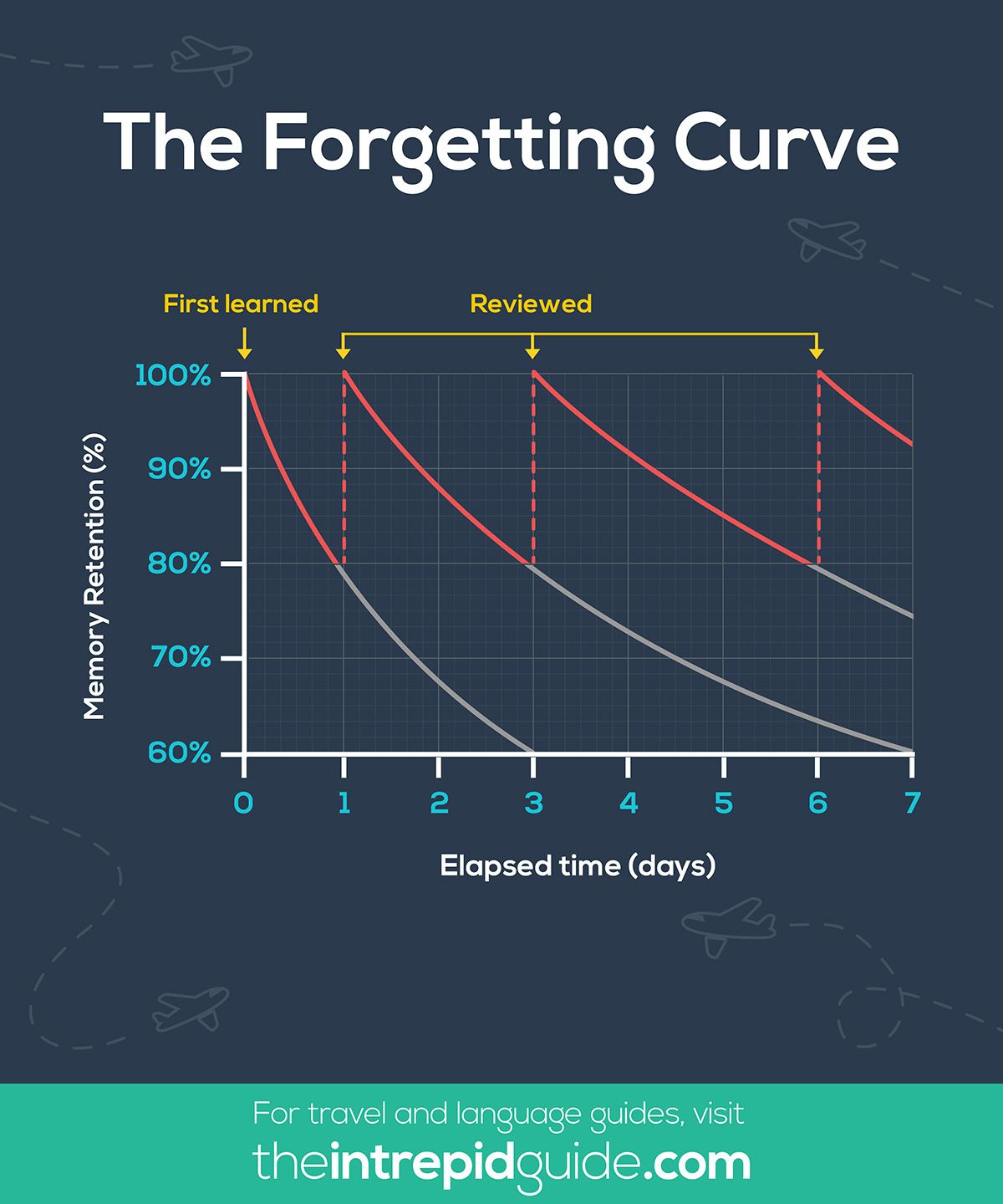
In the realm of learning and memory, spaced repetition stands tall as an invaluable technique for long-term retention. Unlike traditional memorization methods that cram information into short-term memory, spaced repetition leverages the natural forgetting curve to strengthen memories over time.
How Spaced Repetition Works
Spaced repetition is based on the concept that memories are more likely to be retained if they are reviewed at increasing intervals. This process mimics the way our brain naturally encodes information.
When we learn something new, it is initially stored in short-term memory. Over time, if the information is not actively recalled, it begins to fade away. However, by spacing out the repetitions at gradually increasing intervals, we reinforce the memory and push it into long-term storage.
Benefits of Spaced Repetition
- Improved retention: Spaced repetition has been shown to significantly enhance memory retention compared to traditional memorization methods.
- Increased understanding: By repeatedly reviewing information, learners gain a deeper understanding of the concepts being studied.
- Reduced study time: Spaced repetition allows learners to remember information with fewer study sessions, freeing up time for other tasks.
- Reduced stress: The spaced nature of the technique helps reduce anxiety and stress associated with forgetting.
Implementing Spaced Repetition
There are several methods for implementing spaced repetition:
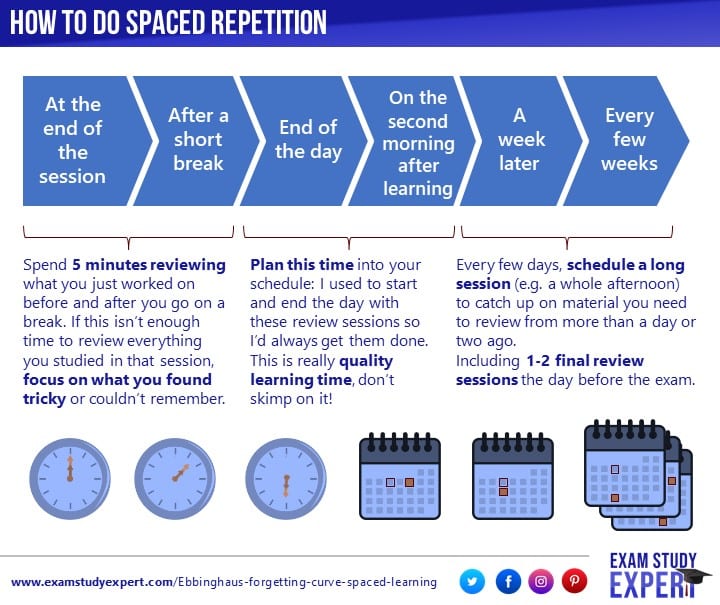
- Physical flashcards: Create flashcards with the question on one side and the answer on the other. Review the flashcards at increasing intervals (e.g., 10 minutes, 1 hour, 1 day).
- Software applications: Use software or apps that provide spaced repetition functionality, such as Anki or SuperMemo.
- Concept mapping: Create a hierarchical diagram that connects concepts and ideas. Regularly review the map to recall the information.
Conclusion
Spaced repetition is a powerful learning technique that can transform the way we retain information. By leveraging the natural forgetting curve, it allows us to encode memories deeply and access them effortlessly over the long term. Whether you’re studying for an exam, learning a new language, or simply seeking to expand your knowledge, incorporate spaced repetition into your learning process and experience the remarkable benefits of long-lasting memory.## Spaced Repetition: The Secret to Long-term Retention
Executive Summary
Spaced repetition is a powerful learning technique that involves reviewing information at increasing intervals to enhance long-term retention. This technique leverages the forgetting curve and actively challenges the brain to retrieve information, strengthening neural pathways and improving memory consolidation.
Introduction
If you’re tired of forgetting what you learn and want to improve your long-term retention, spaced repetition might just be the answer you’ve been searching for. This scientifically proven technique has been embraced by language learners, students, and professionals alike, showcasing its versatile benefits for knowledge acquisition and maintenance. Let’s delve into the world of spaced repetition, exploring its key concepts, applications, and the science behind its effectiveness.
FAQs
What is spaced repetition?
Spaced repetition is a learning technique where you review information at increasing intervals to strengthen memory retention. By repeatedly recalling information from your memory, you force your brain to make an effort to retrieve it, which reinforces the memory and makes it more resistant to forgetting.
Why is spaced repetition effective?
Spaced repetition capitalizes on the forgetting curve, which shows that we tend to forget information quickly after learning it. By reviewing information before we forget it completely, we can prevent the memory from fading and strengthen it over time.
How often should I use spaced repetition?
The optimal interval between reviews depends on the difficulty of the material and your individual learning style. However, a common recommendation is to review information within 24 hours, then again a few days later, and then at increasing intervals (e.g., a week, a month, etc.).
Subtopics
Forgetting Curve
The forgetting curve illustrates the natural decline in memory retention over time. It shows that the most significant forgetting occurs shortly after learning, and the rate of forgetting gradually decreases with time. Spaced repetition helps to counter this forgetting curve by actively retrieving information and preventing it from fading.
Active Recall
Active recall is a critical component of spaced repetition. It involves actively trying to recall information from memory without looking at your notes. This process forces your brain to work harder, strengthening the memory trace and making it more resistant to forgetting.
Retrieval Cues
Retrieval cues are cues or prompts that help you retrieve information from memory. They can be images, keywords, questions, or anything that helps you access the memory you’re trying to recall. Spaced repetition incorporates retrieval cues into the review process to facilitate active recall.
Interleaving
Interleaving is the technique of mixing up different types of information during your review sessions. Instead of reviewing similar concepts in blocks, you interleave them, which helps to strengthen connections between different pieces of information and improves overall retention.
Feedback
Feedback is essential for effective spaced repetition. It allows you to assess your progress, identify areas where you need additional review, and adjust your intervals accordingly. Spaced repetition systems typically provide feedback through quizzes, self-assessments, or error tracking.
Conclusion
Spaced repetition is a powerful tool that can help you dramatically improve your long-term retention. By incorporating this technique into your learning routine, you can effectively combat the forgetting curve, enhance neural pathways, and retain information more efficiently. Whether you’re studying for an exam, learning a new language, or simply trying to expand your knowledge, spaced repetition is an invaluable asset that can empower you to learn more effectively and retain knowledge for the long term.
Keyword Tags
- Spaced repetition
- Long-term retention
- Forgetting curve
- Active recall
- Interleaving